Andrew Seerden
Psychological safety isn't really comfort. The distinction between safety and comfort is fundamental to a high performance governance and psychological safety is not about a nice or a warm environment. To me, it's an architectural framework that allows for that safe discomfort, if that makes sense. Whereby there is the ability to handle conflict, bad news, and disagreement in, good faith.
Ralph Grayson
Welcome to The Boardroom Path by Sainty Hird & Partners. I'm your host, Ralph Grayson, a partner in the board practice. In this series, we'll offer practical steps and useful perspectives for aspiring and newly appointed NEDs. Throughout its 30 year history, Sainty Hird has recruited senior board members across the City, Industry, the Public Sector and NGOs.
We're now also evaluating those boards, as well as coaching and mentoring those seeking to transition from an executive career into the boardroom. So we'll be speaking to some leading figures in the board advisory and NED world. Specifically, we'll seek their counsel about how and where to spend time and energy to make an effective transition into the boardroom. The goal is to equip recent and aspiring NEDs with tips, tactics and strategies to be most effective and build a successful career as a board director. In the process, we aim to help you to think more about who you are, how you operate and how you can make this work in the boardroom. My guest today is Andrew Seerden, who is a chair, a governance practitioner and advisor focused on a deceptively simple question. How does the truth actually reach the boardroom? His work sits at the intersection of governance, leadership, and organisational reality. Not in theory, but in the mechanics of how decisions get made when information is incomplete, filtered, or politically constrained.
Through his platform Fresh Perspective Sales and his writing on board effectiveness, Andrew has developed a distinctive body of thought that reframes psychological safety as a governance design challenge rather than a cultural aspiration. At the centre of his approach is a clear premise. Boards don't fail because they lack intelligence. They fail because they lack unfiltered information.
Andrew is known for translating that premise into highly practical frameworks for chairs. His work outlines how to deliberately engineer information flow through structural mechanisms such as independent reporting channels and triangle relationships, cultural expectations where truths, outranks politeness, and behavioural signals where leaders visibly reward dissent and act on weak signals.
In doing so, he challenges the traditional reliance on CEO mediated narratives and positions the chair as the architect of transparency. What makes Andrew particularly relevant to the boardroom path is his insistence that governance is not passive oversight. It is an active system of inquiry, design, and intervention. He brings a practitioner's lens to questions many boards avoid, such as how do you hear what no one wants to say? How do you know what isn't being reported and what structures must exist before a crisis so that truth can surface when it matters most.
In a landscape where boards are increasingly judged, not just on decisions, but on what they should have known. Andrew's work offers a practical and timely roadmap. He doesn't just ask chairs to create better conversations. He shows them how to build environments where critical information cannot be suppressed. So today's conversation is not about creating a safe culture in the abstract, it's about something far more concrete - how chairs, design board systems that make truth unavoidable.
Andrew, welcome to the Boardroom Path.
Andrew Seerden
Thank you. Thank you for having me, Ralph. It's a pleasure to be here and thank you for that great introduction.
Ralph Grayson
And all the way from New Zealand. So perhaps Andrew, you just want to peel that back a little bit for us. Maybe just step through the the biography and and your route into this sector.
Andrew Seerden
Yes, look I've been a chair person or chairman of of a board for about 10 years. I've got a real interest in building what I call my third career. My first career was in large multinational corporates. My second career was fresh perspectives. My third career is all about advisory boards and governance boards.
So extending my network, writing weekly articles on LinkedIn and so on. So the conversation we're having today is basically based on a true story an experience that I've had with a $350 million B2B business and I'd love to elaborate on that which is why I became interested in this topic of what I call psychological safety.
Ralph Grayson
Please do. Fascinating.
Andrew Seerden
Yeah. So look like I said, it was a 350 Kiwi New Zealand dollar B2B business, quite substantial for New Zealand terms. Their CEO had been in the job for close to eight years delivering year in year growth. So in terms of the numbers, everything was tickety boo, so to speak. But his passive aggressive management style however was extremely toxic. It was micromanagement to the extreme with literally checking each expense claim and challenging, for example, why are staff members parking in that particular car park spot and not down the road where it's for free? Or why do customers eat expensive Wagyu beef and so on?
So all of this in a substantial business like that which effectively could have been more like $500 million instead of $350 million was it not for the CEO. So look, this particular CEO would belittle senior leaders in front of others about simple things like spelling or grammar mistakes. And so over time, this behaviour became unfortunately, was emulated or copied by quite a few of the senior executives also. So long story short, I was approached by the chair to do a deep dive into that CEO's management style, his behaviour, and the impact of that behaviour within the business, on the customers, on the culture and at that executive level, the chair had no idea what was going on. And he was actually surprised that none of the senior executives had ever raised this with him in eight years. So there was this real culture of fear within the business starting at the very top.
Look, needless to say, therefore, there was no, what I call psychological safety for executives or people down the line even to speak up to challenge or to suggest improvements of any kind. And just for the record, I'm not a clinical psychologist, but I've become deeply interested in this topic because of my experience or experiences as plural with other organisations as well. So I've read a lot about it. I listen and still listen to various podcasts and I've had different discussions with various experts and so on.
So the CEO was subsequently let go. And based on this real life story, I decided to create that structured implementation guide for chairs that you referred to earlier on.
Ralph Grayson
It sounds as though your work is trying to reframe this as a governance design problem. And I guess what I'm trying to balance in the story you've just given us is where psychological safety sits alongside the realm of culture and insofar as we talk about chairs, setting the tone from the top, how perhaps that triangle comes together for you.
Andrew Seerden
I believe that creating and fostering that psychological safety between, say, a senior leadership team and the board is in principle the role of a chair. Given that the chair is I call the chair the architect of culture and the trustee of trust. So what I mean by that is that the chair is fundamentally responsible for psychological safety because they set the cultural thermostat, if that makes sense.
They have to modulate the balance between trust and tension to ensure that the boardroom is a sandbox of truth rather than a compliance theatre, if that makes sense. So, and I also believe that the chair is the guardian, or needs to be the guardian, against toxicity, which you may have heard of the expression, the barbecue the sacred cow whereby, the chair needs to remove the bullies or the grandstand is regardless of their performance, in order to prevent a culture of fear, especially a culture of fear cascading down the organisation.
So, and then, as we know, last but not least, the chair together with the board they are responsible for managing the performance of a CEO. They hire, they fire, if required the CEO. So that's absolutely that connection like you said about culture and the role that a chair person needs to play and should play within that.
Ralph Grayson
So quick question, Andrew, why is this fundamentally a chair responsibility and not a CEO or HR issue?
Andrew Seerden
Let's put it this way. We are talking here about the lines of communication between the executive and the board. So either through the CEO or in conjunction with the CEO up to the board and up to the chair. So for me personally, that means that it sits above HR within the layers of the organisation, if that makes sense.
We are talking at a governance level here, we're not talking the operational side of things. So, yes you could say that the CEO is also responsible for this. But I think it needs to be led by the chair and demonstrated and put in place by the chair in this case.
Ralph Grayson
So let's just look at the core problem there. So what you're talking about, I think is information distortion at the top. IE the board only sees what it's allowed to see. So if we think about that information distortion a little more, you're saying it's not just a transparency issue, it's a choke point between the executive to the CEO and to the board.
So if a board isn't hearing bad news, is that a governance failure or an operational success?
Andrew Seerden
Good point. I would call it, not necessarily a failure, but I, would certainly see it as a warning. So if there is a silence if nothing gets challenged, so let's say if the executive come with an quite an aggressive plan to, let's say from an acquisition perspective and it gets taken to the board for approval, for sign off, and everybody is in agreement. There's no challenge, no conversation, no debate about it. That to me is a risk. That's a signal that, hang on a minute, are people allowed to speak up? Is there psychological safety between the CEO and the executive team and the board for that matter? Because it could also be that it's not the CEO that is in principle, the person causing the lack of psychological safety. It could also be the chair person in terms of their body language, tonality and so on. So if there's quietness, if there's silence, that to me is a risk.
Ralph Grayson
So for a chair or a board member listening to this podcast, how do they curate that narrative filtering against what is actually going on the ground level?
Andrew Seerden
Yes, there's a couple of approaches to that which are outlined in that document that I've created. The psychological safety typically breaks down in that governance triangle between the chair, the CEO, and the executive. When a relationship shifts from say a strategic partnership to a performance-based interrogation and the reasons why this breaks down between those three parties that there's numerous.
There could be safety fractures when CEO views the board as an audience to be impressed rather than a partner consult. I talked before about the performance theatre. So which leads to that performance theatre where bad news is hidden to preserve that image of competence. Breakdowns can occur when the board focuses solely on policing financial variance and demanding absolute certainty. That's a punitive culture which causes management of the executive to retreat and to defensive reporting and effectively killing innovation. Trust can also evaporate when the board micromanages operations. In your podcast and a generic saying, noses in fingers out, if a board micromanages operations, they are violating that principle of noses in fingers out.
There's a couple of other reasons on why the psychological safety breaks down. It's not one or the other, if you get my point, it could be a combination of things. And the other thing to keep in mind with, say, the breakdown of psychological safety, it's not a singular event. It accumulates, it builds up, and one simple little mouse could make the ship sink, if that makes sense in regards to when the proverbial hits the fan, it's too late at that point.
Ralph Grayson
So if we're talking about psychological safety, not just as a value system, but actually an operational system, if I'm hearing you correctly. What does the chair or the board have to instal as a structure or as a system to make that work effectively?
Andrew Seerden
Look, there's a couple of things around that and one of which, it's a simple item is a board charter whereby you codify things like noses in and fingers out, right? So, it could also be that the directors inform the CEO that they are visiting, for example, a site.
So I'm talking about, you must have heard of managing by walking around, MBWA, but in this case it's directors walking around so that they're visiting sites, without asking, or that they don't need to ask for permission from the CEO. So it is different ways and means on how, let's say from a structural perspective, a chair or board can create this psychological safety.
You can have independent reporting channels, such as a whistleblower programme or dotted line reporting relationships, even whereby an executive hotline reports into the CEO, but they could have, or individuals within the executive could have, a dotted line reporting relationship to the board or to the chair in this case.
So there's a number of things which are outlined in the document, that I'm more than happy to make available to the listeners obviously need this to say.
Ralph Grayson
That would be fascinating, Andrew, and maybe we'll come back to that at the end in terms of how people access that. I guess the question that's coming up in my mind is this explicit right to bypass the CEO? Is that undermining the CEO or is it protecting the institution? Seems to me there's a bit of a dichotomy.
Andrew Seerden
Yeah, no, it's a valid question. So in my view that granting these executives direct access to the board does not undermine CEO provided, and that's underscored provided, it is implemented in a structured, transparent governance architecture rather than say, a backdoor for gossip, right? So as long as it's transparent, it's structured, it's an architecture, then there's no hiding if that makes sense. It's open, it's honest, and I don't know about you in the UK, I'm Dutch, so we're quite direct and I'd rather have that transparent open, honest, courageous conversation upfront so I know exactly where you stand. And that's the same at this governance level whereby, if you've got that open, transparent, courageous, those conversations need to be held and then you can document that and fall back on it if it is required, right?
Ralph Grayson
Is there a particular role for the company secretary to play there or some sort of information fulcrum that's nonpartisan.
Andrew Seerden
Absolutely. Again, it's one of those structural suggestions or ideas that you can put in place. It could be the secretary. It could be an audit committee. The list goes on. So it's not relying on one individual at all? No, there's various different ways of how you could put that in place.
You could have independent consultants, for example who report directly to the board. So executives could share information through that buffer channel, if you wanna call it that. But yeah, the company secretary could be used as a facilitator, like you say. So it's possible.
Ralph Grayson
And external board appraisals. Then I don't know where in New Zealand that fits corporate governance, but obviously we're seeing in the UK a much bigger emphasis for external board evaluations and audits. Does that figure in this structure?
Andrew Seerden
Yes, absolutely. You could have culture auditors, you could have board evaluators, as you say, so independent, and it could be that could that could be law firms, that could be consultancy firms specifically focused on board evaluations, et cetera. Again, simply for them to interview the executives confidentially, which is what I ended up doing effectively with the example I gave on how this all came about.
I was asked by the chair to interview the executives confidentially, which I did, and that led then to the removal of the CEO.
Ralph Grayson
I'm drawn back, Andrew, to a previous podcast I did with a guy called Murray Steele, who's one of the lead lecturers on the FT NED programme here and he talks about the Zone of Uncomfortable Debate. Interesting mix here between psychological safety, not being about comfort, but its distinction and quite a rarefied atmosphere here between the authority of the CEO, the authority of the chair, that zone of uncomfortable debate, but that being a positive impact on the business rather than in any way some sort of disloyalty either by the executive or by the CEO.
So how does that transparency loop work in your mind? That it's not as a punishment and it's not seen as something negative?
Andrew Seerden
Yeah, it's really comes down to how do you reframe accountability from my perspective. So, psychological safety isn't really comfort, right? The distinction between safety and comfort is fundamental to a high performance governance and psychological safety is not about a nice or a warm environment. To me, it's an architectural framework that allows for that safe discomfort, if that makes sense. Whereby there is the ability to handle conflict, bad news, and disagreement in, good faith.
I liken it to the warm bath illusion. If that's come up before in, in your previous podcast. But, a board that only provides good news and agrees with, let's say, the owner they create a warm bath environment. Whilst that may well be relaxing, it indicates to me that the board is potentially not needed because it fails to challenge the status quo or identify risks. When you talk about safety and discomfort, discomfort in this sense is a positive thing.
Ralph Grayson
It seems to focus very much on something you touched on earlier, Andrew, which is that interface between, and the relationship between, the chair and the CEO. So how does a chair avoid becoming the final layer of protection, if you like, around the CEO if it's too close a relationship, but becoming adversarial if it's the other side of that?
Andrew Seerden
Yes, good question. So what tends to happen is if there's a protection bubble created, when the chair and the CEO become too cosy between inverted commas. I want to give you an actual case, the Royal Bank of Scotland. In that case, the chair explicitly created a protection bubble by saying to the directors, please don't ask Fred Goodwin questions, because he doesn't like it. So this then turned the board, apparently into cheerleaders. That led or was one of the reasons why the bank eventually collapsed.
The research shows that 61% of CEOs admit, they admit that they're not fully transparent with their boards, often sugarcoating difficulties to maintain that image of control. So if the relationship between the chair and the CEO becomes too close, the chair can become a buffer that protects the CEO from the board's legitimate challenges that they should put on the table.
Ralph Grayson
Loyalty is the word that's springing to mind here cause it's loyalty that the executive or a whistleblower needs to have to the institution not to the CEO. Have you seen some examples of that?
Andrew Seerden
I've seen situations whereby the chair would appoint, or would help appoint, individuals that were part of the inner circle of the chair, if that makes sense. Whereby the directors and non-executive directors have worked together with this particular chair in the past. They knew each other socially and so on. So if you were to look at a matrix of the skill sets required for that particular company it turned out that there were some clear gaps in regards to the capabilities and experience that the directors should have in theory, but they didn't. And why? Because they were cosy, they were mates, with the chairperson in this case.
Ralph Grayson
Seems to me there's quite an important role here for the SID in terms of overseeing that relationship between the chair and the CEO in this respect.
Andrew Seerden
Yes, absolutely and I wouldn't go as far as saying audit, but it's important to understand what is that relationship between the CEO and also who the CEO surrounds themselves with. Quite often, in situations whereby I have been present at board meetings, you could smell it from a distance that, the subordinates are demonstrating disobedient behaviour towards the powerful person in the room just to gain advantage or favour and that is not healthy.
Ralph Grayson
So silence is a risk indicator. The chair of the risk committee should be thinking not only about the volume of the noise and the signals that he or she's getting, but also how they read into that.
Andrew Seerden
Absolutely, and also you quite often you talk about silence but quite often it's defensive silence amongst board members or executives, if that makes sense, right? Because if you have that lack of psychological safety that actually triggers the defensive silence. They do not want to be put in their spots publicly or in front of the rest of the team, et cetera. So yes, silence is, again, I said at the very start, that's a dangerous symptom in my view.
You may have heard of Captain David Marquette he's a US, or was a US, submarine commander and he realised that his commander controlled tone it created a dangerous silence where the crew would follow him even into disaster. So he wrote a book as well. I've read his bestselling book Turn the Ship Around, it's called, and he shifted the tone, the ships tone from "Captain, may I?", "So Captain, may I do X, Y, Z" to "Captain, I intend to do X, Y, Z." So that change, subtle change, it sounds like a subtle change, but it forced the crew to reveal their thinking and take ownership of the truth.
There is this thing called a leadership shadow. In other words, if you are in a position of power you, consciously or unconsciously, create this leadership shadow whereby people may not tell you the truth given the positional differences that they're in. And the chair therefore they should replace, if they have an interrogative tone, they should replace that with a tone of curiosity and replace performative, sometimes aloofness, with transparent professional trust.
Ralph Grayson
Trust seems to be a key word there, Andrew, cause what I'm hearing is that structure alone isn't enough. We've got a shift, in some way, the systems to human trust fundamentally.
Andrew Seerden
Absolutely trust to not be caned in public, so to speak, or not to be ridiculed or cut off at the knees when you are posing a question or asking or challenging. Look, one of the things that I quite like, which I referred to in the document is the kelp exercise. Which in the principle I find quite fascinating. Whereby if you think about a kelp, it grows at the break line of ocean waves, right? So it gets battered all day long by the surf, but it stays centred and upright because it has got deep roots anchoring it to the ocean floor. Now, this kelp exercise, which is used by Maggie Wilderotter, I don't know whether you've heard of her. She's a seasoned chair.
But what it does is this, it signals emotional stability when there is bad news, when there's bad news that needs to be shared. So how that works is that, she has said to her executives and to the board members to use the word kelp as a cold word. So if there is bad news that needs to be delivered, they can say, you have got to do kelp right now. Okay, what does that mean? It means that the chair needs to stay centred. They need to stay calm, they need to listen without a knee jerk reaction. They don't panic, they don't shoot the messenger. They absorb it like kelp absorbs the waves battered but rooted. And that comes back to your point around trust.
If a chair does not demonstrate staying calm, listening without knee-jerk reactions and not pointing fingers, you lose trust, and as trust needs to be earned, right? So I quite like that analogy of kelp whereby the executives they will only bypass the CEO with critical information. If they know that the chair won't panic or react emotionally or immediately sign blame or make the situation worse.
Ralph Grayson
Battered but rooted, I think is an expression that you've used. Which I think roughly translates to staying centred under pressure. Do you wanna draw that out a little bit more, just in terms of that idea of removing fear as a reaction or as a barrier to truth.
Andrew Seerden
Well, let's be honest. If you think about the human reaction to, let's say, if a chair was to explode, emotionally, or start blaming and start pointing fingers, you won't repeat that. You'll stop doing it. Especially in a situation at a board level or with your CEO and the executive, your peers in the room. It's important for a chair, therefore, to be able to receive bad news or difficult news with stability rather than volatility, if that makes sense. If there's volatility, human behaviour will tell you that people shut down.
Ralph Grayson
How does a chair or a board recognise that it's under stress in that respect? IE we all know that people react differently and act differently and think differently when they're under stress. So how does the board, as a collective say, "Okay, we're now in a stressful situation. How do we deal with that? How do we act, make sure that we're rational, we're calm, we're collected."
Andrew Seerden
You first ask questions to understand, right? You need to make sure you've got the full picture of what is actually being said because, if there are any blanks, people fill in blanks. And the worst thing that can happen is that you have people not fully understanding what it is you're trying to portray. What are you that you're trying to bring forward? So make sure there's no gaps. Make sure that there's no spaces that individuals can fill in.
Once that's done, at that point, you then, as the board, at a board level, discuss and you ask questions to understand how are we at risk here? Because let's face it right with director's liability, I'm sure it's the same in the UK. Directors have become effectively more conservative and more risk averse. So at the board level, to answer your question, how do you recognise that there is stress? It really depends on the message that's being portrayed, the message, the news. Is it positive? Is it not positive? How do you then respond as a board or as a chair? And the chair needs to take the lead on this, from my perspective, they need to be able to apply the kelp exercise output if that makes sense.
Ralph Grayson
Just step back a little bit from that. Cause I think that raises a really interesting question which has been in the public domain in the UK quite a lot, which is how the board moves on from being a tick box exercise of board meetings and how it looks forward not the rear view mirror of what has happened and how we critique that.
So if we say that chairs don't just run meetings, they're there to develop the atmosphere in which truth can emerge. How do we get that truth actually surfacing in terms of what the real issues are and are we under stress or not?
Andrew Seerden
I suppose it starts first and foremost with the call it the self-awareness of a chairperson as well, right? So in other words, Is the chair willing to accept input, negative news, et cetera? If that is not the case, you've got a problem. They will panic, they will react emotionally. They will start pointing fingers, et cetera. So it starts with the behaviour and the self-awareness of a chair in this case, if they haven't got any of those capabilities, or EQ for the matter. I think you talk in your podcast quite a bit about EQ and good on you. It's one thing to have a lot of IQ but if there's not much EQ, you've got a problem.
Ralph Grayson
And from that behaviour perspective, then how does a listener who's on the board at the moment think about recognising those signals inside the room on a moment to moment basis? Is there some sort of discipline process that they can employ?
Andrew Seerden
Yes. I mean, there's a couple of tools if you like to call, I would call them tools perhaps. There's a company in South America, for example, they handed out yellow cards, physical yellow cards. So if there is say, a contentious behaviour going on in the board meeting, people can hold up a yellow card and then obviously have to explain what it is that they're observing, what they're seeing. So it's a simple tool, but it's very effective, if you're into football or soccer as we call it or any other sport for that matter, a yellow cart indicates yeah there's something not quite right. So any member can safely call out either unproductive behaviour or if dialogue gets shut down, hold up your yellow card.
Ralph Grayson
And that implies much more of an open question atmosphere then. It's implying to me it's that, "Help me understand, explain why" rather than being prescriptive.
Andrew Seerden
Correct. Absolutely. It's basically, asking the open-ended questions not closed, and not accusatory questions, if that makes sense. So the board member or the executive for that matter feel safe to be able to answer those questions and without having a fear of, being shot down as the messenger.
Ralph Grayson
So that seems to me, again it's the role of the chair, not just in running the meeting, but creating the atmosphere in which that truth can emerge if you like.
Ralph Grayson
Yeah, I think that's really interesting. Something I hear a lot is, how board members are looking for those behavioural signals from the chair, who the chair rewards, who the chair punishes, if you like. At the end of the day, people are watching what the chair does, not necessarily what they just say. So I'm going to ask you Andrew, what behaviour, if you like, if tolerated once permanently destroys psychological safety on a board?
Andrew Seerden
So here's an example of in a specific meeting, despite exceptional results, everything was going well, the chair acted very cool and dismissive. Making remarks like, " Oh, rising tide lifts all boats, so it has nothing to do with you as the executive", et cetera. And then it turned out that the chair later admitted that he did that solely to prove to the board that he wasn't in the pocket of the CEO. In other words, that chair was motivated by optics and politics effectively, rather than the success of the business.
Now, what that then led to was it caused the executives to retreat into defensive silence because, it didn't matter what they brought to the table even if it was amazing, fantastic. If the chair, in terms of the language and the body language and the way that he behaved basically was acting, like I said, cool and dismissive, people become silent and it's called the chippy chair.
Ralph Grayson
I love that. Something else I've read, you describe a collaboration contract with the CEO. What does that actually require? What is this contract?
Andrew Seerden
Basically it's an explicit definition of what trust means between the chair and the CEO upfront. So I call it a psychological contract. It sets the stage for transparent communication and information flows. How would you go about it as a chair? You have a, I'm sorry to say, a direct conversation with the CEO about the expectations, the communication, and especially the handling of difficult information. That is what I call the collaboration contract is that you upfront, explicitly, define document what trust means.
Ralph Grayson
And if a CEO is resisting that, resisting the system, resisting the process, that in itself is a governance signal but what does a board member do about?
Andrew Seerden
It often signals that under underlying conflict between, let's say, a desire for personal control and it's a conflict between that personal control and the objective needs of an organisation to grow. And it could well be a potential lack of readiness for true vulnerability. If the CEO is resisting these structures, and I've seen that in a couple of companies that I've worked with, that the leader was trapped. I call it trapped. And, being the smartest person in the room mindset whereby, they think that they know it all. They are the conduent. Everything should go through that person. But they become the bottleneck, right? Which absolutely limits the scaling of the company in case and the other thing with CEOs resisting say external input or independent oversight is that they quite often have gotten themselves a job between inverted commas rather than actually building a scalable business, right? So it's person independent.
The other thing about the refusal to, what I call, opening the kimono, right? So be being transparent about your flaws. It could also suggest that the CEO views their value as tied to perfection rather than stewardship. So if they believe that everything that they need to say is gospel and is the way to do it my way or the highway, that's type of affection.
I'll give you an example. We're all remember Steve Jobs, right? Whilst he achieved massive results, his high criticism, his low affirmation style, it did create a high casualty environment where people felt they were constantly disappointing him. And that model is rather difficult to sustain without having this unique genius at the top. Think Elon Musk, for example, right? Very similar.
To come back to your point, if the CEO resists these structures, that in itself, is deeply diagnostic from my perspective.
Ralph Grayson
Absolutely. If we try and take, this if you like, from philosophy to practise. Let's just come up with a couple of key takeaways then for our listeners. So what's the most dangerous signal a chair can't ignore?.
Andrew Seerden
The single most dangerous signal that a chair should watch out for in regards to psychological safety is this image management. If you have a leadership team that appears to be perfectly aligned, it lacks visible conflict, and claims that everything is wonderful, and there is artificial harmony at the top. That to me is image management. That is the most dangerous signal that a chair should look at, right?
Like I said earlier on, if a CEO presents a risky, say, international expansion strategy and the room response only with polite murmurs or agreement, that could suggest that the team is either afraid to debate trade-offs or they're unsure of their role. That performance of perfection that often masks this deep dysfunction where the truth is being suppressed due to fear or lack of psychological safety. If that group seems to be aligned during the meeting but afterwards breaks out into small groups or whispering afterwards, that's when you have this image management, if that makes sense.
Ralph Grayson
Absolutely. So what single mechanism would you instal first as a newly installed chair?
Andrew Seerden
You have to move away from, what I call, the performative leadership, right? Towards this structured intent based model to create and to ensure the psychological safety. Chairs should not be manufacturing artificial tension or they should be not acting aloof right out the example I gave before, just to prove their independence from management, right? The chippy chair that I referred to before.
So the chair, similar to what I said about this, the USS Santa Fe with Captain David Marquette, they should shift the boardroom communication style from asking for permission to stating intent. It forces, in this case, the crew members to reveal their thinking and take ownership, which is the same, which you could do and apply at a board level or at an executive level.
And the other thing is, you know that from my perspective, chairs they should make dissent actually a rule of the game rather than a personal attack. This is not personal. We are talking about an organisation. How can we make an organisation more effective? And that's where perhaps these yellow cards come in. And what it does, in my view, it depersonalises the conflict, right? It turns out potentially toxic confrontation into a standard operating procedure for accountability. So it's transparent, it's above board, it's on the table.
And then finally, I suppose they, also have to regulate their leadership shadow. What I mean by that is that the positional power that they have, it should not be abused, if that makes sense, by instilling fear in the CEO and the executives to speak up or to speak out. So that's an important one too.
Ralph Grayson
I love that imagery of the yellow card. One final line, Andrew, psychological safety in the boardroom exists when? Finish the sentence for us.
Andrew Seerden
When there is the lack of fear and there's no fear to speak up, to challenge, to debate, to not become personal, but to have an open, honest, courageous conversation.
Ralph Grayson
Andrew, that's been absolutely fascinating. Thank you so much for the time, your insights, and your wisdom. If people want to follow up and read more about the document you produced, your musings on this subject, LinkedIn, website, please let us know where we find more.
Andrew Seerden
Yeah, best thing is just reach out via LinkedIn, Andrew Seerden, so best way to communicate is just via LinkedIn and I can make the document available like I did with you Ralph, as well a while ago.
Ralph Grayson
Thank you so much for that. I would encourage everybody listening, to follow up. There are some really meaningful insights in that. Andrew, thank you so much for your time and for dialling in from New Zealand so late in the evening.
Andrew Seerden
That's okay. Not a problem. Nice to talk to you and thank you again for having me, Ralph. Really appreciate it. Love your podcast.
Ralph Grayson
Thank you so much, Andrew. Stay well.
Ralph Grayson
I hope that you've enjoyed listening to this podcast and have found it helpful when thinking about how to approach your own path to the boardroom. If you would like to push this a little bit further, Sainty Hird runs a bespoke one to one programme designed specifically to this end. For more information, please visit our website saintyhird.com, follow us on LinkedIn, and subscribe to the Boardroom Path to receive new episodes. Thank you for listening.

 Ralph GraysonHost
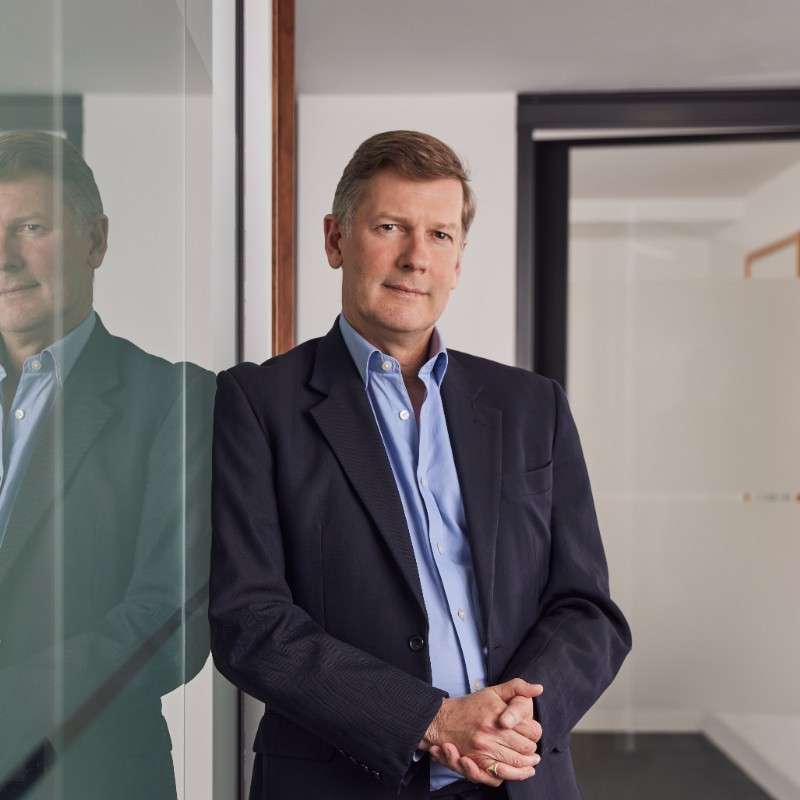
 Andrew SeerdenGuest
 Matt Eastland-JonesProducer
 Story Ninety-FourProduction Company