Ralph Grayson
Welcome to The Boardroom Path by Sainty Hird & Partners. I'm your host, Ralph Grayson, a partner in the board practice. In this series, we'll offer practical steps and useful perspectives for aspiring and newly appointed NEDs. Throughout its 30 year history, Sainty Hird has recruited senior board members across the City, Industry, the Public Sector and NGOs.
We're now also evaluating those boards, as well as coaching and mentoring those seeking to transition from an executive career into the boardroom. So we'll be speaking to some leading figures in the board advisory and NED world. Specifically, we'll seek their counsel about how and where to spend time and energy to make an effective transition into the boardroom. The goal is to equip recent and aspiring NEDs with tips, tactics and strategies to be most effective and build a successful career as a board director. In the process, we aim to help you to think more about who you are, how you operate and how you can make this work in the boardroom.
Today's episode sits right at the intersection of business, culture, and global capital, because we're talking about governance in elite sport. I'm joined today by Tony Simpson, Global Sports Lead at Oliver Wyman, who's been at the forefront of advising leagues, investors, and governing bodies as sports transforms into a truly global asset class.
Tony serves as a partner in the firm's global communication, media, and technology practice. He's a former board advisor to Special Olympics Great Britain. He is currently an independent observer to the English Rugby Football Union Governance Review, a trustee and board member at the United Kingdom's largest museum network outside of London, Birmingham Museums, and Art Trust, and a trustee at leading care charity Drive Forward.
In 2023, Tony was recognised as one of Empower top 100 executive role models. Over the past four years, he has played a leading role advising on governance and best practises across European football leagues, federations, and investment houses. He spent eight years working within the Middle East as a professional advisor to many of the GCC governments, four years of which was chief of staff at the Doha-based AlJera Network. And over the past few years, he's presented a BBC4 programme on resilience and as a past board director at the UK's Black Cultural Archives, where he recruited and restructured the organisation's executive team between 2017 and 2021.
Most recently, he has advised many of the world's leading sports organisations, federations and investment groups on subjects ranging from international expansion, sustainability, the governance and policies needed to embrace and succeed in a digital and rapidly changing content market and the role private equity can play across a new sport investment asset class.
Tony, great to have you on.
Tony Simpson
Thank you and I'm rather embarrassed by that introduction, but it sounds very grand, but thank you very much for having me.
Ralph Grayson
Okay. I want to start with sport as an asset class. You've had a front row seat to how sport has evolved from community rooted institutions into billion dollar investment platforms. So just to ground us as a start, how does that vantage point shape your view of how boards in sport actually function today?
Tony Simpson
I think that, you hit nail on the head when you said it's advantage seat when it started. I think there are a lot of sports leagues and federations who still haven't quite caught up with the governance of sport and money involved in sport. Last year my team did a piece of work for the World Economic Forum where we modelled the global sports economy and for the first time ever, the number was given out to Davos last year and it was $2.3 trillion.
And I had to let people pause in the audience and we looked at that number because the global defence spend is $2.4 trillion. And if you look at the governance structure in and around defence or pharma, which is $2.8 trillion, the sports industry lags behind not only in terms of governance, but also in terms of the financial flows going into it and the structure around its financial flows.
This is really quite unique to sport because it's predicated on the fact that a lot of our sport, especially in the UK, cricket, rugby, tennis was set up as amateur endeavours. So the governance structure was, people took positions of power on tenure, and as the sport industry went from millions to tens of millions to hundreds to billions of dollars, the governance structure didn't catch up in time.
Ralph Grayson
So when we look at that shift and try and get our heads around those numbers, particularly the influx of private capital. What's changed most at board level?
Tony Simpson
I think it's the breadth that boards need to have. When you say what's changed most, unfortunately in some sports, not that much has changed at all and therefore it's held those sports back from investment. What do I mean by that? If you take rugby, rugby is a great sport. It's currently being, hamstrung by some of the debt saddled with. Which you could argue was based on a governance structure that wasn't there in the first place, i.e. when you're investing into any asset class, if it's sport or it's art or if it's cars, you need to have a market for how you sell that asset on and therefore you're looking at the guardrails that protect your investment.
Nowadays, in around around football, especially in North American sports, it's always been there. These guardrails are in place in terms of financial investments.
Ralph Grayson
So how do we think about governance playing catch up then now it's a billion dollar industry, trillion dollar industry?
Tony Simpson
In many ways, you're building the plane while it's in the air and this is a triple hit actually for the sport industry because whilst money is flowing into sports at league and clubs and federation level, there is a seismic shift in the way people consume sport. What I mean by that is AI and technology and digital platforms mean that the traditional way of monetizing sport, be it the $7 billion that the Premier League get from Comcast/Sky in the future could change. We could go to a model which is a consumer pool model where the clubs are starting to look at data sets and having a one-to-one relationship with their fans.
Where does governance sit within this? The governance is that the league itself needs to be there for the benefit of the whole rather than the few. And so you're seeing pressure at the top of football with clubs like Manchester United, Manchester City, Liverpool Arsenal, Chelsea wanting to break away and do their own platforms and actually take all of them themselves versus clubs at the other end, Bournemouth, Brentford, et cetera, who may only have a small amount of fans who will never get anywhere near the collective bargaining they get with the top group.
However this long term is bad news for the Premier League because the one reason why people pay millions of dollars to watch English football is because of the competitive balance, which means at any given weekend, Wolverhampton Wanderas can beat Liverpool.
Ralph Grayson
So I'm interested in what that actually means in practice. You and I have talked before about how money doesn't invest without governance. So what do these investors now expect that perhaps didn't exist before, be that checks, balances, oversight, professionalism even?
Tony Simpson
Firstly, they'll be looking at the quality of the teams running the club or the league or the federation, very much like they would do in any other sector. As you mentioned on the intro, I've been a CEO of an Amos organisation. So when we were raising money, we were always told that we needed to make sure our CFO was appointed sometimes by the institution and that we had a proper governance structure in place.
In the past, money's gone into cricket, rugby, football, tennis without any of those guardrails in place. And so I think there is going to be a need for individuals who don't leave their brains at the door when it comes to sport. Because a lot of amateurs, and I say amateurs people want to do everything in sport because it's fun. But the reality is you're better off picking a finance director from a hospitality business when you're looking at running a stadium or looking at a risk manager who's worked in risk and analysis elsewhere because that's what the finance institutions putting billions of dollars in will want.
Ralph Grayson
I'm fascinated by that. I was with the owner of a prime club premiership rugby club not so long ago and he said, "I'm just a lucky person who's been a successful businessman who's been able to invest my love of sport into a local community and the sport I love."
I think that's very different perhaps to how a private equity person, partner, GP, might think about their investment. So if we take rugby as an example, we're moving from what's been often owner led or even a family run organisation to something which looks much closer to a private equity backed business.
I just wonder what that means now for sport. Is it just going to be governed like any other asset class or is there something still fundamentally different about governance in sport?
Tony Simpson
I think it's a bit of both actually. This is my personal take on it. Sport is very different to take pharma or automotive industry or the aviation industry, even though it's of a similar size. Because sport does something none of those areas can do and that is it drives social cohesion. So your example of somebody who, if you like, is a local lad or lass who's done well and has gone back to their community is actually a good thing. But it needs to be hand in hand with having a good business sense.
I remember talking when we were doing the regulator, the independent regulator in England, that the biggest thing I learned from the first couple of months was clubs don't go bust, owners do. And a lot of those owners had made millions of dollars in businesses outside the football sphere. But they seemed to leave all that common sense outside the door because to your point, they were dealing with their passion. And so passion is a very dangerous thing to have when you're running a sports investment company.
So it's the one thing that sets the alarm bells ringing for me, especially even within my organisation. I got a lot of people coming up saying, "I'm really passionate about sport, Tony. I'm probably one of the best managers, consultants in our business." That's an alarm bell because we don't want passion, we want actually the reverse. We want somebody to look at the potential downsides and the risks that are involved and therefore to understand the industry intimately.
I've actually had a situation where a major investment fund said to me two months ago, I was in New York having breakfast with the owners and talking about their club and saying, "Look, the CEO's fantastic, but he's too local. We want a business. We don't want a local business." So it's getting a real balance in place and Liverpool have done this really well. If you take Liverpool as a club, it's us against the world type thing, which is unique actually to them. But they are still a global brand, but it's dangerous when you have that locality like Leeds might do who aren't a global brand. So you've got to get the balance right. And as an investor, that's what you're looking for.
Newcastle have got amazing fan base, but what's monetization like? And so the challenges you have in football if you're an investor looking at how do you get your money back is unlike American sports, people tend to go on match days, they arrive 20 minutes before kickoff and leave 10 minutes after. And so all the money spent in and around the game is in the local pubs and especially in London where you can get tubed in and out in the centre of London, you finish the game, you go for a meal elsewhere.
The reason Tottenham Stadium is so good is because they've noticed they're drawing people in half an hour, 40 minutes earlier, they're spending their money in the club and they're staying after. And so all of these from an investor perspective are what's really important to driving a sustainable investment. If you look at Arsenal versus Tottenham. Tottenham are outscoring them in all of these areas because their value per fan is of an X of probably two or three of their nearest rivals. So all of that are things that we look at on behalf of our investors on the balance sheet.
Ralph Grayson
I'm interested intrigued even as to your view is therefore on who should sit on boards. Historically, it was very much to do with your community, your affinity, your understanding of the club badge and the culture. Now you're saying in the new era, you've got to be more global minded, you've got to be more professional.
So I wonder where you think we are on that board journey if you like and maybe where boards are currently falling short relative to where they could be and should be.
Tony Simpson
I think there should be community representation on boards. It's really important because clubs are community assets, which is why the independent regulator is set up. But there also needs to be a group of people with deep knowledge in terms of where the club's going, what the finances are and what the tensions are in terms of growing, spending and investing.
And that unfortunately is probably a tighter group that needs to be beholden to this group, but actually isn't being driven by this group. It's a bit like the Brexit situation. If you ask people at any club, "Do we want to spend $100 million on five strikers?" They'll all say yes and the board will go out and do it and then within a year sometime they'll be docked 14 points, 15 points for financial misplace because they don't have all the data in front of them to do this. So a board need to be able to listen to everybody and make considered decisions. But everybody should have an opportunity to input into those decisions and that is good governance practice.
And so it needs to be demonstrable, they need to show that they've done this, they need to show they've listened and the decisions they've made have been based on credible evidence data.
Ralph Grayson
It's just interesting to explore a little bit more that capability to join the board as opposed to a board seat historically being almost being like awarded. If you've been great in the community, you ended up the, on the board of your rugby club, cricket club, football club.
That is holding back governance, right? It's not go too much down a diversity rabbit hole. But If you think of the skills, experience, and knowledge needed on a board commensurate to the size of the industry now, that has to be in almost inversely correlated to your local community involvement.
Tony Simpson
I think there's an opportunity actually. All of that is right, but that's because we are reacting rather than managing these situations. So there is an opportunity for somebody, maybe yourself, somebody needs to put together what a good governance board for a club or a league of federation should be, i.e. what the seats are, the reasons why you need those voices on it and how it should operate. Then that gets rid of that tokenism or whether it's local people or whatever, everybody has, should have a voice with on the board, but they should have a role to play within that board, which is driven by the governance.
Where it's wrong is you're just hiring somebody because of who they are and what they look like or what they've done. If you look at women's sport and women's football, it's so important that women's teams have a voice on the board. Why? Because the growth of the women's game is a totally different product, both in rugby and football, actually, and cricket, is a different product.
And unless this comes from the top, either chairman, the CEO, it doesn't happen. And I've got examples where we've worked with clubs where on a Wednesday afternoon, the women's super league team might have a semi-final game, in the women's FA Cup and they're thrown off the pitch by the under 21s because the manager says he wants the pitch and that happens because the club is still run very much on behalf of the men's first team.
So a governance structure in and around that is important as well. So it's not just on the investment side, it's on how clubs operate and the reason that's important is because clubs where women's teams are well run like Arsenal, Chelsea, Olympic Lione, Barcelona, are all the perennial Champions League quarter finalists making much more money than everybody else, and it makes commercial sense.
And those clubs that seem to focus on the men's teams are missing out long term and it's going to be more expensive for them to buy quality players because nobody wants to play for them.
Ralph Grayson
So a lot of this, we talk a lot in and around the boardrooms about the right skills and in particular perspective. So how much of this is a perspective gap and are we simply asking people to operate at a level that the structure hasn't been designed for?
Tony Simpson
I think the skill sets are there. Because actually it's about knowledge transfer going into the sport environment. So I think there are two things that are needed. One is to identify, and we touched on it earlier when we were talking, people who worked for Financial Services Conduct Authority or OFCOM or any organisations within government who understand regulatory frameworks and governance should and could work in the sports environment, but they need to understand that it's a small industry.
Whilst I've said it's a 2.3 billion trillion dollar industry, the clubs themselves are quite small. So how and where do they show up in the government's perspective? Where is their added value? And these are things that probably need to be mapped out at some stage.
Ralph Grayson
That segues very well, I think, into how a board needs to think about on-field performance and off-field financial stability. So I just want to go back to one of your great lines, which is that clubs don't go bust, owners do. Let's just unpack that a little bit more. Will you bring that a bit more to life for me?
Tony Simpson
When we looked at the football regulator and looked at the problems clubs had in the last six months before we put it together, there were two very famous cases. One was Berry Football Club and the other was Darby County, both by the way are well run now and doing very well.
Berry was a situation where the club had, well the club ownership had run out of money and the first indicator for the regulator of football authorities would be the inability to pay HMRC and as we were working for the government, that would be our first red flag. But this was happening also at some other clubs as well such as Derby. However, with Derby, they did pay the HMRC and yet the clubs still suffered a lack of financial flows. And this was because another reason that hadn't been calculated into the plan and that is the owners just didn't want to put any more money in. They didn't want to lose any more money and it's their choice to do it.
So when you're looking at the regulatory framework, it's not a case of just looking at who's running out of money. I could be a billionaire and I've got a club in League One or in Premier League and I decide, I'm bored with this, I want to do something else. In fact, I'll put just enough in to keep it going.
Now, as a community asset, that's not a good thing and that's why the regulators job is to also mainly maintain the integrity of the pyramid. So we were looking at very much like a prenuptial if you get married. If you take on a club, do you have the ability to finance the club should you need to and if so, the regulatory framework will enable the regulator to take over if they wanted to and dispose of that asset on behalf of the community and the fans and the other shareholders.
Ralph Grayson
I think it's so interesting when we think about premiership rugby, Tony Rowe and Exeter in particular. Tony been very honest and upfront the same way a founder thinks about succession planning. If it's a founder-led business, Tony said, "I'm 73, I can't do this forever." If I'm being prudent and I'm governing the club properly as the steward of the community, and he's a passionate advocate about where Exeter Chiefs sits within the community, then he's saying this transfer of ownership has to be something that's thought through as good governance rather than me getting my money out.
Love your view on that. But, one question to lead into that is the traditional way a board thinks about oversight is that the board is overseeing the executive management. But of course in sport where we've got owner-led businesses it's about holding ownership itself accountable rather than the executive team.
Tony Simpson
Yes, which is why sport is quite complex because you have teams who play in leagues and you have leagues who are beholden to federations. So whatever happens, the government structure needs to be in line with that pyramid. So when you looked at the English football independent regulator, it had to mirror the margins of the UEFA fair play rules because a high proportion of English clubs play in the European Champions League and get their money from that as well. So if they didn't qualify financially to do that, but qualifying to play in English Premier League, it would have been a problem. And so what happened by defacto was when we were looking at our regulatory framework, that was a framework that was adopted actually in Italy and later on in Spain and looked at in Germany where there's a slightly different rule.
So I think the governance structure starts at the very top and it filters down rather than going up. How it's managed and monitored is being driven by financial flows. So the finance industry and the investment industry investing into clubs that are well run and have got a good governance structure is driving most of this change.
Ralph Grayson
It's so interesting when having listened to the new football regulator talking publicly about, "I don't want to have to step in to football yet. I want the House to get itself in order so that I have to do that."
What's your perspective on the role of the regulator here in the interface with the board? Are boards capable and able to get their house in order, particularly in football, or is it incumbent on the regulator where the board almost has to deal upwards as well as deal downwards in terms of its role and responsibilities?
Tony Simpson
The board has a duty to make sure a club is run within a regulatory framework of English football. So it's not beholdens of the regulator, it's beholden of the club. Which ultimately means it's beholdens of the Premier League. So the Premier Leagues or the championship or NWSL. The leagues themselves are currently implementing their financial fair play rules throughout the pyramid in order to make sure that their clubs are compliant. If they're not, the regulator would be the one to penalise any club and that's the right thing because you can't mark your own homework.
And so at the moment, the reason it's been difficult is because the Premier League is ultimately owned by its clubs and its clubs aren't going to penalise themselves. And so you can't penalise one club if four or five of you have got the same issue, so you tend to let it go because it's a bit difficult.
Whereas as a third party, it's much easier to do and it's more of a credible threat. And the regulator was never set up to penalise English football. It was designed to create a credible threat and drive the right behaviours.
Ralph Grayson
So let's flip that.
Tony Simpson
I should be a politician.
Ralph Grayson
You should. It was a great answer. I'm desperately trying to flip this onto the positive now. So if you were advising an investor or an owner to build the ideal board for a modern sports organisation today, what would it look like?
Tony Simpson
It's a really good question. I would look for a model outside of the sports ecosystem, actually, where somebody's done really well.
So at the moment, people tend to hire from Adidas or Nike wherever and think that will work, or they hire from the hospitality industry and think that'll work, or they go to America. All of it works, but it's getting the right blend right. So before you do it, you need to spend a disproportionate amount of time looking at what that particular club is in its community, what's needed to be delivered both from a performance perspective and also from a community perspective and also from a commercial perspective and then cut a board suitably to deliver that and then put your governance framework around that.
So the board structure for City Football Group, which is quite complex, will be totally different to the board structure for Tottenham Hotspur. So at Spurs Daniel, Matthew, Donna, and Andrew, there are four or five of them who run the club. And Manchester City, there are at least 15 people who did that job, but they had a city football group and they delivered a different type of product. Neither was wrong or right.
Ralph Grayson
So let's just bring this to life a little bit. So talk to me about independence on a board, leadership on a board, and different skillsets on a board in terms of the composition as it relates to modern professional sport.
Tony Simpson
I think all boards should have independent directors on there. They'll all push against it as well. Amount of times I've tried to put independents on boards and the chairman and the chiefs have told me they don't really need them because they ultimately are independent.
If people are putting hundreds of millions of dollars into an asset or a club, you have to have some independents in there that has the ability to say no and the authority to say no. And the type of people who do that have to be impartial and as I said before not be driven by the P word, which is passion, but driven by the G word, which is governance and I think that's really important.
Ralph Grayson
And how do you balance that medium to long-term view of the future with short-term performance on the pitch and people coming through the turnstiles using old expression or not and how much you might make on any one day out of concessions?
Tony Simpson
Do you mean in terms of the board makeup?
Ralph Grayson
I mean in terms of the short-term pressure to deliver a result on the pitch, which drives attendance as opposed to a board typically thinking more in the medium term being focused on strategy.
Tony Simpson
Look, I think they're two very different things. So a good board should be operating properly, whether the club are in the Champions League place or they're fighting for relegation. The performance side, sporting directors, training coaches, player recruitment, et cetera, should be totally separate from that.
If it's not, you end up with peaks and troughs. This is where you see your clubs going from Premier League to Championship to League One and bouncing back up again because the chairman, chief exec has become a football person and is interfering in the type of recruitment they should be doing.
Succession planning within sport is not too different to what it should be in business, but it's not done properly. Clubs who do it well, are usually autocratic. So if you take the big Spanish clubs who where they have a presidential election every year and you've got that DNA and a culture running through the club works. Liverpool did it well for years. People used to talk about Liverpool Boot Room, but what they were really talking about was the fact that they had a whole performance and vision that was away from the people, the Moore's family owned the club.
But I think nowadays you very rarely hear about that. You're seeing it at City Football Group. Pep is running it. So the really interesting point is what will happen at City Football Group. They, I would argue, probably got the best infrastructure of any club in the UK, and how easy transition that might be when they move on. They'd have already, I suspect, identify four or five coaches for that role and they'll be ready to go.
Ralph Grayson
I've talked with a number of the premiership rugby owners about their role in hiring coaches and the stability and loyalty they need to show around the coaching team. I'm just wondering how that segues into if somebody's an aspiring board member in elite sport, how much they should be thinking about results on the pitch as opposed to financial stability or products marketing optimisation off the pitch. Where are the guardrails either way?
Tony Simpson
It's really important. I mean, it is a fact that performance on the pitch drives revenues off it. So you can't go to a board meeting and say, "We've done really well. Our sales are ups by by 3X." If the team had just won the Champions League, that's probably why.
But the key is to have a clear line of communication between the sporting side and the board. It's not dropping into the players dressing room before kickoff, if you're the FD, Finance Director, is not really appropriate. Even though it might be fun. It's a lonely job being a coach. So they need somebody with high EQ as well as IQ to support them through transitions. And sometimes it's not the chairman, sometimes it's not the CEO, but it needs to be somebody in the club who support them. Sometimes usually it's a sporting director.
And it takes time, it's like building a business, you can't do it overnight.
Ralph Grayson
As we think about globalisation of all these sports, and we think about the role of multiple regulators within that, are we moving to a point now where we should think about professional sports effectively as a regulated utility and something you and I have talked about in the past should people be thinking about hiring fewer successful businessmen or business women from their community and thinking more about recently retired regulators?
Tony Simpson
I think that will happen as the money gets more and more involved. I think sport is going to play a disproportionate role in people's lives over the next 20 years. And just bear with me while I say that. If you notice during COVID, the only thing that was live and people did was watch professional sport in empty stadiums. If you tried to buy a bicycle during COVID, there were none left. All people did was walk, play tennis, hike, whatever, sport was the one thing that made people still human. And the reason I use that as an example is because if you look what's happening over the next 20 years and the curve is going to be extreme in terms of how AI is going to affect people's lives, the current estimation is 30, 40% of people in white collar jobs could be replaced going forward.
So what is it that makes somebody feel human? What is it that makes them feel valued? And so with something like potential of universal income which looks like it might come in. I.e. We pay people because of the profit, vast profits, we're making from the tech businesses to stabilise economies and give people something to spend. Sport is the one thing that will make people feel connected again. And so the sports industry I believe is just going to get bigger and more cohesive than anything we're seeing at the moment.
So the governance structure around your first question is going to be hugely important. So things like Olympic Games, World Cups, I was thinking about this World Cup now and sports role for social cohesion. I'll give you an example. I come from a small town in the Midlands called Birmingham and if you go up to Birmingham now over the last six months, all as you walk in are lots of England flags flying from lamp posts and we all know they're not really supporting the football team. Now the reason I say that is because during this World Cup, you will see all of that completely drodden over by everybody amplifying their support for the England football team and all its guys is white, brown, black, whatever, which is wonderful.
And what you're seeing is the role of sports to transform social cohesion and also the role of sports to drive mass value for the economy. Pubs, bars, tourism, et cetera, is huge, and so when you go back to leagues, clubs and federations and your conversation on governance, it's not only governance of sport, but certainly understands the value and the role sports plays. And the one of the big projects I'm working on this year, and so I'm getting quite serious and passionate about this, is with the World Economic Forum where last year we presented the first model I mentioned earlier on the global sports economy. This year we're working with the biggest financial institutions. We're working with the world's biggest leagues from the NBA to NFL, to Premier League, to cricket, and some of the biggest cities, governments, and urban developments to look at what a proper global sports index looks like for the betterment of the society. And there's nothing else that can do that.
Ralph Grayson
I'm fascinated by the idea of an index of skills, experience, knowledge, and in particular social empathy to be an effective board member in sport today. Yeah. Do you want to just bring that to life for me?
Tony Simpson
I touched on some of the areas that sports can touch. The role of a modern CEO for a sports franchise is the one that I think is going to be most under threat. There was a time in the sports industry, and especially the sports executive recruitment, and I've spent a bit of time there in the past where you had a rolodex of 50 or 100 people who just kept churning over by the same old companies, same old candidates. It's just not fit for purpose anymore because as sport becomes part of the fabric of societies, having people who understand an interest outside of just sport are going to need to be able to position it within both a commercial and economic framework, but also a societal framework.
So I think the people who run it could be politicians. You could end up with somebody who has been a senior civil servant, look at the independent regulator, there you go. They've been a senior civil servant who has got the bandwidth to have an understanding and a vision for all the elements that are going to be needed to run that community.
I worked last year with the football club in Luton, met the borough and the airport on developing a new stadium, two and a half thousand residential, working with Homes England, working with the National World Fund. So sport was used as an anchor tenant to drive a huge society project. But the vision of the CEO was far and above beyond worrying what Jack Wilshire was doing on the pitch.
Ralph Grayson
I think for people who listening, that perspective is insightful and extraordinary in terms of how we have to think about sports team, whether that's your local club and the added value you can bring by being a member of the community there, or indeed if you're at the top of professional rugby, football, cricket.
Let's try and pull that together as to why listeners should think about joining a sports board, the attraction and the reality. So there's obviously a huge attraction to being involved in sport at a board level. But from your perspective why should someone pursue that path?
Tony Simpson
It should be because you believe you can add value to the club and it needs to be demonstrable value as well, so not just add value.
There's a real debate about should they be compensated or not? The answer is they should be compensated. And the reason they should be compensated is because it provides a level playing field for diverse candidates and what I mean by diverse candidates is not pigmentation. I'm talking about socioeconomic. So a single mum living in Brent has as much value to be on Brentford's board as somebody who's time free and is just retired and had lots of money. So unless you compensate for it, what you're really saying is, "We only want people from this sector of society to do it, " which by definition is not diverse.
And as an example, why is that important? So if you go to Blackburn Rovers or Bolton, which are areas that are very diverse areas where 80% of the population are from the subcontinent the club are always going, "My God, how do we monetize this? How can we reach out to that community?" Try putting somebody on your board who understands that people pay 80,000 pounds a month for an Indian wedding. And at the moment, they're all driving past your stadium and going elsewhere to do it. And then they go, "Oh my God, you're right." So you're using your community to drive the asset and that's why diverse boards are really important.
Ralph Grayson
Is compensation relative to the personal risk that somebody might take by going on a board? I mean that in terms of scrutiny, the emotion of the fan base and various stakeholders and indeed the complexity of that stakeholder base if you're on a board.
Tony Simpson
I've talked a lot about team sports, but, some of the big other opportunities around golf, around cycling, and cycling, I think is one of the most undercooked, opportunities that is in world sport. I'm bias because I like cycling, but Tour de France is probably the third or fourth most watched sporting event in the world and yet in terms of revenue, it's probably in the bottom quartile.
So there's all these things that need professional guidance, how do you monetize and how can you drive them. How can you build an economy? In fact, it's complete reverse. So you're you have a sport where the average fan pays six to eight grand a year on equipment, yeah, and it's free to air on TV versus football where the average player is on X million and the fan pays 50 quiz will go to a game.
So there's so much that can be done in this space in this area. And so the role of executives, the role of advisors, the role of community coming in to help elevate and embed sport within the economy is really important and it's embedding it within the economy.
Ralph Grayson
So what's one thing you would change around governance in sport to achieve some of these issues?
Tony Simpson
I would make sure from an investment perspective that no money went into any deal unless the board was compliant to a structure that had been put together by somebody.
Ralph Grayson
Tony, that's a fascinating thought to end on. Thank you. What's really coming through to me is that sport today is in a unique space. It's not just a business and it's not just a cultural institution it's both and it's going to need that left hand and right-hand side of the brain to be an effective board member.
So that means governance has to rise quality and the right sort of people applying for these roles, diverse, and a host of other issues there to meet that complexity. So for anyone who's listening about their own journey and thinking about going onto a sports board, where would you recommend they look to get more thought leadership? You've written some great papers on this, for example. Where do they go and find some of your thoughts on governance and regulation?
Tony Simpson
Yeah, thank you. Look, there's very little out there actually at the moment. I've done a succession piece actually for the Sloan Business School last year on CEO succession and sport. In fact, David Ellis, the ex- Harlequins CEO was one of the, people we interviewed on it in terms of his succession on succession planning into sport.
I think it's so nascent, that there is not a lot out there. My view would be common sense really and talk to people like yourselves.
Ralph Grayson
Thank you. And people can find you on LinkedIn?
Tony Simpson
Yes, they can?
Ralph Grayson
And Oliver Wyman's website?
Tony Simpson
Yes, but they'll find it.
Ralph Grayson
We'll leave it on that note.
I hope that you've enjoyed listening to this podcast and have found it helpful when thinking about how to approach your own path to the boardroom. If you would like to push this a little bit further, Sainty Hird runs a bespoke one to one programme designed specifically to this end. For more information, please visit our website saintyhird.com, follow us on LinkedIn, and subscribe to the Boardroom Path to receive new episodes. Thank you for listening.

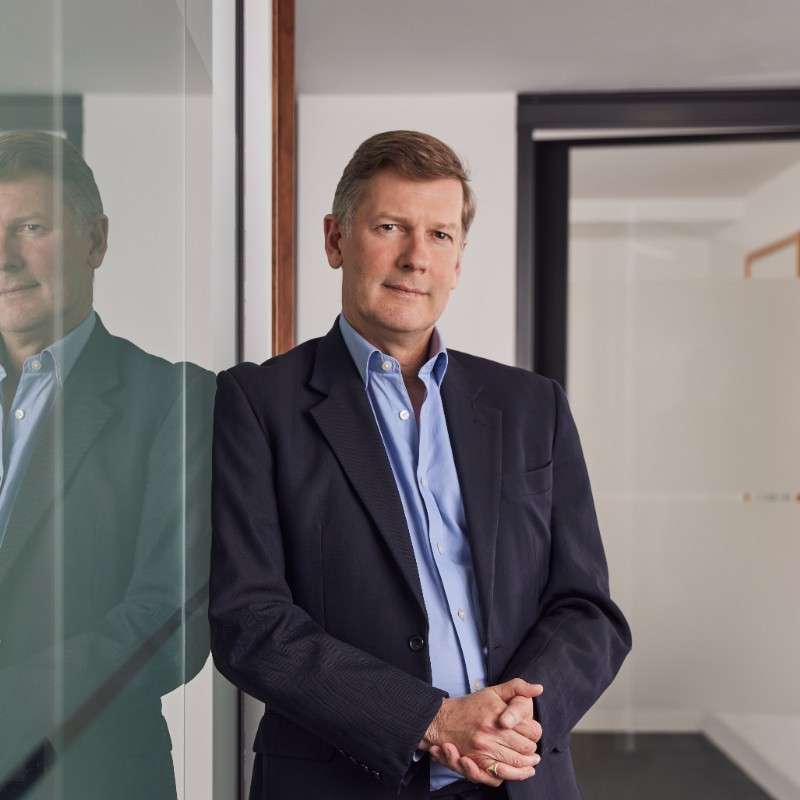 Ralph GraysonHost
 Matt Eastland-JonesProducer
 Story Ninety-FourProduction Company