Andrew Strauss
Any team environment requires effectively a multitude of different relationships between all of those people.
The sort of more relationships you have, the more challenging it is to keep everyone aligned and on track. if in doubt, I would always advocate simplicity rather than complexity.
Ralph Grayson
Welcome to The Boardroom Path by Sainty Hird & Partners. I'm your host, Ralph Grayson, a partner in the board practice. In this series, we'll offer practical steps and useful perspectives for aspiring and newly appointed NEDs.
My guest today has led from two very different positions. First in the middle of the pitch of play, and then with responsibility for building the conditions in which others can succeed, a key function of the board. So Andrew Strauss captained England to two Ashes victories and the number one Test ranking. Later, as Director of England Cricket, he helped reshape the men's one-day game and laid the foundations for the 2019 World Cup victory. His career raises a question that matters well beyond cricket. How do you judge a leader's contribution and create the strategy today when the most important results may arrive years after the decision is made?
Andrew is now executive chairman of Mindflick, which brings performance psychology developed in elite sport into business. He is also leading its expansion across Asia-Pacific and has dialled in today from Hong Kong. Its work examines how individuals and teams respond to pressure, adapt to change, and perform together when it counts. And for board members, that prompts some searching questions. Do we understand how our own behaviour changes under pressure and how does that impact how we lead in the board? Can we recognise when a board is drawing on its different strengths and when it's simply agreeing too quickly? And are we creating the trust that allows someone to challenge a decision before it becomes a costly mistake? Finally, how does the board think about how to create the optimal executive team in the business to outperform and succeed?
So Andrew, welcome to The Boardroom Path.
Andrew Strauss
Ralph, a great pleasure to be on now. I'm very excited about the conversation to come.
Ralph Grayson
And I'm particularly excited to be talking to a fellow Hatfield College, Durham alumnus. This is a, a real career highlight.
Andrew Strauss
We do have to stick together. That is true.
Ralph Grayson
So your career, I think, provides a particularly compelling perspective on leadership which is something that particularly fascinates me in the boardroom. You've experienced it as an international cricketer and now through your work with Mindflick, helping individuals and teams understand how personality, relationships and context affect performance.
So what interests me for today's discussion is how those sporting lessons might translate into the boardroom. Boards are, after all, small teams of highly accomplished individuals operating under pressure, often without the time, shared experience or psychological understanding that high-performance teams would regard as essential.
So I'd really like to explore with you what board members can learn from your perspective of sport and how tools such as Mindflick can help directors to build trust, understand one another and contribute more effectively. So maybe we could just start with your own leadership journey. Looking back across your career, when did you first begin to think consciously about leadership rather than simply performing as a cricketer or captaining a team?
Andrew Strauss
That's an interesting question. I mean, I got made Middlesex captain at the age of 24. I mean, I'd captained cricket teams at school and whatever. I don't think that's leadership really. That's just making a few decisions on the park. But I think once I became established in the Middlesex first team, I became more and more interested in what levers do we have at our disposal to help this team perform better?
So I was always trying to help the team leadership, the coach and the captain give my thoughts as to what we could do differently. And so, while I didn't feel like I had massive ambitions to take over as captain, certainly not at that young age perhaps people saw me as someone who could add value beyond just how many runs I was putting on the board and so I've always been really fascinated by the idea of getting a group of people to perform well. I've always bought into the whole team thing in a way that some sports people don't really and it's quite a surprising thing that in sport, there's a lot of cynicism about, you know, things like team spirit and a team being greater than some of its parts and all that sort of stuff.
I think that there's a slight cynicism to that. I was never cynical about that. I always thought it was really important. Taking over as a sort of first-class team captain at the age of 24 was probably two or three years too early for me and I made a lot of mistakes in that time, probably trying to be a leader that I wasn't. And then when I was lucky enough to be offered the England captaincy, again, I was a well-established figure and had some pretty clear views in my mind as to how we could do things better and differently.
I feel like I had a sort of four-year period with a real clear alignment with the coach at the time, Andy Flower, and that's such an important thing. Then later on became Director of England Cricket and having to lead in a completely different way. And again, felt a little bit more like my 24-year-old self in terms of understanding what it is to lead a department and not being able to just be on the ground and lead by example and all that sort of stuff. So I took a lot from the cricket field into that role, but I had to learn a lot as well.
Ralph Grayson
So you became cricket captain at the same ages as another Durham alum, Will Carling became captain of the England rugby team, and I've had some fascinating conversations with him over the years as to how you have to mature very quickly to think about the difference between being an individual performer on the pitch to being the captain.
Mike Brearley's book on leadership has become one of my kind of bedside reading mantras as we think about all this stuff. Just talk me through a little bit, if you will, how that had to change the way you thought about leadership and maybe your own behaviour and maturity in that respect.
Andrew Strauss
Well, look, I think probably my default around leadership was always to try and lead by example. And so, in cricket, you've got a sort of unique opportunity to do that. You got to go out and perform yourself and then the way you hold yourself off the field and the way you train and prepare or whatever is a really good opportunity to demonstrate to people that you're willing to do rather than just say. So I don't think that ever really changed for me. But I think in the early days, certainly when I was captaining that Middlesex team, my predecessors at Middlesex captain had been Mike Gatting, Mark Ramprakash, and Angus Fraser. So there are three very big personalities, legends of the club, really, and I think I had to be front and centre of everything and dealing with every little problem in the club, really running the club like it was my own little toy, because I think that's what the previous Middlesex captains had done. I realised over time that didn't use my strengths to their greatest, but also, sort of micromanage individuals and backroom staff and the CEO and commercials and it just it's too much to take on.
So I think there was a sort of journey that I had to go on just to understand where do I actually add value in all of this? If I'm going to lead this team to be bigger than just a group of individuals playing cricket together, what value can I add? And so those were questions I had to ask myself.
Ralph Grayson
I wonder whether the coach captain relationship, and you've obviously done both and gone from captain to coach, whether there's an analogy there with the chair and CEO relationship in the commercial world. Did you deliberately have to reframe your thoughts about leadership in that context? i.e. take one hat off and put another one on?
Andrew Strauss
Well, I think that alignment between the captain and the coach, and as you say, the CEO and chair, if anyone feels like there is a lack of alignment between the two of you, it creates the conditions for instability and insecurity and so probably in my early days at Middlesex, I wasn't as aligned with the coach as I probably would've liked to have been.
I was very fortunate in the England environment that myself and Andy Flower saw the world very similarly and then when I went on to become Director of England Cricket myself and Tom Harrison, the CEO saw the world very similarly. So I definitely feel like there's a bit of alchemy that's involved in all of that, and I suppose that comes back to good recruitment in a way.
If you really want to create a strong team environment, that alignment piece at the top is utterly crucial. Because otherwise, you're breeding an environment of, "Are you with me or against me? Are you in my group? Are you in another group?" And so what you get is that sort of natural dysfunction, which I think there is always in teams, which is people looking out for their own agendas and motivations and interests and insecurities and everything else rather than buying into what the team requires you to do and so I think you only get that when you have really strong alignment at the top.
Ralph Grayson
And what happens to that dynamic when it goes wrong? i.e., you and I have spoken in the past about the disconnect between an impressive performance plan, so the strategy the board may have come up with, and I'm at risk of triggering you, I know from the past. Let's use England's disappointing results of the 2015 World Cup as an example.
So what did that teach you about the difference between planning and execution? And how do you think a board needs to think the difference between setting the strategy and then looking at whether it is actually working or not and when to step in?
Andrew Strauss
I mean, using that example of the 2015 World Cup. I got brought in as Director of England Cricket on the back of England really having a humiliating exit from the 2015 World Cup. I mean, we got beaten by Bangladesh and that was the latest in a long line of really poor World Cup performances, one of which I kept to myself. So, I hold myself accountable for that.
The first thing I had to do was, I was given the very clear goal to create the performance plan for England to win the 2019 World Cup. So that was, like, the first thing I had to do was to start putting together that plan. I looked at the performance plan for the 2015 World Cup, and what I saw was actually a really impressive document. They were using a VMOS model, which is used right the way through elite sports, particularly the Olympic sports in this country. Lots of RAG ratings everywhere, a lot of green on the RAG ratings. But what was happening was, there was obviously this massive disconnect with the plan on paper and the people in the background administering the plans and what was actually happening on the pitch.
I suppose what I realised was actually, firstly, the plan had been designed four years beforehand, and so it wasn't actually very relevant. The game had moved on a long way from when the plan was designed to what actually it took to win the 2015 World Cup. But also, there was obviously just a difference between having a great plan and executing on a great plan. And so that really set me on a course of just trying to figure out, "Okay, if my job is to create a plan for us to win 2019 World Cup, what does that actually mean? What does this plan need to be?" And what I realised was this sort of understanding there is a lot of things that are going to happen over a four-year period that you can't control.
Understanding the limits of your control, but also not looking too far into the future when planning and just making sure that you're giving people the opportunity to make decisions themselves on the ground based on the intent. How are we trying to play here? What is it that's important to us? What's the sort of main effort that we're trying to focus our attention on? And giving people flexibility to adapt to what's in front of them because in elite sport, that is what you have to do all the time. The context is always shifting, the opposition are going to surprise you, the conditions are going to be different and so you have to engender this idea and this philosophy of allowing players to think for themselves and adapt. But within a framework. Embracing chaos is not creating chaos, it's a different thing. You still need a framework in terms of this is how we're looking to approach things. This is how we're trying to bind together everyone behind a philosophy in their approach.
Ralph Grayson
So does that mean you're consciously able, depending on results, to know when to lean in and when to kind of get out of the way, for want of a simplistic expression? I love this analogy of the coach and the players on the pitch and the board and the executive team and something we talk about in the boardroom all the time is, noses in, but fingers out, i.e. you can smell when it's going right, smell when it's going wrong, but not overly interfering when it's all going well. Is there a read across there into the sports field?
Andrew Strauss
Yeah, a very strong read. When I look back at it, my job right at the start was to clarify my own thoughts about what we need to do strategically and then recruit according to those strategic needs. So, I had to recruit the England coach. I actually ended up reappointing Morgan as England captain and then once you've got those two positions in place, i.e. the people on the ground, the executive team, so to speak, then my job was just to keep checking and challenging with them around the strategy itself, in what ways are we maybe drifting off what we thought we were going to do, and in what ways do we need to adapt and shift and pivot?
And so it was really just trying to check and challenge them, but support them and maybe create, allowing myself to step out of the here and now where a million things are going on every day and just kind of go, "Well, let's not worry too much about how many runs we went for yesterday or why we lost that game. Just let's just think more generally based on where we were six months ago and where we want to be in six months' time, are we by and large on track? And if not, what's going wrong here?"
So, I think that that does feel very similar to the sort of role that a board needs to play, which is that less emotional kind of 30,000 feet view of "Okay, are things going the way we want them to? And if not, how can we support you to get things back on track?"
Ralph Grayson
And if I bring that up to date, there's been a lot written about and talked about the current England coaching leadership and their availability and conflict of interest with the Hundred and commitments there. The analogy I want to draw is, so a board might only meet six or eight times a year, and the England team now has got some coaches who aren't going to be able to be full-time. How do you think that changes the nature or the ability of a coaching team or a board to develop relationships that are needed for really effective judgement and performance?
Andrew Strauss
It is difficult. When I was Director of England Cricket, we had one coach around for all formats. We had two separate captains. But if you take the view that you got coaches coming and going, you've got different captains for different formats, you've got a director of cricket who's soon meant to be running the whole show and any team environment requires effectively a multitude of different relationships between all of those people.
The sort of more relationships you have, the more challenging it is to keep everyone aligned and on track. I think if in doubt, I would always advocate simplicity rather than complexity. But sometimes you just have to deal with complexity and the board, I would argue, needs to know, okay, well, what's its role based on the context we're in right now? And sometimes maybe they have to dial up the work that the board does, and sometimes they can dial it right down and be much more in the background.
But then I think the other thing the board needs to understand is their own experiences individually and collectively in what areas can they add most value? In what areas are they at risk of overreaching? And so that comes back to individual sort of expertise and skills. But also the makeup of the board the different personalities and how they gel together and, potentially the sort of unconscious biases or otherwise that the board might have, which makes it more likely to want to lean into certain areas than others.
And so, as a great example, with the ECB board that I sat on for a long time, they're all bound together by a love of cricket even though all their other experiences are rich and varied and so there were certain things within the cricket environment that they wanted to lean into because it was almost their interest, but not necessarily their skillset.
Just being aware of that, I think, is really important because a lot of troubles originate when a board leans in too far and I suppose sort of steps on the feet of the executive team in areas that maybe they shouldn't be, and also when they're maybe lacking when the executive team really needs some direction and support. Again, it's so context specific and so we always need to be asking ourselves, "What is this context and what does it demand of us right now?"
Ralph Grayson
So let's turn to Mindflick then and maybe how that can be part of the solution to some of these issues. So let's just cover the bridge from cricketing into being an executive chairman in your own right and your idea for the creation of Mindflick.
Andrew Strauss
Yeah well, I think when I sat down and retired, this is back in 2013, I sat down with Mark Bawden, who was the England cricket team psychologist, and Pete Lindsey, who was the Manchester City psychologist, and we were just talking about what we might want to do next in our careers, beyond just working in the sporting environment.
I suppose we just came out and asked ourselves this fundamental question, which is why is it that performance psychology is restricted and reserved for elite performers who are actually very good at getting the best out of themselves under pressure? Is there an opportunity there for us to distil what we've learned in those high-performance environments under pressure and help people in organisations who are in performance context of their own and under a lot of pressure, but maybe don't have the wherewithal or the experience to get the best out themselves when the pressure's really on? So that was the sort of foundation of Mindflick.
The things that we really took from sport that I think were most applicable were, firstly, this idea of a natural dysfunctionality of teams. if you just shove a load of people together in a room, all of whom have their own agendas and mindsets and insecurities and fears and whatever, and motivations, and say, "Be a great team now," it's not going to happen. You actually have to work on developing teams, which is something we did a lot in elite sport, and because we know the value of it. The team development stuff is so important.
But also this idea of sort of adaptability according to the context, you can't fall in love with your wins. You can't just assume that what worked yesterday will work tomorrow because sport is ever-changing. There's that unbelievable kind of dynamic shift to everything, and so you always need to be asking yourself, "What is being asked of me right now, and how can I shift within a broad approach to meet the challenges that I am experiencing today and prepare for the challenges that I might experience tomorrow?"
Ralph Grayson
So as you tried to take some of those themes and turn them into a product that was a practical solution, what was the key thing you were trying to solve here in terms of moving from the sporting world into the commercial and corporate world?
Andrew Strauss
The key problem we're trying to solve was this idea of teams being greater than the sum of their parts and there's a sort of connectivity issue. If you take the sort of starting point for a high-performing team is that you all have a sort of level of trust in each other, then how do you develop that trust? And it comes down to connecting with people, understanding people, understanding how they might be different to you, and not seeing that as a threat, and seeing that as something that can be leveraged, especially if you need to be adaptable. And then from that you can layer on the importance of those sort of robust, difficult conversations and then, of course, the sort of outcome in all of this is that you get higher performance.
So I think what we challenge ourselves with is, "Well, how do we get people to understand and embrace different perspectives better?" And so we went away, thankfully all my colleagues are PhD psychologists, I wasn't needed in this bit so much, but designed a personality profiling tool which looks at mindset: how you view the world especially under pressure, your sensitivity to threat and reward as a sort of a framework and then just trying to build up a set of products that allow people to, on the one hand, be more aware of yourself and those around you, but then turn that awareness into action.
I think one of the reasons that people tend to be a bit cynical about leadership development work, team development work, is that it's a nice, fluffy thing. We go away on an offsite and we all tell each other stories about ourselves, and maybe we've got a profiling tool that allows us to see a bit more about what motivates each other. But then it all gets forgotten about when you're under pressure in the flow of your work and so if you're not able to take that awareness into action, there's a strong argument that it's not really worthwhile doing at all.
If you're only going to pay lip service to this, then why are we bothering? And so we've created a platform that allows leaders, organisations, to understand different perspectives, allows people to connect together much more effectively, even if they don't know each other very well, or they're in different parts of the world, et cetera. It allows you to understand and police that team environment much better, understanding your collective strengths and take care. But also what we call the empty chair, which is a perspective that group is least likely to take, which we think ourselves is hugely beneficial, especially when the pressure's on.
Ultimately, just we've got a number of mechanisms that allow you to do it day by day in the flow of your work rather than having to do a separate kind of team development session. You can just do it ongoing. The idea of this is to really embed a framework for thinking in an organisation which puts the development of the team at the heart of how the organisation runs.
My own experience tells me that is massively important. If people are in an organisation and they feel that organisations value teams, then they will go the extra mile for you. But I think the natural state for so many people is, "Look, I've got a role to do. If I just do my job well, then no one's going to drop me or sack me, and if we don't play well, then no one can blame me for us not playing well." And I think that's the natural state of a lot of teams and organisations and if you want to do something genuinely special, you have to be better than that.
Ralph Grayson
So let's get into the engine of all of that a little bit more then, because I think there's a danger that psychometric tools just become a lazy label for platforms. So if a chair introduced Mindflick within the board, what would the process look like? What's the methodology? What's distinctive about it?
Andrew Strauss
The starting point is everyone would do their profile questionnaire, which would not be that dissimilar to any other profile they've done. But as I said, the framework we use, we've got a behavioural element to it, but the mindset one is unique.
We use a psychological theory called reinforcement sensitivity theory, which looks at their sensitivity to threat and reward and so the starting point is you get a really good profile that looks at your, strengths, your weaknesses. We really want to make it as a tool for adaptability rather than pigeonholing, which unfortunately so many of these tools do, and so as part of that profile, we'll give you tips on how to adapt more and how to get more performance out of yourself. But that's really just the self-awareness piece.
But then when you're on the platform, you can connect with other people, just like LinkedIn. So you can connect with other people on your team and if you do that you're going to see their strengths, you're going to see what we call the wriggle room, which is what you need to do to allow them to get the best out of themselves. And ultimately, you're both going to get your tips to connect together. So if you want a strong working relationship, these tips are going to really help you to forge that relationship.
Which is really useful for boards because obviously people are coming and going all the time and I suppose there's always a sort of a delay between someone coming onto a board and then them feeling comfortable actually saying their piece on a board. Then the third element of the platform is this whole team dynamic, which I've discussed already, which allows you to see the team map and in doing so, see where the gaps are in the team and that's not so much gaps in terms of people. It's more gaps in terms of preferences and so again, what we know from elite sport is when you're under pressure, you're more likely to get locked into your preferences and you're less likely to be naturally adaptable and so when boards are under pressure, it is really important, A, that one or two voices don't speak too loudly and everyone else be quiet. You've got to tap into all the different perspectives and mindsets in the room. But also you need to ask yourself that question around if our job is to check and challenge the executive team and we've got significant blind spots, what are those blind spots? What questions do we need to ask ourselves to make sure that we're not just charging off down a direction without thinking carefully about what our empty chair is? What our least favoured perspective's going to be?
So again, it's just trying to create a framework to make sure that you're looking at these decisions from a number of different angles. I would say that's most important for boards because their job is to check and challenge an executive team that might be doing exactly that thing and so you want to make sure you're not doubling up on a certain perspective.
Ralph Grayson
Yeah, I think, that's such a good perspective. When we first started talking about this, I thought there were two key ways that this was relevant to the boardroom. First is particularly for the onboarding of a new board member. As you said, it takes time for an individual to feel comfortable within a team to actually be able to speak. So if you can go into that conversation, that first meeting, better informed on both sides of the table that's got to be enormously valuable, particularly in the perspective of somewhere between 45 and 65% of all boards are thought to be dysfunctional in terms of their board behaviour in some way.
But also in terms of how effective the board can be in its oversight of the executive team. You're getting real insights there as to what have we got to work with and therefore what are our action points of the board?
Andrew Strauss
Yeah. And I think the other thing that we do, which I think is really important is when we start working with organisations and teams is we start by actually measuring the actual performance of the team, which is a hard thing for a lot of people to know how well a team is functioning. You'll know the results, the output of the team often. But as we both know, Ralph, that sometimes there's a lag between either good performance or bad performance and actually how the team is functioning on a day-to-day basis and that's certainly my experience in sports.
So we start with this is where your team is actually performing based on a number of different factors. And then obviously by embedding the platform and working with that team, we're hoping to be able to shift that number. Again, a lot of this sort of team development stuff, people always ask, "Well, what is the impact? How do I measure the impact?" And I think we designed a way that allows us to do that.
Ultimately, we're always judged on the ultimate output, whatever that might be, the performance figures and certainly that is the case in sport. But always used to say, winning in sport is your currency. Like you can't afford to run out of currency, but you need to measure yourself internally on something else, which is how are we doing things around here? This is a way of the board being able to measure themselves in that sense.
Ralph Grayson
Well, I think it's got great application as well to the individual board member who may be sitting on two or three different boards and each of those will have different dynamics and therefore, how Andrew Strauss or Ralph Grayson thinks about how they can best be part of that team, which has very different dynamics, could be really impactful.
Andrew Strauss
You will not be surprised to hear that I agree with you on that, Ralph. But I think the reason I agree with you so, so much is because if you take the point of this idea of embracing chaos, that every set of circumstances is slightly different. There are always a lot of variables at play. When you have different people in the room, the critical mass is going to be different, and so that's going to lead you in one direction. But the most important thing is the context is also going to be different. What does the organisation need right now is never going to be the same.
Matching the strengths and the skills of the board and that of the executive team with what is this context asking of us right now? And so how do we adapt, lean into what the context is asking of us is, really important. I don't think we ask ourselves that enough. One of my co-founders always uses this expression of falling in love with our wins. Like I think it's a dangerous thing when we think things are going well, just generally in life, and it's even more dangerous when you feel like you've got it sorted, you've got it cracked, you've got a method that works because the more you get blindsided by this idea or sort of tunnel vision by this idea of we know how it works, we just need to keep doing what we're doing, you're kind of sowing the seeds of your own downfall, in my opinion. That's certainly the case in sport.
Ralph Grayson
The other idea that's springing to mind here is where it might have a fit with internal board evaluations. I spoke to the Head of Stewardship of a major investment manager not so long ago, and she was saying she's never seen an internal board evaluation other than saying how wonderful we all are and she was critiquing the lack of objectivity and how valuable that data was when people are marking their own homework and it seems to me that Mindflick may have a real role to play in opening up that transparency of a board evaluating itself.
If we extrapolate that for the chair thinking about how they can get the best out of the board, how could you use Mindflick as a coaching and development tool then? So we can identify some individual and team weaknesses. Can that become then the basis for some effective coaching and development?
Andrew Strauss
I wouldn't focus on the weaknesses, I think our approach in Mindflick is very much a strengths-based approach. Which is understanding when you can tap into individual strengths in that team based on the context and really leveraging them, getting the most out of those strengths without overplaying them. And so, if you start from that perspective, the one thing you do want in a board or any team is different perspectives, right? You certainly don't want everyone to see the world the same way as the leaders. So that starting point of embracing difference, I think, is important and then there's a real journey that you can go on.
Depending on what it is that the team recognises need to improve, you can be focusing on individual connections. If you take a team as a load of individual relationships, you can focus on improving those individual relationships. You can focus on the conversations you have. Are we having the tough conversations? Where are we likely to default to when we're in a room together? Are we all going to be nice and supportive of each other and create a lovely warm, welcoming environment? Or are we going to default too much the other way where it's all sort of task focused and challenging and people get themselves into a state of kind of conflict? Or are we going to be able to do both according to what is required of us? Because that's probably what you need in a board at times. You can do this stuff forever, but I think the point that we're trying to get across is it's far better to do this stuff on a day-to-day basis without someone holding your hand through it. In all likelihood, when the pressure's really on, we're not going to be there to hold your hand for you. Just like your cricket coach isn't going to go out there and bat for you. So you got to learn to do the stuff yourself, so that when the pressure is on, you default to a team coming together rather than separating apart.
Ralph Grayson
So if I try and pull all this together in some sort of a conclusion, Andrew, if a chair wanted to improve the effectiveness of their board, what's the first question they should be asking themselves and the board and how does that fit into Mindflick's philosophy?
Andrew Strauss
Well, I think the first question is, well, how well are we performing right now? What is the context? What is required of us based on how the executive team is doing and how the business is doing? And then we would always start that question of what unique strengths and perspectives does this board have that we can leverage to help us A, get better, and B provide the support to the executive team that we need to?
So that would be a very simple starting point. By the way, Ralph, I'm going to say it, none of this is rocket science. It's just we don't do it very often and we don't do it very well, and certainly not when we're under pressure. Just taking an opportunity in a moment when the pressure is not on to start embedding a way of thinking, a framework can be really helpful when the pressure does come on.
Ralph Grayson
I think that's a really useful observation. Look, what I've taken from this is that high performance doesn't result simply from assembling a group of talented people or producing a sophisticated strategy. It's actually much more about how a group of people behave together, which is fundamental to good boardroom behaviour and outcome.
So it does seem to me the potential of Mindflick to the boardroom is particularly interesting because it'll help directors move beyond that individual capability towards a more effective collective leadership and an outcome. So I hope this podcast has been useful. If it's piqued listeners' interest, how do they follow up? How do they find out more about this? Who do they engage with and where?
Andrew Strauss
Well, I think first step, go to our website www.mindflick.co.uk and there'll be ways to contact us through there. We'd love to talk to you and understand your context and how we can specifically help you.
Ralph Grayson
And for the avoidance of doubt, although you're in Hong Kong, you are in London, and this is multi-sector. It's adaptability is across all functions, sectors and businesses.
Andrew Strauss
Yeah, absolutely. I mean, our big clients in the UK, financial services, insurance, tech businesses, but also elite sports teams. So Manchester United and other Premier League teams, England Cricket, England Football views our stuff. England Rugby.
So there's a sort of broad array of people that are using us to try and get more performance out of their teams and we don't feel like it's context specific. I think that the whole point is we're trying to get that framework for thinking to kind of go, "What is the context I'm in and what do we need to do to get the best out of the people in our group?"
And can I just finish, Ralph, by saying your sort of summary was far more eloquent than mine, and I'll be using that in future pitches around, it isn't about the plan and it isn't about assembling a great group of people together. It is about that interaction of the people on the ground on a day-to-day basis.
I absolutely, 100% believe in that and that's why we're doing what we're doing.
Ralph Grayson
Andrew, thank you. I do think this has got fantastic application into the boardroom. I would really encourage everybody to give it a good look and follow up. So thank you for dialling in from Hong Kong. Have a lovely evening, and I look forward to following up.
Andrew Strauss
Brilliant, Ralph. Thanks so much for having me on. Really enjoyed the chat.
Ralph Grayson
I hope that you've enjoyed listening to this podcast and have found it helpful when thinking about how to approach your own path to the boardroom. If you would like to push this a little bit further, Sainty Hird runs a bespoke one-to-one programme designed specifically to this end. For more information, please visit our website saintyhird.com, follow us on LinkedIn, and subscribe to the Boardroom Path to receive new episodes. Thank you for listening.

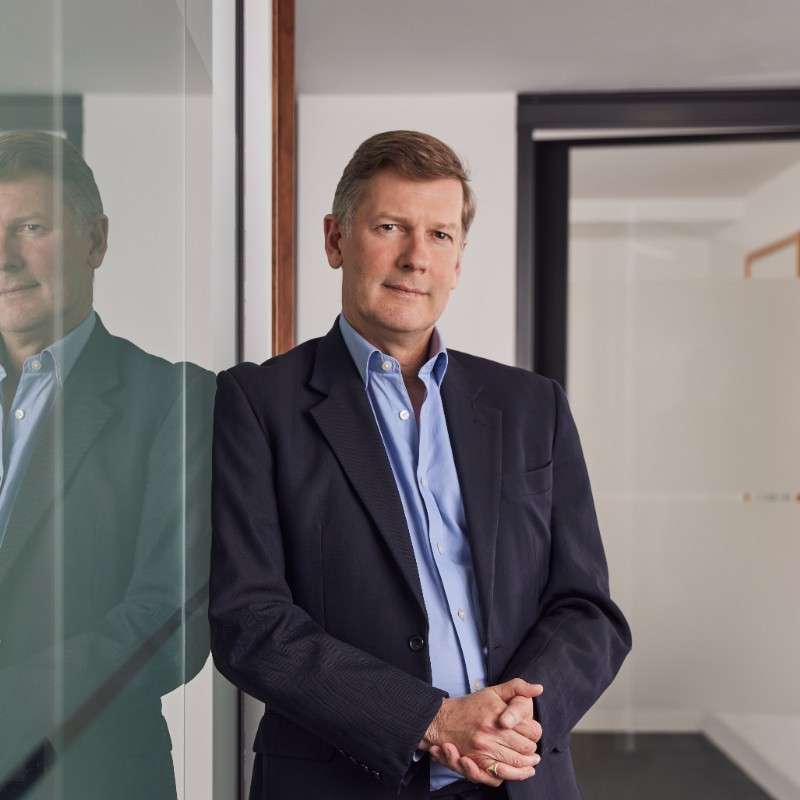 Ralph GraysonHost
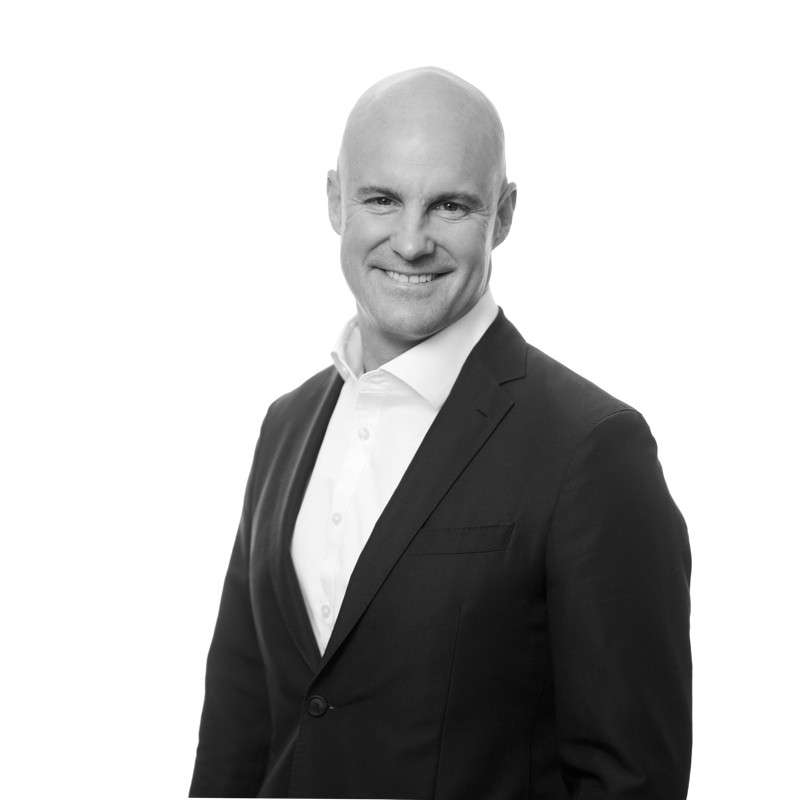 Andrew StraussGuest
 Matt Eastland-JonesProducer
 Story Ninety-FourProduction Company