
Quintin Price on Judgement, Independence and the Chair's Role
Sainty Hird & Partners·United Kingdom
Quintin Price, Chair of Oxford University Endowment Management and former BlackRock executive, discusses how non-executive directors add value: serving owners, chairing by speaking last, keeping independence within a board "choir", and choosing the right boards.
Listen on
Now playing
Quintin Price on Judgement, Independence and the Chair's Role
Episode 47 · 20 Oct 2026
Featured
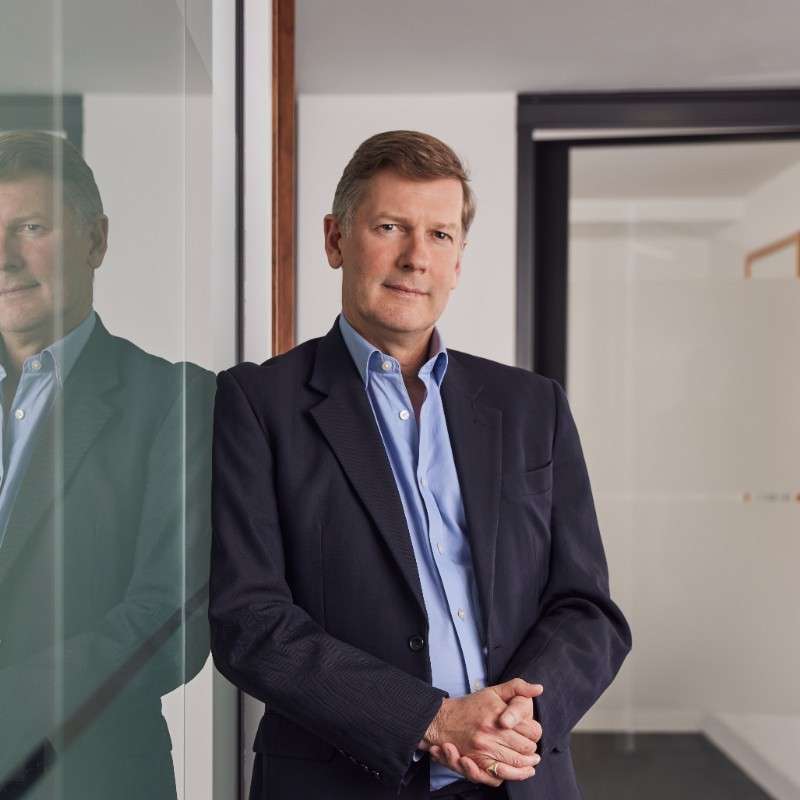 Ralph GraysonHost
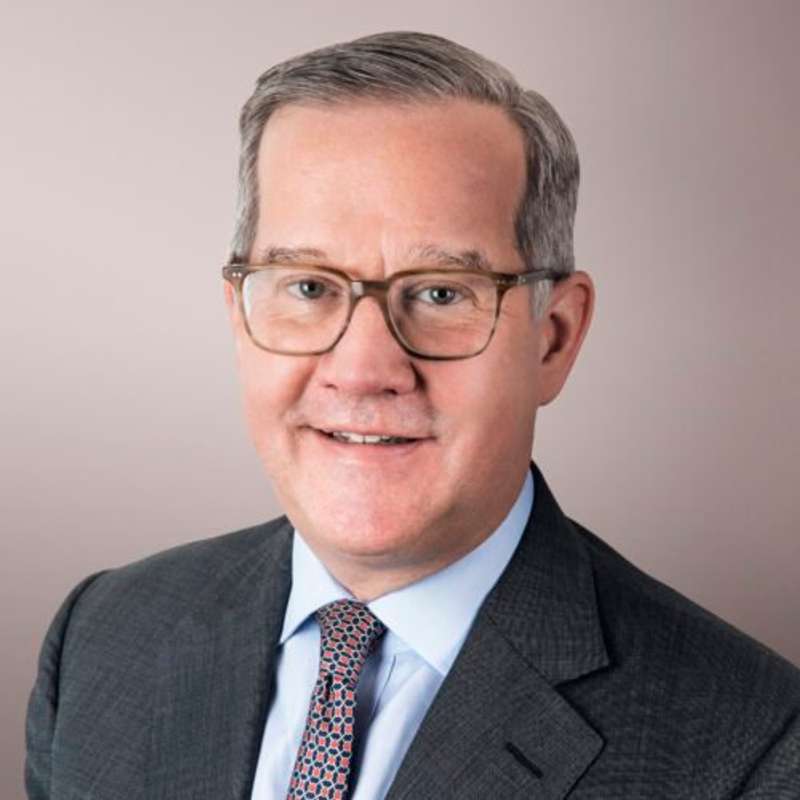 Quintin PriceGuest
Production
 Matt Eastland-JonesProducer
 Story Ninety-FourProduction Company
Show notes
What changes when a seasoned executive joins a board and must influence decisions without executive authority?
In this episode of The Boardroom Path, host Ralph Grayson speaks with Quintin Price, Chair of Oxford University Endowment Management and formerly of BlackRock, about what makes a non-executive director useful once they reach the table. Quintin draws on board roles at a listed investment trust, a grant-making charity, a US start-up and a university endowment. He explains why the board exists to represent the owners, why a chair should speak last, and why the chair can change the player but should never run onto the pitch.
On 12 October, the FCA published a review finding that effective governance relies on constructive challenge and clear decision-making, according to Norton Rose Fulbright's summary. Provision 29 of the UK Corporate Governance Code now asks listed boards to show the basis for their view on material controls, as Board Intelligence explains.
Quintin's model is a board that works like a choir, with different voices and shared operating principles. His advice to aspiring NEDs is to be at peace with who they are and find the board that needs their voice.
- - Welcome to The Boardroom Path
- - A Career Built on Learning
- - How an Analyst Learned to Read Boards
- - Agency Theory and Whom the Board Serves
- - Standing on Principle
- - Purpose, Profit and the Licence to Operate
- - ESG and When to Take a Position
- - Judgement and the Board as a Choir
- - Why the Chair Should Speak Last
- - The Chair, the CEO and the Football Pitch
- - Choosing the Right Boards
- - Credibility, References and Being Yourself
Quintin Price: Quintin Price is Chair of Oxford University Endowment Management (OUem), where the board announced Caroline Serdarevic as its next Chief Executive in October 2026. He is Senior Independent Director of F&C Investment Trust, which he joined in March 2020, a trustee of the Leverhulme Trust, and a non-executive director of Aperture Investors in New York. He also sits on the investment committee of the Royal Shakespeare Company. From 2005 to 2015 he was at BlackRock as Global Head of Alpha Strategies and a member of the Global Executive Committee, and he later served as Global Head of Asset Management at Deutsche Bank. Earlier roles include Global Co-Chief Investment Officer at Gartmore and Global Head of Research at Putnam Investments and James Capel. His career across equity research, investment management and boards with very different owners gives him a practical view of how purpose and ownership shape good governance.
Ralph Grayson: Ralph Grayson is a Partner in the Board Practice at Sainty Hird & Partners, bringing extensive experience in board-level recruitment, assessment, and advisory services. With a deep understanding of the corporate governance landscape, Ralph specialises in guiding senior executives as they transition into impactful boardroom careers. His thoughtful approach, combined with a passion for developing effective leaders, enables him to facilitate insightful conversations that equip aspiring and newly appointed Non-Executive Directors with the tools they need to succeed. Through The Boardroom Path, Ralph leverages his extensive professional network and expertise to empower listeners on their journey into the boardroom.
Episode Insights:
- The board exists to represent the owners of the business, and personal agendas, egos and social factors can pull it away from that mission.
- A good chair draws out every director's view and summarises it before adding their own, rather than steering the discussion from the start.
- Independence of mind works when directors share core operating principles, which lets them be hard on the issues and soft on the people.
- Purpose and profit can reinforce each other, but a company that gives away too much of its return risks losing its licence to operate.
- Executive success earns a seat at the table, yet NEDs must stay off the pitch and influence executives through questions rather than instructions.
Action Points:
- Speak last as chair: Go round the table and ask each director by name whether they have anything to add. Summarise what you have heard before offering your own perspective. If someone has already made your point, say you agree and move on.
- Test the fit before you accept: Ask what the board needs, how it operates and whether its culture matches your own principles. Do not take the first role offered simply to gain board experience. Talk to people who have served on boards, since they can help you spot a poor fit early.
- Ask rather than tell: When advising executives, frame your input as questions such as "Have you thought about this?" A Socratic approach is less threatening, so executives are more likely to listen. When they get something right, tell them, because leading as a CEO can be lonely.
- Check your record of challenge: Provision 29 of the UK Corporate Governance Code applies to financial years beginning on or after 1 January 2026 and asks listed boards to declare whether their material controls worked, as Board Intelligence sets out. Ask whether your minutes record the questions directors asked and the answers they received. That record is the evidence of how the board reached its view.
- Learn from poor appointments: If a board role does not work out, ask what you missed and why. Consider honestly whether ego, vanity or naivety shaped your decision to join. Use the answers to set clearer criteria for your next appointment.
The Boardroom Path is the essential podcast for aspiring and newly appointed Non-Executive Directors (NEDs) navigating the journey from executive leadership to the boardroom. Hosted by Ralph Grayson, partner at Sainty Hird & Partners, each episode offers insightful conversations with industry leaders, seasoned board directors, and governance experts. Our guests share practical strategies, valuable perspectives, and actionable advice on how to effectively transition into board roles, maximise your impact, and build a rewarding NED career.
Subscribe now, and take your first confident step along The Boardroom Path. Learn more about Sainty Hird & Partners at saintyhird.com.
The Boardroom Path is produced by Story Ninety-Four in Oxford, UK.
Transcript
Quintin Price
You see things like a dominant CEO controlling the board, which should never happen. Equally, you see a dominant chairman controlling the CEO, which is not the role of the chair. The chair is to scrutinise their performance and a bit like a football manager to change the player if the player's not right, but not run onto the pitch and kick the ball.
Ralph Grayson
Welcome to The Boardroom Path by Sainty Hird & Partners. I'm your host, Ralph Grayson, a partner in the board practice. In this series, we'll offer practical steps and useful perspectives for aspiring and newly appointed NEDs. What changes when an executive who has spent much of his career making consequential decisions becomes a non-executive whose influence must be exercised without executive authority? And what, if anything, remains constant about good governance when the boardroom itself changes from a global investment institution to a listed investment trust, a privately owned business, or an organisation entrusted with preserving capital for future generations? Those questions sit at the heart of today's conversation with Quintin Price.
Quintin brings an unusually broad perspective to The Boardroom Path. Following a distinguished executive career in equity research and investment management, including senior global leadership responsibilities at BlackRock, he has built a varied portfolio of non-executive and advisory roles across organisations with markedly different ownership structures, purposes, time horizons, and stakeholder expectations. That matters because governance is frequently discussed as though it were a fixed collection of structures, processes, and principles. Yet boards do not operate in the abstract. Their effectiveness depends on context, who owns the organisation, whom it ultimately serves, what responsibility it carries, and what's at stake when judgement proves wrong.
Quintin's experience allows us to explore not only what good governance looks like, but how it must be interpreted and applied in different circumstances. So how does a director preserve independence of mind whilst remaining part of a collective? How do you challenge without drifting into executive territory? How do you know when to speak, when to persist, and when the most valuable contribution may be to just listen? And how does a board make sound decisions when the evidence is incomplete, the interests of stakeholders diverge, and the consequences may only become apparent years later?
So for listeners considering their first non-executive appointment, Quintin's journey is particularly relevant. Executive success may earn someone a place at the boardroom table, but it doesn't automatically teach them how to contribute once they arrive. That transition requires a different understanding of authority, of influence, of accountability and judgement, and often demands that experienced leaders unlearn some of the instincts that previously made them successful.
This is not intended to be a conversation offering formulaic answers or polished prescriptions. It's an opportunity to examine the lived reality of boardroom leadership. What Quintin has learned, what has surprised him, what he may have changed his mind about and what he now believes genuinely makes a director useful.
Quintin, welcome to The Boardroom Path.
Quintin Price
Thank you, Ralph. I'm delighted to be here and very, very touched.
Ralph Grayson
Let's just go through that journey and maybe let's start without being too formulaic on the CV, your route through various executive roles and then into the boardroom. Was it a deliberate path? Was it a mixture of circumstance and opportunity? And what was your guiding principle when you thought about the different career choices that you've looked at?
Quintin Price
I think there's a temptation for all of us when we look back over sort of 40 odd years of career to have a sort of post-hoc rationalisation that there was some sort of grand plan and I had a plan, but my plan was not in a sense that sort of I want to be prime minister, world king, chairman of the NatWest Bank or Chief Executive of Goldman. My plan was always that I wanted to be stimulated in what I did. It was really important to me to be engaged, inspired by what I did. And inspiration comes in different forms. And I think that implicit in that was I was always hungry for knowledge. I love learning. And so that was a very big component of a series of choices I made during my career where learning actually was a much bigger part of the decision than anything else and I can elaborate on that.
I wanted to enjoy what I did if at all possible, and I wanted to be able to contribute. So I always ask myself it's really important that this job offers me something and it's really important that I offer this job something and that was my plan so much as I had one, rather than I want to be world king or whatever it was that Boris Johnson wanted to be when he was 12.
Ralph Grayson
And your early career on the sell side and on the buy side, it's a question I've asked a number of senior City members. How did you think about governance and boards when you were thinking about the evaluation and the valuation of a company? Is that something board members should be conscious of?
Quintin Price
Yes, that's a really fascinating one. My early days in my career were in capital markets and then in derivatives and so obviously I wasn't spending a huge amount of time thinking about board, but when I moved into equity research, obviously the first thing you do is think about what is it that distinguishes one company from another and try and link that to something that will drive the share price up or down.
In many ways, I was very lucky because I took over as a media analyst from a very talented and very successful media analyst, Richard Dale, who'd gone off to start his own firm. My boss at the time, who was the number one rated media analyst, Neil Blackley, said to me, "Look, you're the new kid on the block. You may have been good at derivatives, but you don't know anything about media. So I'm going to give you the sort of small and rubbish companies and I'm going to give you the smaller clients, but there are three clients I don't get on with who are big and so why don't you see if you can crack those?"
And so I went to meet those three clients and I asked them, because I was the new kid on the block and I was very I suppose as the supplicant, I said to them, "Look, I understand you are very well served by other media analysts, so I don't want to waste your time, but I'd like to understand what you think you're not getting that I might be able to provide for you?" And two of them gave me fairly pat answers that were platitudes, but one of them, said to me, "Look, I am very well served. Essentially, I want you to call me when you think there's a 10 bagger, i.e. your stock's going to go up by 10 times, or it's going to halve, it's a torpedo and if it's neither of those three things, just don't call."
And actually, in many ways, that was the best advice I ever had because I immediately translated that back to my derivatives career and though, oh, normal distribution, this client wants the fat tails and so I then looked at businesses that were either distressed that might turn around or businesses that were riding high that might falter, and made my name making recommendations about those types of businesses, buying Burton and Next when they were both fallen angels, selling, various other companies, Ratners and others, when they were riding high.
That was fascinating because, of course, those are the points at which governance is all important. I didn't think about the board, per se, I thought about the chief executive, but it's a very short walk as you become more experienced to realise that the board in aggregate through the nominations committee appoints the chief executive, the chairman obviously has a very big influence on that, and so the board started to loom quite large. I was 29 when I became a media analyst, I was 34 when I joined the board of HSBC Investment Bank. So suddenly I was on a board and then I could experience firsthand, what governance was like. So that was illuminating for me.
Ralph Grayson
So we get through this three stages being an analyst, then running big investment departments, to then being on a board. How has your perspective on the role of a board changed? And if somebody's listening to this today thinking, "I don't really understand how I should be giving the right oversight as a board member relative to what the city might be thinking about." Is there a link there?
Quintin Price
Yes, there is a link because in the end, I think it's very important to go back to first principles. When I started to think about leadership, I tried to read every book I could get my hands on with respect to it, and that included things like Berle and Means, you know, work on the corporation, and then Jensen and Meckling. Adam Smith was the first person to talk about the conflict between the person running the business and the person owning the business, but Berle and Means were the first people to really articulate the agency principal problem, and then Jensen and Meckling were the first people to sort of if you will, categorise the agency-principal problem as a thing, as a sort of academic subject.
And you do have this conflict, right? You've got owners of companies who are the shareholders, and you've got the directors who are ostensibly representing the owners of the company and have to attend to their needs and obviously, also under the Companies Acts, Section 176, the needs of the company itself. And so I started to think about that sense of how do you approach this as both a leader of business, there were times when I was effectively a chief executive of business, and then there were times when I've been on the board or now chair of a business and you have very different roles.
And so, of course you know, in one sense, my knowledge has evolved and therefore my views have evolved with the knowledge. But what hasn't changed is that in the end, the board is there to represent the owners of the business and do the right thing on their behalf and often you see with boards that all sorts of other agendas get in the way, personal agendas, egos, social factors, et cetera and that disturbs them from their core mission, as I see it. You see things like a dominant CEO controlling the board, which should never happen. Equally, you see a dominant chairman controlling the CEO, which is not the role of the chair. The chair is to scrutinise their performance and a bit like a football manager to change the player if the player's not right, but not run onto the pitch and kick the ball.
So I think, again, it's really helpful to have a conceptual understanding of these things, certainly for me and understand clearly where you think these roles should be.
Ralph Grayson
So what surprised you most when you found yourself in the boardroom for the first time? And in that transition from executive to non-executive, was there anything you had to force yourself to unlearn?
Quintin Price
I was very lucky because first of all, I served on boards, captive boards but boards, HSBC, BlackRock, et cetera when I was a full-time executive, and so although those boards were 100% owned by the company I worked for, you still had a regulatory responsibility, you still had a commercial responsibility under the Companies Act, and therefore there were times when you would have to do things that your line manager may not really appreciate because it's not convenient.
Those are quite crunchy times. You'll remember, I stood on principle because I felt that I was being asked to work for somebody, in one of the firms I worked in, who I felt did not have integrity and as it turned out, many years after I'd left, that was decisively proven by the individual being dismissed for gross misconduct.
But there are times when you have to stand up for your principles and accept the consequences of that and if you don't want to do that, don't be on a board. But it's tough. I mean, it's tough. I remember driving home the day I left and I had a one-year-old and a two-year-old and it wasn't part of my life's plan. But on the other hand, I've never regretted it because I knew that I had to do the right thing.
Ralph Grayson
So that moral north star remains consistent wherever you are and however that is contextual. How does that change depending on the nature of the board you sit on? You sit on a variety of different boards, investment trusts, charitable sector, can you categorise the way maybe you put one hat on or take one off depending on the nature of the board you're sitting on?
Quintin Price
I will do, but if I may, I'd like to take a step back, because I don't want to sound sanctimonious talking about morality. I think there's an incredibly close connection between moral principles and good commercial practice. And so, whether or not we ever exercise the moral principle gene it just is an unbelievably close cousin of really good commercial practice. You only have to read Jamie Dimon's letter to shareholders, which everybody should read every year to witness an exposition about how he positions JP Morgan not only as an outstanding commercial enterprise, but also as a pillar of the communities in which it serves. But also on top of that, in ways which go to profit JP Morgan whilst also serving communities.
So JP Morgan's involvement in Detroit and then in Illinois more widely is something which has brought JP Morgan enhanced profitability because they dominate the sector in that state now, from what I understand. But they've also put more than $500 million into Detroit in rebuilding bits of the bombed out city and so on and so forth. But consequently, they then lend money for mortgages and auto loans, et cetera, to the people who move into the regenerated city and make money out of that. So I think there's a sort of positive loop there and we can happily leave morality to one side, even if that's something that privately appeals to me.
To answer your question more directly, how does that then translate itself into different bodies with different missions? Well, I think in the end, as a director of anybody, whether it's a non-profit, whether it's an endowment, whether it's a commercial enterprise you have to understand, clearly in your head, what the mission and purpose of that business is and the one thing that companies can't do, and I'll give you an example of this, is they can't afford to lose their licence to operate or they cease to be.
I remember being asked by a very large UK board to go and speak to them about combining purpose with profit. And this board was a bank, well known high street bank, and they posed the question to me at the board should we be banking the unbankable? And what they meant by that is there are 30% of people in many of the Western world countries, that are not seen as a good credit risk, and therefore they can't get a bank account. And is that fair to them? And should they therefore assign some sort of level of profitability or whatever to, in a sense, invest without a return in helping the unbankable get bank accounts, which I think is a very laudable aim.
The question, as a board member, you have to ask yourself is, is that something that your shareholders want you to do? Shareholders have some tolerance, and we see it evidenced by all sorts of charitable contributions for some service in the community. Most big corporations make some contribution. But my advice to the board was, "Look, if you know you're not going to make a return on this, what you cannot do, because you will cease to operate, is if you do too much of this, you will lose your licence to operate. You'll get taken over because your returns won't be good enough to allow shareholders to have confidence in you in leading their organisation. So you just have to be very clear about what sort of good works you're doing and what the aim of those good works are." And if you look, and I pointed them to Morgan's work in Detroit, and I said, "Look there, there seems to be a positive loop. Which is this huge regeneration, the sort of thing that you're interested in, which is very laudable, but also in the end, the very people this is helping are then coming back to JP Morgan and banking with them, and that's helpful to JP Morgan."
I see absolutely no conflict in that. That feels to me to be very enlightened capitalism. And so again, it goes back to what is the purpose of the organisation? And different organisations have different purposes. Some are not-for-profit. I sit on the investment committee, not the board, of the Royal Shakespeare Company and that is a not-for-profit. It's a charity. It seeks to, obviously, promulgate cultural awareness through the education it offers. Not only through the plays that it mounts, but also through all sorts of outreach in schools and so on and so forth. That's part of its mission. That's a wonderful thing and I think we should all be very grateful for that. But in the end, again, like every organisation, it's gotta make sure that its outgoings are matched by its incomings.
Ralph Grayson
I think this is a really interesting area to explore a little bit if I can go slightly off piste. So you talked about Jamie Dimon, the other Larry's letters BlackRock, an old employer of yours. I think it's something a lot of board members struggle with is when and where to take a position and Larry Fink has been quite vocal, particularly on the back of COVID and George Floyd in making some ESG-related statements, which is all virtuous, if I can give that label.
And then was perceived rightly or wrongly to have backtracked on that with a new president with litigious lawyers saying that investing in ESG funds had been to the detriment of investment performance. Without getting too much caught up in that particular instance, have you developed a better sense of what's the right time to speak, when to persist, and when to remain silent?
Quintin Price
Well, I'd like to think I have, but you'd have to ask my colleagues whether that's true. Let's take that example, because I think it's a very good one. Leaving the personalities out of it, the very interesting thing about what occurred over a number of years with Larry's letters and the subsequent threat of litigation is something that I find very admirable about the United States, which is they still think that it's very important to have a clear political philosophy and so you've got people in the States who very much subscribe to the Milton Friedman dictum, the one and only rule of purpose of business is to enhance the returns for shareholders within the rules of the game, and what Friedman meant by within the rules of the game, he was explicit about it.
He said, "That is without resorting to deception or fraud," I think was something like the phrase. So the point that Friedman was making actually was something where in the crony capitalism of the 70s when he was writing this, there were chief executives whose companies paid for them to have golf club memberships and so on and so forth and that felt manifestly wrong and Friedman was essentially saying, "That is an agency-principal problem. The company should exist for the benefit of shareholders, not for the benefit of the chief executive's golf handicap. So let's get that stuff off the P&L." That to me feels like a laudable aim.
So then you have to ask yourself, where do I personally, where does this board decide to draw that line? Do we make any charitable contributions? And again, I've worked in firms where there was a very clear political philosophy that the firm didn't make charitable contributions because they felt that was in the hands of the individuals who were working there. They were paid and they could decide whether they wished to donate their own money to private causes. There are other firms I've worked in when I was a partner at Putnam where you got an allocation to contribute to charity and when I say you've got a contribution, you were asked every year, "Would you like a percentage of your earnings to be dedicated to charitable giving?" So it was your earnings, but they were obviously derived from the earnings of the firm. But the firm didn't pay for them. The partners of the firm, out of their paid income, decided that they would make contributions.
I quite liked that distinction because technically, you could say, "I don't want to make this because I'm actually supporting another cause or building a school in El Salvador" or whatever was your thing. One of my colleagues at BlackRock was a massive sponsor of charter schools, like academies in the UK, and that was his thing and he's done enormous amounts of work admirably in that area. And so if he'd been at Putnam at the time, they may have said, "Would you like to contribute to the local Boston charities?" He'd probably have said, "No, because I'm supporting these schools in Atlanta." That would've been fine. But at least it was his call and his decision.
Is it right for any old company to say, "Well, we're going to donate 100 million a year." Where do you draw the line? Is it three million? Is it five million? And I think most companies have a very common sense approach, which is we're members of the community. We should help the communities in which we operate up to a point without losing our licence to operate and I think that degree of involvement is appropriate personally, but there are other people that have a more purist view.
What happened with Larry and ESG was a bunch of essentially Republican lawyers, the red state lawyers saying, "Look, we do not think that it's the mandate or mission of a company to determine whether they only use suppliers who don't have products made via, coal-fired power stations or whatever it is. That is something that's determined ultimately by the customer and let the customers make that choice. Don't make it for them." And so again, there was a very strong, clear political philosophy on one side, which is that's an individual choice, very libertarian, if you will. And there's another one, which was, "Look, we are stewards and custodians of a lot of people's money who don't spend the whole time engaged in this. We do. And therefore we should be taking the high road on this and trying to help the world address its climate problem." I think they're both defensible propositions. They're both different. They disagreed, and one of them had a much, much more aggressive threat of litigation than the other.
So I think, as a consequence of that, that threat of litigation was highly effective in turning down some of the more radical nostrums that were proposed by some of the big asset management firms in terms of what companies should do in order to become more ESG friendly. Have we reached the right balance? That's an individual judgement
Ralph Grayson
Judgment's the key word. You segued beautifully into what I wanted to talk about next, which is the role of judgement in the boardroom. Peter Drucker talks about the role of executive management about doing business well, and he talks about the role of the board about doing business right. Big distinction there. How does the role of judgement influence what you do and say and act in a boardroom? And how should somebody listening to this think about how that boardroom behaviour reflects good judgement?
Quintin Price
Yeah, that is, in a way, the axiomatic question for every director, either non-exec or exec. I suppose the way I've evolved my thinking is every board is like a choir, and this has multiple applications as a metaphor, but to your point, I've sat on boards where I am the discordant voice because my own view of what is appropriate is at odds with the majority of people on that board. That doesn't stop me believing that my view is appropriate. I found many other boards where all of the board members would share a very similar view of what's commercially appropriate, ethically appropriate, and so on and so forth. So I don't think I'm in any sense a sort of outlier or some sort of weird purist.
But where you find yourself in a choir, it's fine to have a descant. It's fine to have trebles and baritones. Different people bring different voices to that board. That's as it should be. You shouldn't try and bend yourself out of shape. You need to find your own voice and then find the choir that needs that voice. What you shouldn't do is waste any time when you find you're the discordant voice in a different choir and I've found that at times. I've sat on three boards where I realised fairly quickly that the way that board operated was not the way, philosophically, I felt was appropriate and it was quite clear in those cases I was not going to be able to convince the majority of the board members of that case and so therefore, I tried as best I could to gracefully withdraw from those so that I didn't waste their time or my time and find a choir, another board, where my voice actually fitted in with what we were trying to sing.
Ralph Grayson
What I'd like to follow up on briefly on that is how you distinguish genuine independence of mind from inappropriate contrarianism?
Quintin Price
Let's use the metaphor of a board, again, being a choir because a descant is somebody who is singing at a higher register than the rest of the board. You can and should on boards have different voices. You should have different personalities. You should have people with different perspectives. But what you also need, and it's not a paradox and it's not a contradiction, is you need a sort of core understanding of what, in a sense, the tolerable operating principles of that board are. In a sense, a very good board will allow people to voice independent thoughts, if you will to use a sort of Hogan phrase, disruptive thoughts, where you're trying to shock people into thinking in a different way and that's an entirely appropriate thing. You don't want a board of only disruptors, but it's perfectly fine to have a board of people, some of whom occasionally seek to disrupt the thinking in order to move it on. Otherwise, you won't get progress.
So sometimes that can be uncomfortable, but that's fine. You're not paid to be comfortable. You're paid to get to the right answer and, as I think most of us discover in our careers, there are no shortcuts to that. You just have to do the work and sometimes doing the work involves discomfort. Discomfort for you, discomfort for other people. But if you're focused on the fact that you're trying to get to the right answer, you tend to be harder on the issues and softer on the people. It becomes far less personal. Sometimes you can't help it becoming personal because other people misunderstand that. But what you want to do is work on a board where people are aware of what they're trying to get to, and therefore happy to have that, hard on the issue, soft on the people, type of conversation without letting it become ad hominem.
Ralph Grayson
That brings us perfectly into the role and responsibilities of the chair. So keeping your orchestra analogy going, thinking about the chair as the conductor. So the chair shouldn't be the first violinist, and the chair needs to bring out the best in the orchestra rather than let one particular instrument have primacy. So how do you think about the role of the chair? You've, as an analyst and investor, had a lot of chairs and CEOs. So let's start with that chair being the orchestra leader of the board.
Quintin Price
Yes, okay. So for me, a very early epiphany, probably 25 years ago, at one of the asset management firms I worked on, we had a very, very, talented chief operating officer. And I went to a meeting with him, my first meeting with him after I joined the firm, and the way he chaired that meeting was different to anything I'd ever seen in my whole life.
We used to joke when I was at Putnam that sort of board meetings were a bit like a Thanksgiving dinner where everybody was just talking at each other and I remember we had an offsite, once where Putnam was a very, very, should we call it, active culture. People had strong views. They didn't mind voicing them. It was part of the texture of the business and I remember the guy who was invigilating the offsite, facilitating the offsite saying, "Could we just have one person talking at a time, please?" And we somehow, between us, the sort of 20 people in the room managed that. But it was very difficult for a lot of people and then he stopped us again quite soon afterwards and he said, "Look, it's one thing to stop talking, but you're meant to be listening to each other rather than reloading." And I never forgot that. I thought that's such a good phrase and that taught me all sorts of useful things, mainly about self-defense. But it wasn't always efficient when people are just talking at each other.
So I go into this room with the COO, and his name is Chris, and he solicited everybody's view. But I've always liked the Arthurian legend. I've always liked round tables because they're very egalitarian. Nobody's at the end of it. And he went round this room, which was a round table, and he asked everybody their view, and then he summarised it, and then he said, "And by the way, this is my view."
When I started at the Leverhulme Trust, Niall FitzGerald was the chair of the trust, former CEO of Unilever. Now had a very similar operating style, would basically draw out from everybody their view, would summarise, and then if there was something else to say, he would say, "This is what I think." I've worked with other chairs who are only too happy to go first, which I think is wholly inappropriate because as chair, you are chair. You are basically bringing together the views of the other people on the board, and you should sublimate your own views until everybody else has spoken. And so I now try to go round the room very deliberately asking every single person, catching their eye and asking them, calling their name, "Do you have anything to add? Do you have anything to add?" If they haven't said anything. Obviously, some people are appropriately happy to speak up. And once I have done that, if I have anything extra to say, I say, "Look, my perspective is X." And I try and adhere to that as much as I can, and hopefully I'm reasonably competent at that.
But I do think it's very different being a chair. It's not about you making an individual contribution and trying to influence your members. It's about drawing out of the people around the table who are your fellow board members, all the wisdom that they possess and then summarising it and adding your sixpence worth if indeed it hasn't already been covered. There's no need to say anything if somebody else has said it. You can just say, "Look, I agree with John," or, "Marie said this," and just let it go. So that was a huge epiphany for me about 25 years ago, and I've never forgotten it.
Ralph Grayson
And the balance between the chair and the CEO, it seems to me that chairs have become ever more public facing and high profile. BP is a classic example of that, is that theatre has played out over the last couple of years. How does the chair make sure that the right checks and balances there of the CEO being seen to lead, but also to use the old adage, "I'll back you till I sack you."
Quintin Price
Yes. Again, it's a balance. It's not a perfect analogy, but as the chair, you are the football manager and the CEO is the captain of the team on the pitch and the captain can shout at his players and do this, that, and the other, and the manager can offer advice and if somebody on the team is failing or the chief executive is failing, ultimately, they can change the player. That is their job and responsibility to do that. It seems to me a bit like losing your temper that that should be your last resort, if at all possible. You should exercise every single other available option to communicate concerns, offer constructive input, get people coaching, and so on and so forth.
But there are times when that has to stop and a change needs to be made and again, without wishing to personalise it to BP or any other company, there are clearly times when the board decides that it wants a more interventionist or more activist chair, a more, if you will, executive chair to shake things up or whatever. Sometimes that is appropriate. I mean, a good example of that would be Marks and Spencer going and finding Archie Norman as chairman. His sort of symbiotic relationship with Stuart Machin appears to be very good indeed and Archie brings something to that board that others don't possess, both in expertise and wisdom and Stuart is obviously a very, very talented chief executive who both benefits from Archie's perspective, but also gets enough oxygen to do his own thing and Archie's very good about that too. So that's a very good example of where those two work in harmony.
You know, I remember when I was sort of making, or thinking of making, the switch to a plural life from a singular life, and Ian Davis used to be global managing partner at McKinsey said something to me which was very helpful at the time. He said, "Before you make this decision, you've got to decide, because you can't go back on it, whether you want to do something or some things." And that was super helpful because when you're doing some things, i.e. you become a non-executive with a portfolio, you are not on the pitch anymore. You should never stray onto the pitch. Your job is to be on the sidelines helping the players do a job that's better, because you were once a player. You understand what that's like, that's why you're on the board. But you're not a player, so don't be one and don't interfere with the players by running onto the pitch. You can interfere with the players in extremis where they're not doing the right job and that helped me, in a sense, just frame it.
Ralph Grayson
That framing word is very interesting. I'd like to just explore the rhythm and cadence of the boardroom at the moment because we've now entered people labelling this VUCA environment, right? The goalposts have moved. A board may meet four, six, eight times a year. But the speed at which events are unfolding are now faster than that. Let's not go down the AI rabbit hole as well in terms of the velocity of that. But it seems to me the way boards collectively and individually need to think has fundamentally changed in so far as they're never going to have perfect information on which to make a judgement
Quintin Price
Correct.
Ralph Grayson
So how do you adapt to that in the boardroom?
Quintin Price
So, two things. There's an echo of your previous question in this. I think part of the reason you see more visible chairs is the competitive intensity of business, my phrase, which I think summarises what's happened most, has just gone vertical over the last, I would argue, 15 years. There were three people I took advice from before I started my plural career, Simon Robertson, Ian Davis, and the late Paul Myners, and they all said the same thing, which is, "You're going to get paid a lot less for being a non-exec than you are for being exec. So only do the stuff that really excites and interests you, because it will be a root canal experience if you go and do stuff that you think might be prestigious, but you really don't like." And it was very helpful at the time because having come out of BlackRock, there were a number of people who were dangling sort of big FTSE 100 board seats in front of me. I remember there were six or seven of them, almost all in financial services in one form or another, and I'd already decided I didn't want to sit on a bank board. I'd already decided I didn't want to sit on an insurance company board. I didn't want to spend my weekends reading about Solvency III. It's just not what floats my boat. Thankfully, it is for other people, but it isn't for me.
I wanted to be on boards where I could make a contribution in a practical way to helping the chief executive be successful and in a sense pay it back for the people who paid it forward to me. But I was very clear about my sort of boundaries there, which was, you're not doing their job for them. So you offer that advice hopefully when they want it and are most receptive to it. My favourite ever aphorism, I used it when I was an executive, I still use it today, is the art of diplomacy is letting other people have your way. And what I mean by that, I think what's meant by the phrase is, if you adopt a sort of Socratic approach, it's amazing how if you don't threaten people, they will listen more. So just posit things with them, "Have you thought about this? Have you considered this? I wonder if this might work," because it's not threatening. You're not indicting them, you're not criticising them, you're not saying, "You did that wrong. I'd do it this way." That's not the way to go about it. So just be supportive and be constructive with them and when they do something well, tell them. It's lonely being an exec, especially a CEO.
So these days, with a competitive intensity where it is, I think the unity of the board, the sort of cohesion of the board, going back to the choir analogy, it's more important than ever. The role of the chair in creating the right sound is vital and your role, both as a board member, but especially as a chair, is to try and raise the level of functionality. How do you do that? You do it by recruiting the right team, and you do it by being absolutely clear what your mission and purpose is, both commercially and in taking care of the stakeholders who are essential to the wellbeing of the firm and therefore ultimately its owners. There's probably not enough attention to that in many boards because I think a lot of people haven't noticed how much the competitive intensity has gone up. One thing I love about working with American firms and Americans in general is they're very, very competitively intense. I like that.
Ralph Grayson
I'd love to bring that to life a little bit more. What's your critical path analysis for a description of the boards you've joined and the boards you've decided not to join?
Quintin Price
Well, I mean, the ones you decide not to join are really easy because it's just so blindingly obvious to you that they're not for you because they don't have the right people, construct, mission, imperative. You know already that the culture is deeply mediocre and they've no intention of changing it or whatever. So those are the easy ones. The harder ones, and I'm more than happy to admit, I've made three bad choices in the last 11 and a half years of joining boards, which I thought might work for various reasons and two of them were early mistakes that I learned from and you should always try and learn from your mistakes. And I thought, "Okay, well, why did I get that wrong?" and be appropriately self-critical. What did I miss? Why did I miss that? Could I have seen that ex ante? And if so, what was it that blinded me to it? Was it my ego? Was it some other form of vanity? Was it naivety?
You know, I think there's a group of people, and I would certainly count myself as one. I love business. I just think it's the most extraordinary fascinating thing. It propels us all. It creates our society. It fuels the taxes that pay for our schools and police and hospitals, et cetera. It fulfils a vital social purpose in giving people a purpose to go to work. There's plenty of psychological studies showing that people without a purpose suffer when they're deprived of it. I think business is a vital life force for all of us.
How that business is constructed, the RSC has a educative and entertaining mission, right? It seeks to educate us in its broadest manifestation, both in schools and, you know, through audiences. the Leverhulme Trust, which I'm a trustee and board member of we give grants to academic institutions, and so our aim there is to encourage excellence in academia. The Oxford Endowment, obviously, I would submit Oxford's one of the strongest brands in the world. It stands for a certain type of original excellence, an idiosyncratic brilliance that I find extraordinarily inspiring. And so if we at the endowment can augment the finances of not only the university, its constituent colleges, but also our non-collegiate clients, then we will have fulfilled our mission. Those are all pro bono roles. I spent a huge amount of time on them, and I absolutely love them.
Similarly, I sit on commercial boards, the F&C Investment Trust, which serves investors of limited means and always has done for 150 years. So individual savers who are just trying to save up for a caravan or to pay some of their children's university fees or whatever it is that they want to save for and if we can help them achieve those ends, that's a great thing. And the board there is very, very focused on how we can help the very talented fund manager who manages the money and his team to do the very best job that they can. But we're not trying to pull the trigger for him. All of those things are, to me, fascinating. But what you want to bring to that is a sense of the contribution you can make through the perspectives that you've generated in your career, and then you want to take away if you ever stop learning, I think you sort of give up.
I'm constantly educated by some of the really smart people who are either running the businesses whose board I sit on, or who are on the board with me. That is just so exciting, and I love that, and that makes it enjoyable. And so then when you're piling through 300 pages of regulatory submissions it somehow seems worth it to do that for the other bit, because, not all of board work is fun. That's all part of the bump and grind of being a board member or indeed an employee if you're not yet a board member and I think, if you have that unhealthy perspective, you'll just take it in your stride.
Ralph Grayson
Couple of things come across really powerfully to me there. One is don't compromise your authenticity and ensure you have the right fit in all senses of the word with the board that you would join. Now the dilemma for a lot of people who are listening to this who are maybe want to be first time board members is the old adage, "You can't be a NED until you've been a NED."
And I think the fundamental mistake a lot of those people make in my experience is to take the first board role that's offered and then they repent at their leisure or they become a failed board member because for whatever reason that fit doesn't work. So how would you advise wannabe board members to get the balance right there?
Quintin Price
Yeah, I think you're right. There is a temptation. I was certainly tempted to take the first couple of things that came along, and if I hadn't been advised by people who were a lot older and wiser than me, I probably would have, and that would have been an error. Thankfully, the likes of the Simon Robertson and Ian Davis' and Paul Myners have advised me against it, mainly, I think probably because they've made that error themselves in their time and they just wanted to save me the same painful process.
I did hold back. You know, you have to have a bit of faith in yourself that something will come along because you sort of know also that once you're on one board, other boards tend to turn up because you've ticked that box. But it's no different to breaking through as an actor or breaking through as a cricketer. There has to be a time when somebody gets injured and you're given a place on the team or the actor loses his voice and you're the understudy and you suddenly appear on stage. Everybody has to make those breakthroughs and if you just stay in the game, you will.
What advice would I have for people like that? Yes, you're right. You have to be you. The executive search world knows who we are. You have documented us, you have followed us, you've audited us, you've got endless comments on your software packages saying Quintin Price is this or Quintin Price is that from people who know me, have worked with me, and all of us have that stack of quotations about us already on your database by the time you approach us.
So if you've been a jerk all your life, then that will already be evident. If you haven't been a jerk all your life, then sooner or later, somebody's going to turn up and say, "Would you like to serve on this board?" I've never taken for granted ever anybody offering me a job. I'm always deeply touched when somebody asks me to do something, whether I want to do it or not. It doesn't mean I always do it, but I'm always deeply touched because I think you should never take that for granted. But what I always think is, why would they want to ask you? Well, why do any of us want to ask anyone? Because those are the people who are going to make a contribution. They're going to teach us things, make us think differently, challenge us, stretch us, but also they're just fun to be around, right?
When you're applying to Oxford and Cambridge, one of the pieces of advice you get is look, part of what the tutor who's interviewing you is looking for is, will this person be fun to teach, right? It's no different on a board. So bring your best self to that, make it fun and, you know, a bit of irreverence, a bit of humour. We're human. We like that, especially in Britain. You know, I serve on boards in other countries. I serve on one in Saudi Arabia where the sense of humour is just as strong, sense of irony is just as strong. I serve in one in the States where, again there's a lot of laughter on that board whilst really attending to the brass tacks. That was a startup. It's now seven or eight years old. It's reached escape velocity. It's got a sort of sustainable profitability. It's been the most incredible journey that's been a privilege to be part of. Hopefully, I've also made a contribution. I'm never off the phone to the CEO. We've become very, very good friends. He is a man who's insatiably curious about how to improve his business, so we have very productive conversations. But I learned so much from him and his fellow board members as well. If it's not always tap dancing to work, quite a lot of it is.
Ralph Grayson
I think the social skills as a prospective board member are so important and so misunderstood by so many people. Sage old chair I once said "Why do you recruit A rather than B? They both look very similar candidates on paper." And his answer was, "I'd rather sit next to A at the dinner the night before the boardroom meeting than the other candidate." And it was as simple as that.
Quintin Price
We're all human. We're all human.
Ralph Grayson
Let's try and shape that a little bit more into how somebody thinks about establishing their credibility as a board member without just relying on their past history title and executive career. How do you use that judgement on a prospective candidate?
Quintin Price
Again, when I've interviewed people for board roles, and we're interviewing a series of people for the same role and we'll choose one. The first thing I do is I use a structured interview process, so I ask every single one of them exactly the same questions in exactly the same order. So in a sense, I get as pure a form of comparison as I can. Secondly, there are going to be unconscious signals. You are going to like some people more than others. I don't think that the sole aim of a board is to have a tonne of fun. There's a particular individual I serve on one board I'm on who's clearly very on the spectrum. He's an extraordinarily clear thinker. Some people would see him as rude and abrupt. I'm very clear that he just has a particular personality type where he asks very direct questions because he's a truth seeker and he wants to get to the right answer. He is one of the most valuable board members of any of the boards I serve on and you just have to be curious about his motivations. His motivations are 100% honourable and at times he's a bit abrupt. But everyone on that board knows who he is and is understood that he's not the guy who's going to crack the joke, right? And he therefore in the choir may be the bass. That's fine because there's a treble who's going to crack the joke. And that's fine too.
We have to value people for the individual contributions that they bring. Not all of them are going to be the life and soul of the party, or indeed should be, or you end up at the Thanksgiving dinner. You have to have that mix. You should relish and enjoy that mix and so when you're looking to replace a board member, what is it that the one rotating off brought to that board? Was it a forensic understanding of the accounts that you're trying to replace? Was it something else that was very unique to them? Will you feel acutely the absence of that when that person's left? And therefore, are you actually trying to replace that specific attribute? Or when that person rotates, are you actually trying to replace them with somebody with a different set of skills that you already lack, and in fact, you've now got the opportunity to replenish? And as long as you are very deliberate and clear about what you're trying to do, then I think you're going to be close to the right track most of the time.
But the other thing is, and you will know this better than anybody because you're obsessive about it too. When I was interviewed by Putnam, I remember the CIO who recruited me saying, "We've taken 14 references on you." And I remember thinking, "Wow, I thought people took two or three, and we've just recruited a new chief executive of the Oxford Endowment." And I took those references personally and one of your colleagues at this firm took another whole set of references on that candidate, so that between us, we had over 10 references on someone. We had a really good picture of the individual we were hiring. As a chair, when you're making that determination, you want a really good picture because it's on you to hire the right candidate and you can't always guarantee it, but you can certainly guarantee that you've done absolutely everything you can to make sure that you've made the best possible choice available with the facts that you can ascertain.
Ralph Grayson
I think that's such a powerful observation around the role of referencing in board recruitment and that awareness of your reputation goes up the stairs and comes down the lift is never more true than when you're a candidate to be a board member.
You and I have known each other decades, too many to want to remember. But one of the things has always really impressed me around you, Quintin, is your self-awareness and understanding where perhaps some of your gaps are and using mentors, advisors, gurus, whatever to help you think about that and occasionally reading the odd book as well on the subject.
What's the one bit of advice that you didn't get that maybe you wished you'd been given before you entered the boardroom? And just as a conclusion, what single bit of advice would you offer somebody beginning their own boardroom path?
Quintin Price
Gosh, that's a really interesting question. By the time you're ready to join a board, you are already baked. You are who you are, and that doesn't mean that you can't evolve. It doesn't mean that you can't grow. But your personality is all of the psychological studies show that your brain is plastic until your early 30s. But by the time you're in your mid 30s, you're set. Just be at peace with who you are and understand that because it is a choir, if your voice is a bass, that's fine. If your voice is a treble, that's fine. There may be people you really admire who are different singers to you.
So I'll give you examples, right? Simon Robertson, very distinguished chairman of Rolls Royce and vice chairman or deputy chairman of HSBC and so on and so forth, partner of Goldman Sachs, chairman of Kleinwort. Simon's a very calm man who in a sense he glides over the board. It's very effortless, ostensibly. There's a lot of paddling underneath the surface as they always are. Paul Myners was a total live wire, right? But Paul knew who Paul was, and he wasn't going to change who Paul was because he could make a contribution in the right place by being Paul. And my advice to anybody is just be at peace with who you are.
I know that I am who I am. I'm not going to try and change because what I bring to a board is a particular type of energy, engagement hopefully a bit of lateral thinking. Other people will bring, a calm forensic, analysis. Put those in a choir, you get a beautiful sound. Have only Paul Myners, it's a problem. Have only Quintin Price's, it's a problem. Have only Simon Robertson's, it's a problem. So understand that you have a contribution to make to that choir and your voice is an individual voice, but, in the right combination, that can combine to make a beautiful sound. Don't try and change your voice, because you can't, and everybody will see you being inauthentic. Just be at peace with it and that way, I think you'll get to the places you should be faster than if you're bending yourself out of shape.
Ralph Grayson
Quintin, I expected this conversation to be one of the most thoughtful recordings I've ever done and it's absolutely for me lived up to the billing. I hope the listeners have enjoyed it and have found it as thought-provoking as I have. So thank you so much for your wisdom and experience.
Quintin Price
Real pleasure. Thank you.
Ralph Grayson
I hope that you've enjoyed listening to this podcast and have found it helpful when thinking about how to approach your own path to the boardroom. If you would like to push this a little bit further, Sainty Hird runs a bespoke one-to-one programme designed specifically to this end. For more information, please visit our website saintyhird.com, follow us on LinkedIn, and subscribe to the Boardroom Path to receive new episodes. Thank you for listening.
Presented by

Sainty Hird & Partners
Sainty Hird & Partners is a leading executive search, assessment and development firm. We are a trusted advisor to boards, executive teams and human resources leaders in private and public sectors across the UK, Europe and North America. Combining integrity, tenacity and imagination, Sainty Hird & Partners’ reputation is founded on consistently providing an exceptional service to its clients.
saintyhird.comQuintin Price on Judgement, Independence and the Chair's Role
The Boardroom Path