Ralph Grayson
Welcome to The Boardroom Path by Sainty Hird & Partners. I'm your host, Ralph Grayson, a partner in the board practice. In this series, we'll offer practical steps and useful perspectives for aspiring and newly appointed NEDs. Throughout its 30 year history, Sainty Hird has recruited senior board members across the City, Industry, the Public Sector and NGOs.
We're now also evaluating those boards, as well as coaching and mentoring those seeking to transition from an executive career into the boardroom. So we'll be speaking to some leading figures in the board advisory and NED world. Specifically, we'll seek their counsel about how and where to spend time and energy to make an effective transition into the boardroom. The goal is to equip recent and aspiring NEDs with tips, tactics and strategies to be most effective and build a successful career as a board director. In the process, we aim to help you to think more about who you are, how you operate and how you can make this work in the boardroom.
Today's guest brings a perspective that every boardroom increasingly needs, but not always has enough of. Simon French is the Chief Economist and Head of Research at Panmure Liberum and one of the UK's most respected economic commentators. His work sits right at the intersection of markets, policy, and corporate strategy. He's regularly featured in The Times and widely read across the City and beyond.
What makes Simon particularly relevant for this audience is that he doesn't just describe the economy, he interprets what it means for decision makers. Whether it's the structural challenges facing the UK through productivity, capital allocation, or energy, or the impact of global geopolitical shifts. His analysis goes directly to the questions boards are grappling with right now. In a world where capital is no longer cheap, where risk is more persistent than cyclical, and where growth is harder to find, the role of the board is changing and understanding the macro environment is no longer optional; it's fundamental.
So today we're going to explore what the rest of '26 might look like for the UK economy, how boards should be thinking about risk and investment, and what good decision making looks like in a much more constrained and uncertain world. Simon, welcome to the Boardroom Path.
Simon French
Ralph, thank you for that generous introduction. It's very kind.
Ralph Grayson
You've got a very interesting background in the public sector and in the private sector. Perhaps we could just put that into a bit of context then, in terms of the career and what's led you to Panmure and what the role of a Head of Research and Chief Economist really sets out to achieve in what's one of the leading corporate brokers in the UK? Therefore, a firm that spends most of its time advising boards.
Simon French
Yes, we're recording this at a decent time to reflect on those 24 years of being a professional economist because I've spent almost exactly 50% in the public sector and 50% in the private sector. The first 12 years doing economic analysis, economic advice for ministers at DWP, the Cabinet Office, the Treasury, and then in 2014 it came to what was then Panmure Gordon, and now Panmure Liberum, initially as a UK Economist and Chief Economist and more laterally and during the merger process with Liberum to Head of Research.
And to the second part of your question how does a Head of Research, the advisory function of an economist work with our corporate clients, a very extensive corporate list? It is an extension of what the single stock equity analysts do, which is obviously unearth trends, analyse, share the investment story. But actually mindset is a bridge between that and the advisory capacity on the investment bank, in terms of there are boards who don't retain specialist economic advice to navigate geopolitics, which we are going to come on to discuss, to navigate currency and inflation and interest rates risk, and the degree to which it is a shared service offered to our clients, I can be a conduit for some of those big macro pictures that affect the operating environment for almost every board dealing with, not just the UK economy, but the global economy.
Ralph Grayson
So when I put some notes together for this I found myself a bit of a hashtag moment. So I've written "boardroom decision making in an age of constraint, risk and capital". And I guess it raises a philosophical question in my mind as to whether boardroom members and executive management give enough thought to the macro environment as opposed to worrying about their P&L, their cash flow, and the microeconomics.
Simon French
I obviously have a vested interest in them taking a interest in the big picture and I guess I would suggest that there are businesses that operationally understand their market far better than anyone else. We work with a lot of founders who've lived and breathed, they've intellectually been the lineage by which their whole business has been built right up to mid and large cap businesses, for whom more different proposition. But all of them have been sideswiped by what some people have dubbed rightly, a series of poly crises; the global financial crisis, Brexit, the pandemic, the Ukraine war, the Iran War, the resurgence of inflation, the advent of AI.
These are big picture elements, which I think economic advice provides a roadmap for thinking how to navigate that, some of the sensitivity analysis on what scenarios you need to be preparing for and so while it isn't the be all and end all, I don't think any single or multi-line service company or goods producer needs to be dominated by macroeconomic thoughts. But certainly if they have over the last 15, 20 years relegated those out of their thinking, they've faced a steady succession of crises that don't look like they're going to go away.
Ralph Grayson
Interesting question in my mind, it's a theme that's coming up more, and perhaps probably offset against the environment we're in at the moment, is whether boards engage enough with asset managers and asset owners. I don't know whether you've got a view on that and where Panmure perhaps sits in the middle as a corporate finance advisor to boards to help them engage with investors in the City where we're now sitting.
Simon French
It's patchy, if truth be told. I think there are some boards that absolutely are engaging with their shareholder base. Both in an active management of their existing shareholder register, but then also searching out new pools of capital, which UK PLC has had to do and evolve as the capital markets have evolved, where capital sits, where the end investor wants to allocate. So some boards are very engaged with that. I think it is incumbent on corporate brokers to facilitate those discussions, make them profitable discussions, and I mean profitable in terms of the challenge that the shareholder will give to boards. But also profitable in terms of finding new pools of capital and actually lowering the cost of capital for UK companies.
One of the things, and I think you referenced it in your introduction, I've written a lot about the rationing of capital into the UK marketplace because of a series of very well-meaning pension reforms, capital market reforms. But it has led to a capital raising ecosystem that is very fragmented. There's quite a difference between the capital available to large mega cap companies and smaller companies. Therefore that engagement to understand what is your available pools of capital is really important. But I don't think it's universal in being good or being bad.
I would say if I've seen signs in the last few years of boards getting their confidence back, post Brexit a little bit, post the global financial crisis, post the pandemic to be more growth orientated rather than returning capital to shareholders and I think that is a mindset that Europe, and we're going to come onto the geopolitics, is going to have to embrace more and more a growth mindset, more comfortable with risk in a way that if they don't do that, they'll continue to have their lunch eaten for them by the United States and some of the developing Asian economies.
Ralph Grayson
And just wearing your Head of Company Research hat at Panmure Liberum and rather than your economist or strategist hat, is there any correlation between good governance and valuation? And in a world of increasing stewardship, are people looking at the quality, composition, skills on a board and looking at that in terms of its investible proposition?
Simon French
Yes but it's fast moving and trends on what shareholders are looking for, has changed beyond all recognition in the last four years. And you may say, well, four years is an odd timeline to pick Simon, but I would describe corporate governance under the banner of ESG as becoming quite evangelical ahead of the Ukraine war, but as an encouraging development, much more pragmatic, much more realistic, post the Ukraine war. What corporate governance looks like in a wartime economy, which in Europe we are now in, in an environment where our traditional strategic allies may not be our traditional strategic allies, has to be more pragmatic. And look, you mentioned, again, in a very generous introduction my columns in The Times. Some aged well, some aged badly, one of them that's aged better than most is back in 2021, I wrote about ESG would need to go through a second phase, a growing up phase because it had become very Animal Farm.Two legs bad, four legs good. That taxonomy of what good corporate governance looks like across those three line items had become very formulaic.
I see progress, but that requires, of course, boards to pivot as shareholders have quickly pivoted and investors have quickly pivoted towards, as I say, a much more nuanced approach to corporate governance.
Ralph Grayson
So let's get into it then. Where would you characterise the UK economic position at the end of the first quarter of 26?
Simon French
You and I are old enough to remember Monty Python, and some people listening to this may also be old enough to remember Monty Python. There was a character in Monty Python called The Black Knight. And the Black Knight going to battle, lost an arm, lost another arm, lost a leg, lost both legs. It was "but a flesh wound". That's the UK economy. It's but a flesh wound. It's bravely fighting on, but with many of its limbs severely impaired. The rationing of energy, the rationing of capital, the rationing of land, these are the reasons the UK economy's long-term sustainable growth, its productivity, has been much lower in the last two decades than it was in the preceding five.
Some people refer to that as a productivity puzzle. I don't think there's anything puzzling about it. It's hiding in plain sight. At the start of 2026 or through 2026, the UK economy is showing incredible resilience to some pretty self-inflicted wounds. Now that is both worthy of celebration, that resilience, that Black Knight type resilience should be celebrated. But it does leave a sense of frustration on what could be if some of those enablers of economic growth, to be able to compete as it is a global competition across many frames of reference, what it could do if it liberated the supply side of its economy across energy, across capital, across land. The UK economy could grow sustainably without generating additional inflation much faster than it is. So I speak to you with some frustration in my voice, but admiration for the resilience of UK PLC
Ralph Grayson
I am somebody also old enough to remember stagflation, which is maybe a word we'll come back to. Are boards aware of this? When you meet chairs and CEOs, is it changing strategy or are they in denial as to the flesh wounds?
Simon French
I'd be more charitable. I would say they're aware of it and they're frustrated at it, but it's not within their gift. A lot of this is public policy driven. I would say that because boards in the private sector have to respond to prices, have to respond to the operating environment, have a budget constraint, they respond very quickly to the changing environment.
Public policy cuts its cloth at a much slower pace, if you excuse me mixing my metaphors, but it does. It hasn't really adjusted to a different funding cost environment. And so boards that I speak to are frustrated with the quality of, let's be candid, political leadership. Which is not unique to the UK because there's challenges of political leadership across the world, which we don't necessarily need to go into country by country, jurisdiction by jurisdiction. But the UK's got some additional elements to it, which benchmark badly across energy. Some of the asymmetric impacts of Brexit, which boards, as I say, are frustrated at. They navigate it, but again, similarly to me with a macroeconomic lens on their frustration on what could be in terms of the operating environment. But they largely recognise that it's an exogenous factor that they can't directly impact.
Ralph Grayson
Which raise the question: is this structural now rather than cyclical?
Simon French
I think it is and the structural challenges UK PLC have to be a voice as they have been more recently over pushing back on some of the employment rights legislation. Some of what's started off as very virtuous ramp up in the National Living wage, but has probably overrun the North Sea Oil and Gas industry now being very vociferous and I think rightly so on energy pluralism. I think the corporate realm has a role to play. But I can understand, we've mentioned the B word once let's mention it again, Brexit, why on some pretty polarising issues down the political realm boards are nervous sometimes of taking a polarising position. But the longer it is deemed as structural and an impediment I don't think boards can afford to stay silent because if we were doing a postmortem on Brexit, we would say the perhaps UK PLC was a bit too sitting on the fence and then had to live with the ramifications of that. And by the way, I don't say this is a remoaner as some people dub me on social media, I say this is a pragmatic remainer who recognises there are advantages of Brexit. I don't think in aggregate they become a positive, but I can see some advantages of it. But that criticism level at UK PLC for not being more vocal, they then had to live with the legacy for the last decade.
Ralph Grayson
And a good thing about talking about Brexit, it means we're not talking about AI. So if boards have spent the last few years thinking about the implications of Brexit and we've now got a government that's increasingly talking about having closer ties to Europe, what do you think the likelihood of that is at the practical level and do boards need to think about that in terms of their strategy?
Simon French
That'll, again, be quite sector specific. But I would say that to be intellectually consistent, which I try and be, the idea of reducing frictions to trade with your, still your biggest trading partner, is a pro-growth measure. So closer alignment I am pretty comfortable with and there are definitely people who don't see it the same way. People indeed who voted remain, who now think that actually leaving enables the UK to pursue a different growth agenda. I've never thought that being a member, or not being a member, of the EU was the biggest driving force of the stagflationary environment we find ourselves in.
It's not the EU that told us to pass the Net Zero Act and tax our North Sea oil and gas assets and reduced permissioning licencing. It's not the EU that passed the Town Country Planning Act and led to, over the last 40 years, building houses at half the rate of the rest of the G7. It's not the EU that led to the removal of the incentives to allocate capital to your domestic market, which was as a result of the PEP turning into the ISA, the removal of the dividend tax credit, both for the retail and the institutional investor, reduced the incentives to allocate to your domestic market.
None of those that I think is my diagnosis of why the UK has got those structural growth problems change as a result of closer alignment or less close alignment with the EU. So I don't tie the economic performance in a holistic sense to that binary decision the government is grappling with.
Ralph Grayson
So there's no reallocation of emphasis or reprioritisation at board level, given the political talk around Europe?
Simon French
I don't think so. There is probably one sector where that is relevant and I think that's the defence industry. In areas of defence, it looks a pretty dangerous world out there, doesn't it? And whatever one concludes over the long-term ramifications of the conflict in the Middle East, the focus towards greater public spending and indeed private capital allocated to the defence industry feels to me like a structural shift that boards have to be aware of. Obviously those that are in the defence sector itself, but also defence tangential sectors, and that includes quite a range from consumer goods, through technology, through industry, industrials, even healthcare, pharmaceuticals. I mean, there's quite a lot of, what we describe as separate sectors of the marketplace, who are tangential, linked to those decisions on the allocation. If defence is one of the big legacies of all of this, I think boards need to be aware of that.
I think of real estate clients that we have who recognise that the land demand by, and the property demand, of the defence industry is going to structurally grow across Europe. The degree to which you pivot your strategy to support that feels to me like you are playing into structural growth. That feels like a pretty smart strategy to me.
Ralph Grayson
You've written and talked a lot about what I think you've called the "rationing of inputs". Let's just touch on that before we leave this bit.
Simon French
This, from the other side of the aisle, got a bit of the zeitgeist 18 months, two years ago with the publication of the book Abundance, which advocated, I think, for an abundance of factors of production, and it doesn't take a lot of economics to realise that if you have abundance supply for a constant level of demand, the price level will be low. So it should push down inflation and if you think of the cost of living squeeze, you want lower inflation, don't you? So I've approached it in my writing of saying, abundance would be great, but can we just stop rationing energy, land, capital? Because just to get to a neutral setting, let alone an abundant setting, would be progress on where we are at.
I don't pretend that these are easy political decisions. I get it. I'm not naive to this that repealing the Net Zero Act, repealing the Town and Planning Act. You know, you can see the current debate over mandation of UK pension fund allocation. They are politically very contentious. It requires careful navigation. Has an awful lot of the intellectual ballast, the research, the case made to the public, to industry as why these are necessary changes being made? No, and I think that's been one of the failings of the last 20 years, is some of the intellectual heft last really seen, I would argue again, maybe ageing myself here in the 1980s under Nigel Lawson, a proper aggressive supply side agenda to liberate and free up the economy. Obviously in the financial services sector, this culminated in the Big Bang. But it was across industry with the privatisation of nationalised industries, the liberating of market, the abolition of capital controls. All of this stuff, I think is required again, and the more interesting boards perhaps are really thinking about this, are saying, does it require a proper crisis for a reset moment?
And of course, students of economic history will perhaps look at the 1976 to 1979 period of a real crisis period, winter of discontent, time of bailout, very high inflation, that catalysed the movement away from Howard Wilson, Jim Callahan towards Margaret Thatcher, and embracing of a supply side agenda. Next general election, 2029, 50 years on from 1979 that has quite a nice calendar resonance of 50 year economic and political cycles. Would we need a crisis to get there or a further crisis to get there? Possibly. How do you navigate the near term pain to provide the conditions for the revival and the renewal that I think ultimately is necessary?
Ralph Grayson
Gosh, a number of questions spring to mind here. Let's try and pull that together. Does that make the UK more or less investible in a global context? What does that mean for a board's access to capital and capital markets generally, if it's thinking about an investment strategy? And how should boards be putting this on their agenda?
Simon French
It does make the UK more investible, but it has to be for patient capital. Look, by any metric, putting my equity research capital markets hat on, UK assets are keenly priced at valuation discounts, even accounting for earnings that are below there. This explains some of the public to private M&A. It explains some of the relisting to the United States. It's a real discount. So there's the valuation opportunity. If you can attract that capital, it needs a favourable political and macroeconomic backdrop. So it needs to be patient capital because you might have to get worse from here before it gets better.
But I, perhaps I'm revealing something about my own investment thought process which is I, quite like buying. I'm a value investor at heart. I quite like buying keenly priced assets and the UK looks like a keenly priced asset. In a world where, you know, the most richly priced assets are found Stateside and what is the long term implications geopolitically of Trumpism on that as a reliable place to park your capital? So at the margin question marks over that, which I think even the biggest sort of, maybe not the biggest Trump supporters, but even those who are sympathetic would say, look this is quite a tricky environment to want to allocate all of my pension assets to and UK pensioners are 50% allocated to dollar denominated assets. They've already got implicit exposure in most of their asset allocation decisions. That could pivot back if the UK could embrace some of the things that we've chatted about during this podcast.
So yes, I think it does present an opportunity. And if you can provide, if you can establish with the help of Pamure Liberum, of course, a supportive patient shareholder base then there is a real opportunity to say, not only have we got a good proposition at a product level as a business level, but we'll be in an operating environment that should attract capital. Because the diagnosis I think has been made on where the UK's got to improve things. We just need the politics to align, to embrace with those trade offs.
Ralph Grayson
And the core thesis of this government, of course, was that stability will attract capital, will attract investment, and will raise valuations. If we face May elections coming up, where now we may have five parties running neck and neck rather than two. If we've got a structural change in the voting pattern of this country, what does that mean for how boards think about political stability in this country?
Simon French
Well, certainly for boards of companies where their cost of capital is linked to the risk-free rate gilts, those with sterling risk Mays definitely a period to navigate. The May elections potentially triggering a leadership challenge. And I think we're already starting to see that actually priced in, certainly in gilts. I think while there's a focus at the moment on the impact of the Ukraine war on inflation, actually I think there's a second thing impacting gilts at the moment, which is that political risk, you talk about.
Boards are either battle weary or battle hardened. They've had the experience of the mini budget, they've had the experience of the pandemic, they've had the experience of, a series of crises. There's probably another one to navigate. How big that will be? Look, I think my economic forecasts are rather better than my political forecasts. But it feels like that promise that Labour gave on the back of a big majority of bringing stability is going to at least be challenged after the May elections. Even if it doesn't lead to a change at the top, it might lead to a change of direction from the same people at the top forced upon them. That's tricky. That is tricky for boards to navigate and understanding, as I say, particularly for those whose assets are linked to the risk free rate that may be quite volatile. We've seen guilts interest rate expectations move quite aggressively.
I still think the core thesis of what Labour campaigned on, stability does hold. I think you do see pockets of it. I'll just give you a little micro example. After the last November's budget, UK economic data was getting better between about November and the start of the Iranian war because actually you'd had a bit of a buildup of headroom from the chancellor. You'd had a deemphasising of that November budget going into the March spring statement and the whole thing was looking better, just on the basis of a few months of stability. It shows what is possible. But you need that to extend further. So the confidence builds the confidence to make long-term allocation decisions builds cause you go, it's not going to be just a few months, could be a few years, and I think most of us perhaps naively thought that the 2024 election would yield five years of that. It doesn't particularly look that way, but it doesn't mean that the core proposition of stability yielding its own dividend, what I've called the dullness dividend wasn't right. It's just we haven't had enough dullness, quite frankly, over that period.
I hope it comes. Politics is never the same. It's always in flux. If a government of any colour, or a party of any of those five can find a stable governing coalition, then embrace some of those economic trade-offs, there's a big opportunity set. I'm not sure private company boards are hugely in control of this, but they certainly should be looking at the scenarios of, as I will be doing in my research, the scenarios under different political leadership. What that means for various parts of the economy and how you navigate that.
Ralph Grayson
Just interested to explore a little bit more this link between geopolitics and risk. I've talked to a number of boards recently, which ostensibly think they're in a domestic market. But they've suddenly realised because of their supply chain or whatever it may be, Oh, bugger, we're actually global now.
So if we're entering this era of global fragmentation, be that around trade, energy, or supply chains. What does that mean? What are domestic boards missing? Or what are the geopolitical risks you would encourage them to be thinking about in a way that perhaps they didn't think they had to in the past?
Simon French
Recognise that the UK is largely a price taking economy. It is 3% of global GDP, it is 1% of global population. There may have been a period, there was a period, not many people are alive who saw it when the UK was a price maker in some markets. It's largely not now. So again, we have sometimes illusions of sovereignty, but in many economic variables, we don't really.
If you look at monetary policy interest rates, largely the UK because of the free floating currency, man marks the policy position of the Federal Reserve and the ECB. So anybody who thinks they're purely domestic, but they pay a sum plus interest on their capital, on their debt, is not really exposed purely to the Bank of England's domestic policy stance. Because that in essence, is a derivative of the international monetary policy stance. So it's heartening actually to hear that you're saying the boards are increasingly aware that when it comes to the operating environment, there really aren't many borders actually across prices that they're exposed to in their supply chain resilience within their supply chain.
They're pretty rare beasts, aren't they? They're those that are purely domestically orientated with no spillover effects.
Ralph Grayson
And without putting you too much on the spot, but in a world of permacrisis where every day seems to be completely different to the last day, how has that changed the way you think about your base case for inflation and interest rates? I mean, how do you start?
Simon French
Yeah, I think you have a heightened risk premium in there. Probably a heightened term premium in there as well. So while we're trying to encourage capital to be longer dated, more permanent, actually the more crises we have, the more we are in an environment of polycrisis would suggest investors want to be more short termist. They want to be able to have liquidity and options not lock this stuff away.
It's an interesting, perhaps segue into the attractions of private capital versus public capital. Private capital has been in the ascendancy, certainly in recent years. But there is a liquidity challenge that is posed by private assets and we are seeing that in real time actually with some of the shuttering of some of the private equity funds, private credit funds.
I think this speaks to the fact that the crisis environment you are in where flexibility, liquidity, optionality is a virtue, is not necessarily consistent with a large allocation into very illiquid asset classes, which you can't get out of. And we've seen plenty of examples of that and I suspect those will keep coming.
Ralph Grayson
So if liquidity and cost of capital is coming to the fore is the central thesis of being a public company and being a public company board member going out of the window?
Simon French
No, I would say quite the opposite. Which is part of public company boards growing and perhaps recovering their confidence, is extolling the virtues of being in the public realm actually, and embracing the optionality the public markets give you in terms of rapid execution of capital raises the optionality of equity versus debt financing in terms of changing your distributions.
Making the case for a capital structure that includes public equity, I think is something that in a permacrisis world where shareholders should crave optionality and liquidity, you can say actually that public equity provides just that.
Ralph Grayson
Interesting. So let's move on from cost of capital maybe to cost of labour and productivity and operating models. This is something you've written on and spoken about a lot. Just connect that labour market distortion to board strategy for me.
Simon French
Yeah, so I think you get fined if you do podcasts at the moment and don't talk about AI. So, we have to, don't we? Talk about AI at some juncture and I'm sure at every board strategy away day they are talking about AI. Why wouldn't you? But there are a couple of things going on and the impact on the labour market, your employment density, your workforce are obviously first order questions.
But I think in the UK context, what is driving what appears to be a quite significant softening of the labour market as a time of recording. Is it AI destroying starter jobs, actually not just starter jobs, but destroying jobs across the distribution? Or is it the combination of employer national insurance increases, national living wage increases, employee rights bill instruction and the legacy of auto enrollment? The on-costs of employing people have risen much, much faster than the productivity rate of that labour.
Now, it doesn't take a hugely sophisticated labour market model to conclude that if you're raising those on-costs of employment, employees are going to demand fewer employees. It's pretty standard Econ 101 and I think the Treasury, the Chancellor, have acknowledged they've rather overcooked this. And while AI will be playing a role and there's a respectful disagreement amongst economists in the City on how much of the weakness in the labour market at the moment is AI and how much of it is on-cost.
I sit in the on-cost story, that it's been the overlaying of the cost of employing people that is the bigger problem right now than AI. Now, that may not be the case in a few years time. But right now, I think that is one of the things that is impairing the flexibility and the clearing properties of the labour market.
I'll say this, that if, again, to go back to AI because we don't wanna get fined, do we, Ralph? You've got a situation where if AI is going to be hugely disrupted to where demand is for workers, and it will, if it's like any other technology revolution, it will destroy jobs over here and it'll create jobs over there. If you're going through one of those periods, and again, we're going to go back to the early 1980s and de-industrialisation in the UK. Workers that did well were the ones who could leave the manufacturing sector and join the services sector. They were flexible enough, they had the skills to be able to do it. You want a flexible labour market, geographically flexible, skills flexibility, in order to make that transition.
That's what will be at a premium for labour markets around the world at the moment. So the UK should be making its labour market more flexible. My criticism, my single biggest criticism of this government, it's difficult to always just to go for one. I'll go for one, which is they've made the UK economy substantially less flexible at just the moment where you would be wanting maximum flexibility.
Now for a board looking at their individual workforce there is a micro question. That's the macro policy question for government. The micro question is, if you are going to have a different pattern of where your demand is going to be and demand, and also where the economic value is generated by workers, you want to have a flexible resourcing model to adjust in fairly quick time to a disruptive force in the form of AI that none of us really know how it's going to evolve.
Everybody writes a substack or a blog post or does a sort of interview pretending they know. Let's be honest with each other here. We don't know. But flexibility feels like the one thing the boards want to have, should have, in order to be able to navigate this better than their competition.
Ralph Grayson
So if we put that into a board's risk model what does that mean for their response options around automation, offshoring, restructuring? How does that become an international dynamic, if at all?
Simon French
This is where you've got a conflation of two things. You've got the optionality of geography of your labour force being increasingly less relevant. And we had a little test of this, didn't we, during the COVID pandemic and the debate about, well, if workers don't come back to the office, they might find out that their jobs find themselves in India or other parts of the world because you haven't got your job, your geographical footprint, then what have you got? You just move it to a lower cost jurisdiction.
Well, AI feels like the globalisation, the tradability, of the services knowledge economy. Breaking down the geographical monopoly they used to have of office-based services workers. So I think it provides lots of optionality, AI, to do things where geography doesn't matter as much as it used to and therefore boards should absolutely embrace that. But that's probably the force suggesting more diversification of locality of their labour force. But equally at the same time, you talked about it, I think about five, 10 minutes ago, the fragmentation of the world order. Maybe this idea that you could do that without any frictions, perhaps the geopolitics is going in the opposite direction to the way AI is. AI will be breaking down those borders, those barriers. Geopolitics might be trying to reimpose some of those barriers. So it's navigating those two conflicting forces.
Ralph Grayson
So where does board judgement come into this in terms of the need for growth, cost of capital, short term inflation risk? How does a board think about balancing these? They all seem to be slightly at variance with each other.
Simon French
Geopolitics is going to cause a degree of de-globalisation and fragmentation, then all else being equal, that makes supply chains shorter and less efficient and therefore the level of price level growth inflation across the world economy will tend to go up. So on a structural perspective, you think of some of the introduction of China into the WTO, some of the reduction of tariffs, feels a long time ago doesn't it, in terms of various WTO trade rounds, that had a downward pressure on global inflation, that created the conditions for lower interest rates, lower inflation after the shocks of the seventies and eighties. If we're going in the opposite direction, fragmentation, it should push the level up.
But similarly, if AI is going to reduce some of the pricing power of companies, particularly services sector in certain jurisdictions, that should put downward pressure. So the risk of sounding like an economist whose going to sit on the fence. There are arguments in both directions for a higher interest rate, higher inflation environment, but also a countervailing downward impact.
If you had to absolutely push me, I would say that I think the disinflationary or potentially even outright deflationary aspect will win out. Not in the straight line, but will win out. Because this is a enabler of much reduced geographical monopolies, which are rent extractive and therefore increase the price level.
Ralph Grayson
I always try and have a practical takeaway for listeners on this thing, which may be challenging for economists. Let's see. How does that change the way a board oversees the Executive team? When the Executive team comes to the table and say, this is what I want to do. It's the job of the board to ask open questions about that, to critique it and provide oversight.
How do they reframe that, given everything you've talked about, all that uncertainty? Do boards need to just fundamentally change the way they think about risk now and ask different questions?
Simon French
They need to ask contemporary questions. If there was a roadmap, a checklist of things you used to ask a PLC board. I go back to that four years ago, pre Ukraine war about six years ago, pre COVID. Some of this stuff has really changed quite dramatically in that time horizon. So if you are working off the old script, probably the wrong script, some of those things around strategic resilience, we haven't talked about cybersecurity and some of the, I think potential, and we've seen it in corporate UK like Jaguar Land Rover, Mark & Spencer's Co-op, AI used by malign forces has the potential to absolutely run coach and horses through some of your operating models.
Where's the expertise on boards to challenge the Executive team of, well, okay, have we got a soft underbelly there? Are you building not just strategic resilience of the supply chain, but security resilience to threats that will be enabled by technology like never, ever before?
Ralph Grayson
Always want to end on a high. So where is the genuine opportunity in the UK economy? What should board people lead towards?
Simon French
Two things. On a macroeconomic level, the darkest hour is just before the dawn, isn't it? So it's been a pretty dark run of stagflation of growth, of polycrises. Could it get worse? Possibly, but on a risk reward basis, I'm optimistic. There's the conditions to consider some of the things I've called the sort of luxury beliefs of policy makers that just need to be more pragmatic and therefore more pro-growth. That's the first thing, and that's a macro piece.
The other reason to be bullish is, we talked about it during this recording UK assets are keenly valued. A revaluation event, as the UK attracts capital in a dangerous world, can it be a stable, safe haven? Absolutely. I know, many of us have talked about it and maybe there's a bit of fatigue about that. Just because it hasn't crystallised doesn't mean it isn't wrong as an opportunity. I still think it stands there as an opportunity. The UK's historic success has been a calm, mature platform in a dangerous world, and you can seize that again.
Ralph Grayson
So I was going to put you on the spot and say, do you want to sit on the side of the table, which is about defensive positioning or do you want to sit on the side of the table which is strategic boldness? like every good economist you've sat in the middle on that one.
Simon French
No - strategic boldness. Strategic boldness. Absolutely. One of the things we haven't covered, maybe we cover it right at the end here, which is appetite to risk. The big dichotomy between Europe and the US that has emerged and since the global financial crisis is the appetite for risk. You see this from Mario Draghi's report, we haven't really had it in the UK, but you know, we do need to recognise that risk is not a dirty word. It's not something to be fearful of, something to recognise as an important part of the operating environment and taking risks unlocks the potential for reward and we've tried to de-risk an awful lot of things in this country.
So, I wouldn't actually characterise my position in any other way that actually wanting to embrace more of a risk mindset because we've seen for all its foibles, the US steals a march on its international trading partners by continuing to embrace risk.
Ralph Grayson
Do you see a change in culture at all in this country around risk taking? What I mean by that, and the reason I ask the question is the FRC have come out quite publicly to say the real demonstration of leadership in the boardroom should be explaining why a company is not complying with FRC guidelines.
Simon French
Do I see the culture change? Not really. But whether it comes from boards or whether it comes from the underlying investor base, the providers of capital, is an interesting question for me. Because I think one of the reasons why we were quite a risk averse continent is we've had a history of removing risk for the individual investor and putting it either on government or the corporate. The famed 401k culture from the US that embodies risk, you get in a taxi in Manhattan and they ask, what's in your 401k? You get in a black cabin in the UK and they say, well, do you own a house? Words to that effect. It's about the housing market. That culture of engaging with asset class portfolio selection is not in the European, the UK DNA, but that shift away from DB towards DC is one of the structural shifts that hopefully will embrace that in the investor level and will it permeate up through the corporate level? I hope so.
Ralph Grayson
Could a board change that agenda? I mean, should they be doing something to talk to the market, quote unquote, about risk and the attitude to risk and this country's fixation on dividends, for example, rather than capital growth.
Simon French
Yes. But that also needs to be well stage managed. This is not a marketing campaign for Panmure Liberum, but you do need good advice if you're going to change the proposition to your shareholder base. So yes, I would like to see it at a macro level. More appetite to retain earnings. You know, have a growth mindset, an M&A mindset rather than return dividends to shareholders. But you need to take a shareholder base with you. You can't pivot on the sixpence, in effect, and expect the same shareholder base to stay with you. They'll have different preferences, different mindsets, different mandates, different prospectuses. So you do need to take the base with you.
But I think, can you do that? And can you do that really successfully? Absolutely. You need to get your comms really good and say, explain why you are doing it. Why a total return mindset rather than a yield mindset is an important one for enriching your shareholder base. Let's be blunt about this. And the best boards I think can do that. The best communicators can do that.
Ralph Grayson
So what are the couple of things you would hope listeners to this podcast would go away and do at their next board meeting?
Simon French
Well, taking the first half of the podcast, engage with scenario analysis of geopolitical risk and what the long-term implications of that. Don't try and be too acute on whether a ceasefire comes in a week or a month or a year or whether inflation will go up 50, a hundred, 200 basis points. But what are the structural legacies of all of this and what does that do to your resilience, your supply chain, your demand, your supply? So that's the first half of the podcast.
The second thing I think, practically is where you might want to think that you've got the risk resilience, conservatism with a small c balance wrong. Wrong to win in an increasingly globalised, particularly in the services sector marketplace and challenge boards to challenge executive teams, have you got the balance right? And if you haven't got the balance right, what do we do to get a shareholder base that can go with you on that journey or join you on that journey if you're going to pivot.
Ralph Grayson
Fascinating. So if a board member listening to this then is thinking, gosh, I need some advice from Panmure Liberum or I'd really like to follow their Head of Research and Chief Economist further. Obviously taking subscription to the Times, but beyond that, how do people connect with Panmure Liberum? How do they follow you?
Simon French
Oh well, many, many options. They can subscribe to my research if they're the institutional base or the board base and just get in touch with me directly. They can follow me on social media @frencheconomics. I do a lot of media work a lot. I try to do a lot of podcasts. I think, and maybe this is getting over my skis a bit, but you know, I think there's a really important message for us as practitioners in capital markets to go out and sell the virtues of capital markets, of public markets, of the social good that can do in terms of growth, tax, revenues, et cetera. So, lots of opportunities to work with us on that because it enriches the story I'm trying to tell, to have some really good examples of UK companies growing against perhaps the prevailing narrative of it being an ex-growth economy.
Ralph Grayson
Simon, that was incredibly insightful. Thank you so much. What really comes through for me from this conversation is that we're not just dealing with a difficult economic cycle, but actually something much more structural. The constraints around capital, energy, productivity, and of course the geopolitical backdrop are fundamentally reshaping how boards need to think and operate.
So for those listening, I think there are a few clear takeaways. First, that risk is no longer something that comes and goes. It's now embedded in the system. Second, that capital allocation decisions now carry a much higher premium, and boards need to be far more deliberate and disciplined. And thirdly, that understanding the broader economic context is no longer a specialist concern, it's a core boardroom capability.
So Simon, thanks so much for helping us unpack that with such clarity and depth. It's been a fascinating discussion and hugely valuable for anyone involved in governance strategy and leadership today.
Simon French
Huge pleasure. Thank you, Ralph.
Ralph Grayson
I hope that you've enjoyed listening to this podcast and have found it helpful when thinking about how to approach your own path to the boardroom. If you would like to push this a little bit further, Sainty Hird runs a bespoke one to one programme designed specifically to this end. For more information, please visit our website saintyhird.com, follow us on LinkedIn, and subscribe to the Boardroom Path to receive new episodes. Thank you for listening.

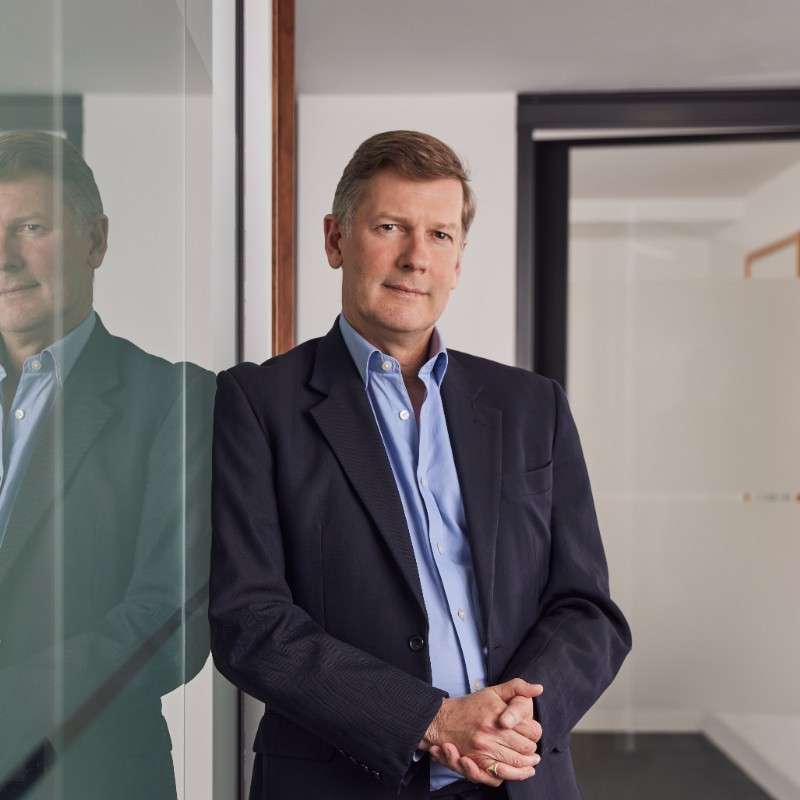 Ralph GraysonHost
 Simon FrenchGuest
 Matt Eastland-JonesProducer
 Story Ninety-FourProduction Company