
Bridging the Gap between Scientific Research and Industrial Impact
Susannah de Jager·Oxford, United Kingdom
Dr. Holly Reeve, co-founder of HydRegen, discusses transitioning from academic research to leading a deep tech company developing bio-based catalysts for chemical manufacturing, covering leadership lessons from her PhD and the challenges of commercializing breakthrough science.
Listen on
Now playing
Bridging the Gap between Scientific Research and Industrial Impact
Season 4 · Episode 8 · 12 May 2026
Featured
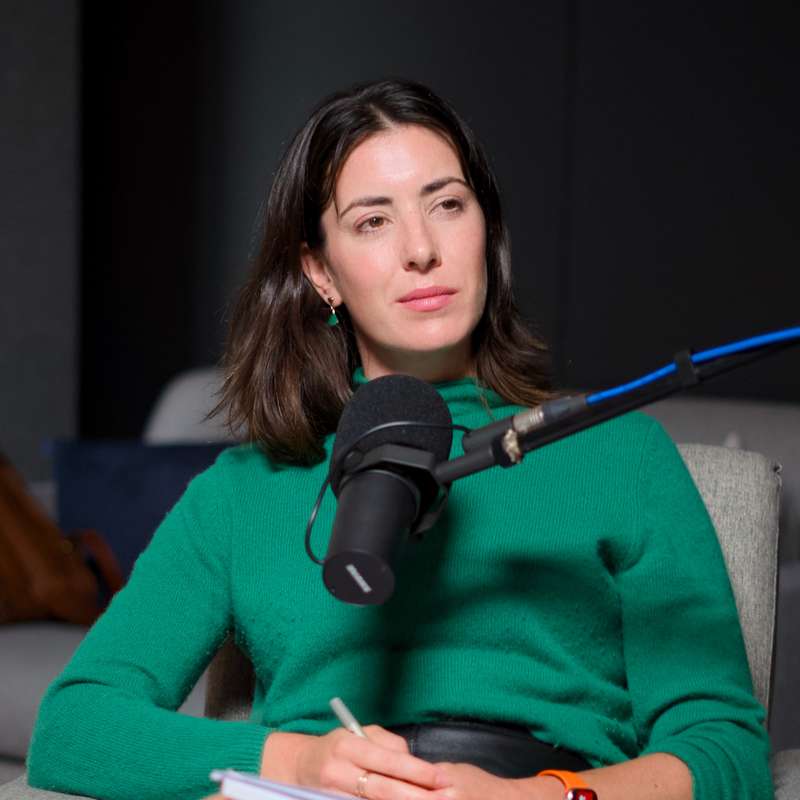 Susannah de JagerHost
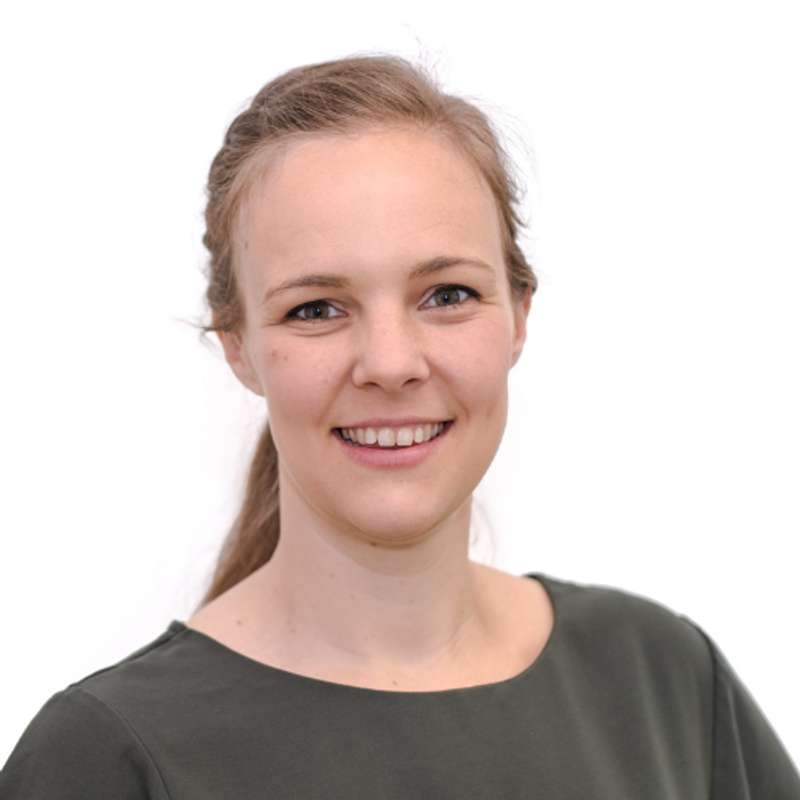 Dr Holly ReeveGuest
Production
 Matt Eastland-JonesProducer
 Story Ninety-FourProduction Company
Show notes
What does it really take to turn a breakthrough in a university lab into a company that could transform how the world makes chemicals?
In this episode of Oxford+, host Susannah de Jager speaks with Dr Holly Reeve, co-founder and CEO of HydRegen, an Oxford spin-out replacing precious metals in chemical manufacturing with bio-based enzyme catalysts. Holly shares her journey from a farm in rural England to leading a 15-person deep tech company now preparing for manufacturing and raising a Series A.
With the global biocatalysis market projected to more than double to USD 10.2 billion by 2033, Hydregen is positioned at the forefront of a sector gaining serious momentum. Holly discusses how she developed leadership skills during her PhD, why the shift from academic to commercial mindset is so difficult, and how she balances curiosity with execution. She also speaks candidly about the challenges of fundraising as a female founder in a sector where women-led deep tech startups still receive only 15% of seed funding.
- - Welcome to Oxford+
- - Growing Up Curious on a Farm
- - Finding Chemistry at Oxford
- - Inside Kylie Vincent's Research Group
- - Learning to Lead through Delegation
- - Going beyond the Lab to Find Industry
- - Knowing Your Strengths and Building around Them
- - Building Industry Relationships during a PhD
- - Learning to Listen before You Pitch
- - Founding HydRegen
- - Replacing Precious Metals with Bio-based Catalysts
- - Exploration versus Exploitation in Deep Tech
Dr Holly Reeve: Holly Reeve is the co-founder and CEO of Hydregen, an Oxford University spin-out developing bio-based catalysts to replace precious metals in chemical manufacturing. She holds a MChem and DPhil in Inorganic Chemistry from the University of Oxford, where she worked on the HydRegen technologies from inception in Professor Kylie Vincent's research group. Holly has raised over £1.3 million in early-stage funding from Innovate UK and investors, secured a further £2.6 million led by Clean Growth Fund, and grown the company to 15 people. She is a Royal Society of Chemistry Emerging Technology prize winner and a member of the Royal Academy of Engineering Enterprise Hub's Shott Scale Up Accelerator. In June 2025, HydRegen announced a strategic collaboration with James Robinson Speciality Ingredients to implement its Bio2Amine™ biocatalyst technology in commercial manufacturing.
Connect with Holly on LinkedIn
Susannah de Jager: Susannah is a seasoned professional with over 15 years of experience in UK asset management. She has worked closely with industry experts, entrepreneurs, and government officials to shape the conversation around domestic scale-up capital.
Connect with Susannah on LinkedIn and Subscribe to the Oxford+ Newsletter for Exclusive Content
Oxford+ is hosted by Susannah de Jager and supported by Mishcon de Reya, HSBC Innovation Banking, and James Cowper Kreston.
Produced and Edited by Story Ninety-Four in Oxford.
Transcript
Susannah de Jager
Welcome to Oxford Plus the podcast focused on innovation around Oxford. We look at everything across the ecosystem, the institutions, the people, the technology. If you need to learn anything about Oxford, whether it's how to take a first step in through the door, or as an experienced investor wanting to go deeper, this is the podcast for you. If you've ever wondered how deep scientific research actually makes its way into the real world, or how someone trained to explore ideas becomes someone who builds teams, raises capital, and leads a company, today's conversation is for you.
Our guest is Dr. Holly Reeve, co-founder and CEO of Hydregen an Oxford spin out working at the intersection of chemistry, biology, and industrial decarbonisation. Holly's journey is especially helpful for anyone navigating the shift from expert to leader, whether you're coming from academia, engineering, or another highly technical field. She's built a company in one of the most risk averse sectors there is, grown a team from two people to 15, and made leadership development a deliberate part of her startup strategy.
In this conversation, Holly shares how to balance curiosity with execution, how to build teams with different strengths, and why industry, not just research, is essential to making real impact in the chemical sector.
Holly, thank you so much for joining today. You attribute some elements of your upbringing to how you became so curious. I'd love to just hear a little bit of that backstory, how you grew up and why you think that led you to starting on the path that you're on now.
Holly Reeve
Yeah, I grew up living on a farm. My dad used to spend time helping me take apart engines and I got fascinated by the differences between petrol engines and diesel engines and things like that and all my family have engineering brains and they could talk indefinitely about how engines were different, but I was like, but what is it about the fuel that means you need different engines? And they got stuck, I guess at that chemistry level. Despite my uncle saying he loved chemistry at school. Apparently they didn't teach you about electrons then.
At school I didn't actually know that I was hard of hearing at school and I think that really influenced the fact that I fell in love with science because it was something I could kind of logic out on my own. I was good at math, so I was good at chemistry, and my chemistry teacher was the one person who really saw in me something that could do well. She was the only teacher I think that really thought that I could be special in something. So that really doubled down then my interest in chemistry that led me to go off to university.
So I got into Oxford to study chemistry despite everyone's expectations with my C's and B's in English and I absolutely hated every second of undergrad. I found it so disconnected from the real world. Like all the reasons I wanted to go study chemistry were how things work, why things work how we can make those things better and I just got lost in the kind of theory and the detail and the equations of chemistry. But at Oxford you are strong-armed into a research project. I applied to the group of Kylie Vincent because she was looking at how we can use hydrogen as a fuel and it kind of re-excited that part of me that had always been interested in those kind of types of things and it turned out I was really good at research and I could see the potential impact of it. So that's what kind of led me there.
I think also in my upbringing, we have a very multi-generational big, loud, crazy family which meant that I was very used to exploring ideas and concepts and scientific discussions at the dinner table were quite usual. So I think that lent itself well to research where you are always trying to get to the right answer together, sharing different perspectives and not being scared of avoiding your opinion, even if you're the younger one at the table.
Susannah de Jager
So very much what jumps out there is the importance of good teachers, which we all know, but it comes through again and again. But also that your real passion is for the application and the practical versus the abstraction, the, pure maths or the pure kind of theory of chemistry and the sciences, which by the way, resonates with me hugely. So within that team, talk to me a little bit about how that was structured and why it reignited that enjoyment of a subject that was waning.
Holly Reeve
Yeah, so when I joined the research group there were a team of five. Kylie was quite a new into her professor position in the university and everyone was doing very fundamental research. So they were trying to figure out how this little enzyme called hydrogenase splits hydrogen into protons and electrons more efficiently than a metal.
I was given a high risk, high reward applied project. Which meant that I had to think about what we were doing in a really different way. So I started leaning on people outside of the group to get ideas of how to make this project work. It didn't work for months and months and months. You know, I was told it should work. So I was like, so it will work. So I was very persistent. But also not scared to go ask other people for advice. When it worked, the very Nth hour of my master's project, we quickly filed a patent and published a paper and I stayed on to do a PhD. And what's really interesting here is that the group grew from five people to 25 people pretty much overnight when I started my PhD.
And I saw myself, I guess, as the little leader of this applied part of science. In my first year of my PhD, was given four master's students to look after, which is pretty unusual. And I think I identified really fast that if I invested time and energy in these students, if I got them really excited about what we were doing, how we were going to do it, train them up really well they could do a lot of it for me and I could go off and do other things.
Susannah de Jager
Excellent. I love that. A good delegation.
Holly Reeve
Yeah, so it was kind of like being a bad PhD student. I did do some of my own research obviously. But looking back now through my kinder to myself lens, it was early development of my leadership skills. You can't just tell people what to do and walk away, especially people who are just starting their research journey.
I had to get them excited, motivated, aligned with what we wanted to do. But also skilled up and support them. You had to identify what each person needed from you. And then I spent my time going off and talking to industry, doing training and things like that.
Susannah de Jager
I think what's again really interesting is that you are clearly an academic, but you are coming up through quite an atypical ladder compared to many PhD students. So these skills that you were developing of sort of persistence, going outside for advice, iterative approach, they're much more startup skills typically than pure academic ones and it's come up in a few of the interviews we've done on Oxford+ over the years that this can be a really hard bridge for excellent academics and researchers to step across into that mindset. Whereas for you, it seems almost like it was the opposite, that your instinct led you that way first.
Holly Reeve
I don't see myself as a rule breaker, but I don't always think rules apply to me. And I think the PhD rules are knuckle down, do your research. The more hours you're in the lab, the better. And I think it was just obvious to me that missed a whole lot of information and skills that I needed.
I was terrified that someone more experienced was going to be put in above me and that I'd have to conform. I was like, I'm going to go find that knowledge. It was obvious to me that going and talking to industry and finding out what was going on in this sector would help my research regardless of whether it was going to become a company. It was obvious to me that developing scientific plans is complicated and that project management, technical project management skills were going to be useful. Like I think it's really easy to start a PhD and you just keep doing the next step without looking at that big picture of where you're actually trying to go.
My supervisor gave me a throwaway compliment once and said that something I was really good at was seeing the kind of detailed next steps, but also the big vision and being able to juggle both of those all the time. And it wasn't until she said it that I realised that not everybody does it and I suddenly started realising that some of the team was super scatter gun because they could see the big vision, but they didn't know how to get there. And they did these big ideas but never really followed them through. Whereas some people would get totally fixated on trying to solve a problem that actually I'm not always sure was a problem and they needed like, pulling out of that. So yeah, I think it just lent itself to my, how I see the world.
Susannah de Jager
I think Benny Axt a couple of weeks ago called that, sexy research looking for a problem to solve, right? Yeah. And it's the extreme version of pure academic is that's wonderful. And it can be very useful by the way, we've had conversations with Dame Molly Stevens talking about kind of blue sky research versus thinking about the application from day one. We need both, but there's always a danger with pure academic research that you discover something fabulous and it's just too early, too soon. Not useful in the world yet.
Holly Reeve
Yes. Yeah.
Susannah de Jager
Yet. It's interesting hearing you talk about that awareness you have or that you were given by that mentor of the way in which your brain worked differently to everyone else because I think that's a very adult experience for most of us, is that things that you take for granted that are common, it becomes more apparent the ways in which we differ.
And the sooner we can identify what we're genuinely have an edge at with our own brains and you identified this earlier, what our teams are good at and what they can bring or perhaps even be better at. And so I love that you were talking about they were great at it and that you are obviously very good at bringing up the team around you.
Holly Reeve
Tried to be. Yes, because I think what's also important is, and I say this to people all the time, is being given those compliments or those, that awareness of what you are really capable at, that you didn't even know you were good at and definitely didn't know wasn't normal for everybody, is just as important as identifying what you are not good at that other people can bring.
Because at the end of the day, to deliver impact or, you know, high impact results and fundamental research or applied research, you have to have all those different skill sets and all those different perspectives. And you have to be humble enough to know what
Susannah de Jager
But not all in the same person. Crucially.
Holly Reeve
That's crazy. Yeah
Susannah de Jager
And actually that's such an important difference between academia, often and startup, is you don't have to be at all and you don't have to have all the answers. And again, you had that from very early on.
Holly Reeve
It's so important. I was actually talking to a friend about this recently about how the academic system rewards and raises tiny celebrities. You get promoted as an academic because you can do it all. You can write grants. You can lead people. You can do research. You are the smartest. You have the most ideas. And then nobody seems to tell them, okay, and now you are here, let some bits go. Like some of these you probably find harder or easier. Some of these you probably enjoy more or less and there are other people in your team and in companies that's so obvious, perhaps or clearer that teams have to function like that. Like different people do different things based on their skills, their capabilities, their experience. It's a disaster in a company if one person does it all or is solely responsible for anything.
Susannah de Jager
Yeah. It's key person risk. It's a huge problem. And it's that thing of a mentality of being collaborative rather than competitive. And again, that's a big shift. And so you were talking earlier about that you engaged with industry. Talk about some of the kind of opportunities that you had during that stage and how they led to the formation of your now company.
Holly Reeve
Yeah, so I was really lucky I think that in industrial biotech in my field it was quite early in the sector, but it was already really apparent that it was going to need academic industry collaborations. And as a field, there were loads of academic industry events. So pretty much all the conferences in that area had representatives from industry, which I think is a bit unusual for some sectors.
So I started going to a lot of these events and just talking to people, trying to figure out what was going on, what people were struggling with, what was going well. And I started building relationships and started winning industry linked funding, like really small amounts of funding to start with really proof of concept. But I think that helped me with, what industry we're interested in like where do we need to point this? Where should we focus? Like where should we not get distracted by? That prioritisation I guess. But also what are their concerns? What do they not believe yet about this type of science and how can we prove those out?
And then at the end of my PhD when we won some translation funding, so we won 3 million pounds over five years to think about de-risking these technologies. At that point, we had the network to build the industrial advisory board out and things like that. Interestingly, it was another five or six years until I ever had training in how to go talk to industry. So I basically did seven or eight years of talking to industry with zero training.
Susannah de Jager
And what did you learn in that training that you hadn't worked out?
Holly Reeve
Well, it's funny, isn't it? So I learned a lot. Some of it I had already understood, I think. But it was just that crystallisation. So the main takeaway from the training I had was to read the mum test and was that you don't want to go out and tell people what you're doing. You want to go out and understand what other people are doing.
You want to understand where their problems are, if they're big problems, how they're trying to solve those problems. And it's funny because I think the reason a lot of people don't do what I did is because the university hates it. The university hates the thought of students going and telling industry what they're doing and spilling all the university secrets and losing all the IP. And I found there was a, well, it's not even your idea, it's your boss's idea. There's a lot of kind of hierarchy and a lot of fear and a lot of universities panicking, I guess.
So I knew I couldn't talk about the secrets of what we were doing because I knew that was, IP and whatever. So really it crystallised for me that piece that, talking to anybody is about asking them about their selves and then going away and seeing how you can apply that to what you do. But I wish I'd had that understanding earlier because actually it's the same in networking. People find it easy to talk about themselves and if I go networking with CEOs that have gone before me which I used to do, asking them about their experiences, what they found easy, what they found hard, never asking them about how can I apply this to me, that's your job. You go away and think about what you've learned and how that applies to your situation because it's a lot to be like, try and lay out your situation to someone and ask them for advice directly.
Susannah de Jager
This is something that's come through again in a few conversations as all the best points do of there's something in academia that's naturally on that transmit, you are publishing, you're putting things out into the world that is, as you said, yourself, your value. But so much of being a business leader is about whose problem am I trying to solve? What do they need? What's their problem? What's their burning platform and how can I make myself indispensable to them as a partner? You touched upon it, it's sort of intuitively there, but like all the best books, training, et cetera, you sit there and when you're told it in more concrete terms, you go, yes, I sort of knew that, but was I doing it all the time?
Holly Reeve
And I think another thing I say all the time especially to any of us that have had academic training is if people make a presentation or build a document I often say, that's a really good version of what you wanted to say, but now I need you to make it what someone else wants to hear.
And I think university, publishing papers, it's so geared up for what I want to say and really explaining what you did, why you did it, really demonstrating that you did it in a credible, sensible way to be peer reviewed. But that is not how anybody else wants to receive that information really especially in a business transaction. They want to know how can this be useful to me and solve my problems exactly as you said.
Susannah de Jager
I've had that in my career at various points because I started in fundraising and actually what you said earlier about academics reminded me of fund managers, which is where I started my career, where you have the star fund managers not everywhere, but that was often the case and they would do the same.
You know, they would quite reasonably think, well they want to know about my process and I'm going to sit here and talk about my process. And I would see as the sort of bag carrier at that stage in my career, the sort of switch off happening across the table. And it was my job to catch that. And often it was just making sure that you repeated a question. Have we answered your question? Have we got it down? But also starting meetings or hopefully even before you're in the meeting, what is it you want to get out of this? What's going on in your business? And letting them speak.
Holly Reeve
Yeah. I said just the other day, it's like the goal of conversation in any format is not to implant all the information I have into your brain. It's about understanding what, where the overlaps are, what you want to know about, what I want to know about how to learn together.
Susannah de Jager
And if one's more cynical, the psychology, people will leave liking you more if they've spoken more about themselves and actually if you want them to want to do business with you and think that was great. There's nothing like asking more questions to make somebody think they had a great conversation with you.
Holly Reeve
Yes. I need to remember that
Susannah de Jager
That's why I interview people. Holly. So wonderful, talk to me about how you founded Hydregen then. So you were on the tail end of this period, and what was the sort of the moment that changed it into a company?
Holly Reeve
It's funny because when I talk about it and students or upcoming entrepreneurs always say that the big transitions for what I've done came at the end of my funding and I think that's is important to remember. So I did a PhD and we then won 3 million pounds of translation funding. That funding was about to run out and I started to company. And I think that we should never underestimate the human part of taking science to industry. Of course there were other things going on in the background, but, definitely me always looking for the next step was aligning with partly my career as well as everything else.
Susannah de Jager
Do you think that's the pressure of that moment?
Holly Reeve
Oh, absolutely. Yeah.
Susannah de Jager
Just to be clear.
Holly Reeve
Yes. It's not that surprising that as our translation funding was ending, I found investment to start a company. So this five years was really about systematically de-risking taking our technologies to market. I was like, okay, we are working in specialised equipment. I need to show that this can work in any chemistry lab in the world, that anybody else can use it. They don't need training in what we're doing. I remember my supervisor thinking that she was going to be really bored by this project because it didn't sound to her that sounded so unscientific. Whereas to me it was like, the sharp end of doing science.
We also balanced our curiosity as well. So there were lots of new ideas. We had a team of seven postdocs. They had ideas all the time and it was partly my job to balance like, which ideas should we pursue and which ones should we not? So we ended up filing additional IP. So three further patents were filed in that time.
Towards the end I did a three month market validation programme. So I got funding to go talk to a hundred companies across the chemical sector. Finally got that training and how to talk to industry. You know, we had a lot of ideas of what this company could do, but that was the time I really tested those. So talk to people about what the best way of us going to market could be. And at the end of that, I won £300,000 from their kind of ring-fenced government funding and then got investments as well. I actually found out I was pregnant with my second baby the day I found out we'd got our Innovate UK funding to start the company and I closed my first fundraise six weeks before my second son was born.
So that was an interesting time.
Susannah de Jager
Goodness me. You reflect back on these moments and you think, I can't really understand how I put one foot in front of the other, but I think does
Holly Reeve
did it because of COVID, because normally that market validation programme would've been a hundred percent travelling and normally at that time getting investment would be going and meeting people in person. I would've struggled with that, with it, with a small kid at home and being pregnant. But everything got shifted online and actually it was really funny looking back that because I was pitching online, nobody noticed that I was pregnant. And you know, normally as you walk in a room, people see you get bigger and bigger. But that never happened. And I got to this point where I was like, I guess none of these people know I'm pregnant.
So I remember going to our kind of final meeting before the investment was agreed, and walking through my agenda and saying there's one thing left on my agenda. And everyone's turning their piece of paper over, like, no, we're at the end. And I was like, so I'm having a baby in six weeks. And I have a really good plan for that if anyone would like to know about it. They were very supportive, so that's great. But they were a little flummox, I guess. because normally you would just know at that point in time.
Susannah de Jager
And isn't it terrifying to think what the counterfactual is there? Because as much as I'm sure if you ask any of those people and investors would you have behaved differently? They would all and I think mean it, say no. Absolutely not. But I think our subconsciouses do have tricks that they play on us. Even if we have the best intentions. And it plays through in a lot of the statistics around this, that odds are on it, probably around the margins we hope, but perhaps not would've made a difference. And not least that it would've made a difference to your ability to do that process, which is both wonderful, that you had a silver lining to what was a terrible period in many ways. It does make me a little fearful for people that aren't being given that flexibility perhaps so much anymore. So where are you up to now?
Holly Reeve
So we are currently 15 people. We have a couple of lead customers that we are hoping to go to manufacturing with by 2027 and we are currently raising a series A fundraise which is extremely time consuming.
Susannah de Jager
Yeah, sure.
Holly Reeve
But yeah, the technology is developing really well. So our technology briefly is about replacing precious metals in chemical manufacturing with a bio alternative. A bit like switching your washing detergent to an eco washing detergent. So the premise, is the same dirty clothes go into the same machine. You switch your washing tablet, you get cleaner clothes, it's been kinder to your clothes, you lower the temperature of your washing machine so you save money and save carbon. So we're trying to do that, let customers and use the same chemical feed stocks in the same infrastructure, but switch the catalyst and to get cost savings and sustainability savings and cleaner chemical products.
One of our first processes to manufacturing, we believe will be paracetamol and then some others in some kind of specialty chemicals. So yeah, it's a really exciting time. I think it's a time where you know, running a company demands so many different things from you all the time and you get to these really clear inflexions where you are like, okay, I'm going to need some new skills or capabilities now I'm either going to need to find them or I'm going to need to grow them really fast. So we are definitely at that delivery end now. So it's exciting and a little bit terrifying
Susannah de Jager
And may I ask what the timeframe is on that?
Holly Reeve
We are,in advanced discussions, so it's going well. Hopefully that will be closed as soon as possible.
Susannah de Jager
Wonderful, and is that industry partners? Is that VCs? I'd love to know what the mix of people that you're seeing interest from is.
Holly Reeve
Yeah, so it's mostly still VCs at this stage. So we're still a bit early for the kind of corporate venture capitals. We do speak to a lot of them. They're interested in what we're doing. I think one of our challenges has been that we really fall between biotech and chemistry, so it's been quite hard to juggle that in terms of people not feeling like they have the breadth of scientific literacy, I guess, in both those environments.
But also we really want to work in traditional chemistry business models and there's a lot of reasons why I think that's going to work really, really well for us. But it doesn't work for traditional biotech for lots of sensible reasons. So that's another problem, like biotech's, like no, we've been burnt by these business models before and I'm very much like everything we've done since before we even started has been how do we make it as easy as possible for chemistry companies to take up new technology? How do we make it fit in their existing kit? How do we make it work in their traditional business models? That's been my entire philosophy. There's lots of stuff we could do, there's loads of kind of future opportunities, but my absolute focus is I want to make it as easy as possible for people to adopt biotech and then the opportunities from there will grow.
Susannah de Jager
And did anyone help you with that process? I'm sure lots of people, but has it just been you looking people up? You talk about a new skill set and there'll be people listening who don't yet have it and are going to need it,
Holly Reeve
Yeah, so my first fundraise back in history back in 2020, I used some of the Oxford networks to reach out to Angels. That was great and then as time's gone by and we've added directors. Directors have helped with their networks. For this fundraise, we are actually using a consulting team as well. Which is great because they have their own network and they can support with materials and narratives and asking all the questions. I have however, seen this amazing graphic on the internet that really epitomises what it's like to be a CEO fundraising. And it's like all of these like books and objects stacked up all a bit haphazardly, like all the different components you need to close a fundraise and it's all balanced on this little tiny block called CEO charisma and it just feels so real.
I think some days when I'm juggling a lot, I have to remember that if I need an hour out or two hours out to get ready for talking to investors, I need to do that because you can't just rock up tired or distracted or in a different mindset and it can be really hard to go from being around the team in the lab and things maybe aren't working today and then jump into this is the future of what we're going to grow.
So I think I've had to be so kind to myself and remember my leadership coach always says, you are a finite, precious resource. If today what you need to deliver is a really impactful hour long discussion, you need to take the time to get ready for that.
Susannah de Jager
Yeah. Preserve your energy.
Holly Reeve
But it's hard to tell yourself that when there's lots going on.
Susannah de Jager
Yeah, and you've gotta kiss a lot of frogs, right. You know, these processes are voluminous at the top end of the funnel. Which can make it feel a bit like plug, play, repeat.
Holly Reeve
You don't know which of these discussions you're going into is the most impactful one. You don't know who's going to be before you start, if it's going to be a really,
Susannah de Jager
exciting set of discussions or if it's going to be a oh, it's not quite the right fit.
And listen, even those ones, I used to find that sometimes the ones I thought had gone the least well ended up having legs or that I felt had been really tough because they were actually the ones that engaged. The ones that I thought had gone brilliantly and were fluffy, were sometimes the least engaged.
Holly Reeve
It is the first time I would say that I've noticed the impact of being female in my whole career, though.
Susannah de Jager
In what way?
Holly Reeve
I think I have a lot of female founders on my LinkedIn, for example. So I always see this narrative about how much harder it is for women to fundraise. You see the stats on, if you have a deck being presented by men versus women, how much more likely men are to get the funding and I think some days I feel the grind of being underestimated or maybe being not what people expect. Especially in all male investment meetings.
You know, we talked about it right at the beginning, how my brain works isn't how your brain works, isn't how the other person's brain works. And it can take some time to see the benefits of how any one person's brain works if you're not used to it.
Susannah de Jager
Do you feel, you get asked different questions.
Holly Reeve
Yeah.
Susannah de Jager
Do you have a view on what might help people change that? Because again, it would come back to the point I made about you being pregnant. Nobody wants to think they're doing that. I like to hope that it's very much unconscious.
Holly Reeve
So I have been to a lot of female VC events and funnily enough, I think the one place where being female is even harder than being in science is in VC. I think investors are still quite uniform perhaps. I think so the more diversity we have in investment panels and in investors, I think will help because the more likely it is that someone that thinks of it more like you or looks a bit like more like you will be in that room.
Susannah de Jager
Yeah, I've actually had the pleasure of interviewing Debbie Wosskow, who's one of the women that founded the Invest in Women Task Force, which is looking at that exact issue. And I know that many people think, oh, you know, the pendulum has swung. That's not a thing anymore, but the data doesn't support that. So I think these initiatives are still very important.
You have, as we've already discussed, had a really quite an unusual pathway into becoming a founder and a leader of a business. You talked, when we spoke before this interview about kind of framing deep tech as two mindsets, the exploration and then the exploitation and how you manage the team and get them to think about.
I'd love you just to articulate that because it was quite original. I'd never heard it articulated like that.
Holly Reeve
Yeah, so when people join the company if we onboard a few people at a time from the university, I run my mindsets from moving from university into a company workshop and we all share our kind of experiences of how...
Susannah de Jager
I feel like you should commercialise that, by the way.
Holly Reeve
I really want to. And we talk about how much of a kind of, I have someone in my team who said when she was a postdoc, if someone else needed her help, she felt like she had to put down her progress for the day and go help them. And in the company, she felt like if she went to help someone, the whole company had moved forward today. And I loved that. But the other thing I've learned is that there are times when we are trying to solve a problem or make something better, and there are times when we are trying to deliver it. So we are trying to do the exact same thing every day.
Because at the moment, or at least when we started, we had a lot of academics. Academics love to be solving problems and making things better. It's their absolute happy place. And it means that you don't have to think all that hard about how to make the team culture great and how to make people happy because they're feeling valued. Their ideas are really exciting.
Susannah de Jager
It's their love language.
Holly Reeve
Yeah, like they make it better every day and they feel great. Don't get me wrong. Sometimes they don't make it better and they feel sad. What I noticed was when we moved to kind of exploit or deliver, and you want someone to do the same thing every day, and really you are relying on them to be an expert in one thing and to do it. They don't get as much love out of that. And that's where company culture and the narrative and the like, we just want customers to be happy mentality has to come in. But actually you have to find different ways of rewarding people for some people, not for everybody. Some people love that. I love that. So it's sometimes hard for me to understand. But you do have to understand.
I think we've been really clear about naming where we are. Because it's funny because you know, you'll be delivering, delivering, delivering, and then you'll be like, oh no, this is a problem we actually need to solve. So you have to go back and solve it. And if you're not clear about whether you are in delivery mode or kind of development mode, it means that things just get lost, I think and people suddenly find they're not being rewarded and they don't understand why. I've started building a framework. It's a bit clunky at the moment, but it'll get slick about how to help people in that kind of, both in academia, but also more importantly in deep tech startups I think
Susannah de Jager
I'm sort of looking forward to when you are out of Hydregen and you've had this amazing exit and you can form this business, helping other people move their own companies through these stages. Because I think so many of these moments are common to so many scaling and starting companies and spin outs and the psychology of it, how it feels, these little nuggets of knowledge that form a thesis of how to navigate through these moments is so important.
Holly Reeve
It's kind of common and not obvious. It's a bit like right back at the start where we said that sometimes someone will say something and you are like, yeah, I knew that, but I didn't know that enough to proactively do it.
Susannah de Jager
Like every single good kind of business book you've ever read, right? Where you think, oh, I already knew that, but you didn't. Looking forward what does it look like the next two years, maybe longer for you? What would you like to see Hydregen turn into from here?
Holly Reeve
So I think our next big thing is to getting to manufacturing. That's a huge inflexion point for us. That means the technology is working at scale. It means all our commercial kind of strategy has worked and it massively de-risks our kind of next customers taking up the opportunity that we can offer.
From there it really becomes that delivery. It becomes scaling the company commercially. I think the thing for me to figure out as a human is how I fit into that and where my key strengths are. I always say at some point, this company will need someone that brings, my tenacity for science and delivery to scaling commercials and not sure that I'm going to be that person.
So I think it's a really interesting time. I think the company has such a big opportunity for growth. I want to make sure that I am never the person holding that back.
Susannah de Jager
That's incredibly self-aware. I hope that anyone listening that's an investor notes that, because one of the biggest barriers to success of companies that I have seen, that I have invested in over the years, has been a CEO's inability to see when perhaps their skillset was not going to serve the next stage of growth.
And I think there's an expression talking about war time versus peace time prime ministers, right? the same idea, the same skill sets are not going to serve companies in that case countries through different moments.
Holly, I wish you all the best with it. It's an incredible story to date and I think you have so much that will make it an incredible story going forward. I wish you all the best with it.
Holly Reeve
Thank you very much.
Susannah de Jager
Thank you.
Thanks for listening to this episode of Oxford+, presented by me, Susannah de Jager. If you want to stay up to date with all things Oxford+, please visit our website, oxfordplus.co.uk and sign up for our newsletter so you never miss an update. Oxford+ was made in partnership with Mishcon de Reya and is produced and edited by Story Ninety-Four.
Partners
 mishcon.com
In partnership with
Mishcon de Reya
The Mishcon de Reya Group is an independent, international professional services business with law at its heart, employing over 1450 people with over 650 lawyers. It includes the law firm Mishcon de Reya LLP and a collection of leading consultancy businesses that complement the firm's legal services.
 oxfordequinox.com
Sponsored by
Equinox
Equitable Innovation Oxford is a major regional partnership established by the University of Oxford to drive inclusive innovation and sustainable economic growth locally, nationally and globally. Equinox serves as a voice for the region, championing innovation that delivers economic impact and social value.
Bridging the Gap between Scientific Research and Industrial Impact
Oxford+