Susannah de Jager
Alongside our main episodes of Oxford Plus for Season Four we are introducing a short fortnightly miniseries in between the main episodes. Brought to you by me, Susannah de Jager, and in partnership with Mishcon de Reya. In each episode, we ask our guests the same four questions designed to reveal how they think, what shapes their decisions, and what they're curious about right now. The questions stay the same. The answers rarely do. This is Oxford Plus in brief.
Benny, what would success look like if we got this right?
Benny Axt
Success for me would look like Oxford, consistently producing globally leading health tech companies, not just great spin outs. And so in practical terms, that means a few things. First, you would see multiple companies scaling to real global impact, not just exiting early, but becoming category leaders in their field.
Second, the time from lab to market would compress significantly. Ideas wouldn't sit in translation For years, they would be tested, validated, and scaled much faster. Third, I think you would have repeat founders and operators who stay in the ecosystem. People who've built once and they're building again.
Who are then raising the overall quality each cycle of building. And I think finally, existentially Oxford would be known not just for scientific excellence, but for execution. a place where world class science and research reliably turns into products that reach patients at scale. So if we get it right, Oxford won't just be where health tech ideas come from, but rather it will be where the companies that define global healthcare are actually built.
Susannah de Jager
Amazing. What advice would you give someone entering the Oxford Ecosystem for the first time tomorrow?
Benny Axt
Four things. The first one is to open your wallet and buy a lot of coffee and many pins of beer. I think the people are extraordinary. I could spend a life trying to meet them all and, and not accomplish it. and so the more that you're willing to try to spread your wings and to meet people, the more success you'll encounter.
Two is to get out of the bubble and I think identify the pain of what you're trying to solve. It is an incredibly dense and impressive ecosystem, as I just mentioned, but it's still a bubble and so. Spending time with customers, identifying people and problems outside of Oxford that need to be solved,is really key, and that's where you get the truth.
I think the third one is, a bias towards action over analysis. So we touched on it. There's a tendency to overthink and over perfect, especially in an academic led setting, but I think, and I think this is because the intellectual bar in Oxford is so high, but in company building progress comes from doing testing ideas, failing fast, talking to users and shipping something imperfect in it, shipping something imperfect.
The fourth one is be deliberate about who you'll build with. And so getting the founding team right is key. and so I think if you do those four things, if you open your wallet, you stay externally focused, you move quickly and you choose the right people, you're going to get so much out of Oxford. Much more than just great conversation.
Susannah de Jager
This isn't one of my questions, but something I keep wondering and wanting to ask you is we're talking about moving faster, but in the same breath, we acknowledged it in the main interview that we had, that some ip, the system just isn't ready for it yet. Have you heard any discussion? Are there platforms.
That you are seeing being built that are holding pens for that IP because you feel like, yeah, people need to keep going over that deck.
Benny Axt
The construct of there is what's called an express licence. And so there is a way when Spinouts come through a partnership with OSE and Oxford University Innovation, the tech transfer office to actually bundle ip. And some of it could be more nascent. I have seen outside of this, in, in infectious diseases, I was having a conversation recently and I think there are ways to build the infrastructure.
Clinical trials is another area. The guardrails that over time can be supplemented by IP and research that's happening now. I think the question just becomes, is it ready for primetime in the market and is it better to continue to build and stealth without rolling something out in order to protect and build the moat?
So I think there are some strategic questions there, but I have seen examples of this. Yes.
Susannah de Jager
Third question, what is Oxford great at? And not to be too negative, but to look at areas for improvement. What is it structurally not so good at?
Benny Axt
It is exceptional at creating world class science and deep technical insight. I think it's incredibly strong at attracting talent, scientifically, medically, and also academically. In terms of researchers, I think where structurally weaker is in the speed of translation and scaling. And so I think there's a tendency for decisions to move more slowly than they need to, which I think is, it's inherent in academia anywhere.
We see it, whether it's, spinning out, making decisions or getting products into real world use and I think related to that. Oxford can be, could be stronger at building and retaining commercial talent at scale. We're an hour away from London, and I think that we still lack some of that commercial pull and operators who have scaled things successfully and so I think you end up with this pattern of incredible ideas, strong starts, but not always the same consistency in terms of turning those ideas into globally dominating companies. and then the last one that I would say is that, and it's not a, it's not a bug or it's just a, an aspect of the system and a strategic choice that was made maybe a millennia ago.
Tom Hockaday, who at one point was at the CEO of OUI expressed to me that there's a philosophy in Oxford of let a thousand flowers bloom and I think that's part of what makes Oxford so powerful is this idea of you maximise creativity and independence among academics through this decentralised structure, but then you also lose some coordination.
And so I find, in some instances duplicated effort or, slower overall progress. I'll talk to academics who are in different colleges working on the same things and they're not aware that another colleague of theirs is working on a similar problem. And so I think one of the biggest untapped opportunities for us at Oxford is better visibility and connection across the ecosystem.
Susannah de Jager
Well, I'm pleased to hear you say that because I know that Equinox are trying to solve some of those problems. So hopefully there's a lot underway that feels like it's moving in the right direction. What do you think Oxford will look like in 2050?
Benny Axt
By 2050, Oxford could be one of the few places in the world where breakthrough science routinely turns into globally dominant healthcare companies. And I think faster translation, more connected ecosystems and companies that are built at the intersection of biology, technology, data, those other areas that I was describing around medical devices, digital health.
I think it's a convergence of those elements and a strengthening. And so to me, the raw ingredients are already there, and the question is how we will over the next 24 years connect them and scale them. I think the UK's first trillion dollar company is going to. It's going to be built on deep science, and I think Oxford is one of the few places that can produce it, and I think OSE intends to build it.
And so I hope to see that far before 2050. But that's on the horizon.
Susannah de Jager
If you had a magic wand, what would you change about the system?
Benny Axt
If I had a magic wand, I would redesign the system to optimise for speed of learning and not just quality of science. And I think Oxford and the UK more broadly is exceptional at generating breakthrough ideas. Where we struggle is translating those ideas into companies that learn fast enough to win globally.
I would change five things. Number one, I think we need to radically compress the time from lab to market. I think too many spin outs and startups spend years in validation cycles before properly engaging customers. So I'd push for earlier, messier, real world testing, even if the technology's not perfect.
Two, I think is rebalancing the incentives around commercial outcomes. I think academic systems still reward papers and grants like we were just describing and I think those are rewarded more than creating scalable businesses. So if you want global companies I think you have to reward the people who take those risks.
Embedding commercial talent much earlier in the trajectory is part of that, and so it is, the reason that I'm sitting here talking to you today that I'm in Oxford, is companies that are coming out of academia need people who are not just advisors, but they're co builders from day one. I think the best spin outs aren't just predicated on great science. I think they're great businesses very early on, and so there really is a marriage between the science and the commercial angle. I think four we've touched on is access to growth capital. Really tapping the pension funds and unlocking some of that illiquidity, I think would go a long way towards fostering the innovation ecosystem. Oxford Science Enterprises does an exceptional job of carrying that baton and really trying to steward resources and voices in the ecosystem to try to help that.
The last one is just the shift in mentality as well from sometimes if I'm pitching or talking to investors in the US I hear what's the 10x growth case? I want to know the upside. Sometimes when I talk to investors in the UK or in Europe, they're interested in the downside case, what could go wrong and so that's a much more conservative approach and so if I could wave a magic wand, I would say, let's think more about that 10x case and let's unlock that risk capital.
Susannah de Jager
I feel like you were really greedy with your magic wand. I feel like that was more like a genie, like, two and a half times I like it. By the way. I like your ambition. It's very American.
Thank you, Benny. I've really loved this.
Susannah de Jager
Thanks for listening to this episode of Oxford+, presented by me, Susannah de Jager. If you want to stay up to date with all things Oxford+, please visit our website, oxfordplus.co.uk and sign up for our newsletter so you never miss an update. Oxford+ was made in partnership with Mishcon de Reya and is produced and edited by Story Ninety-Four.

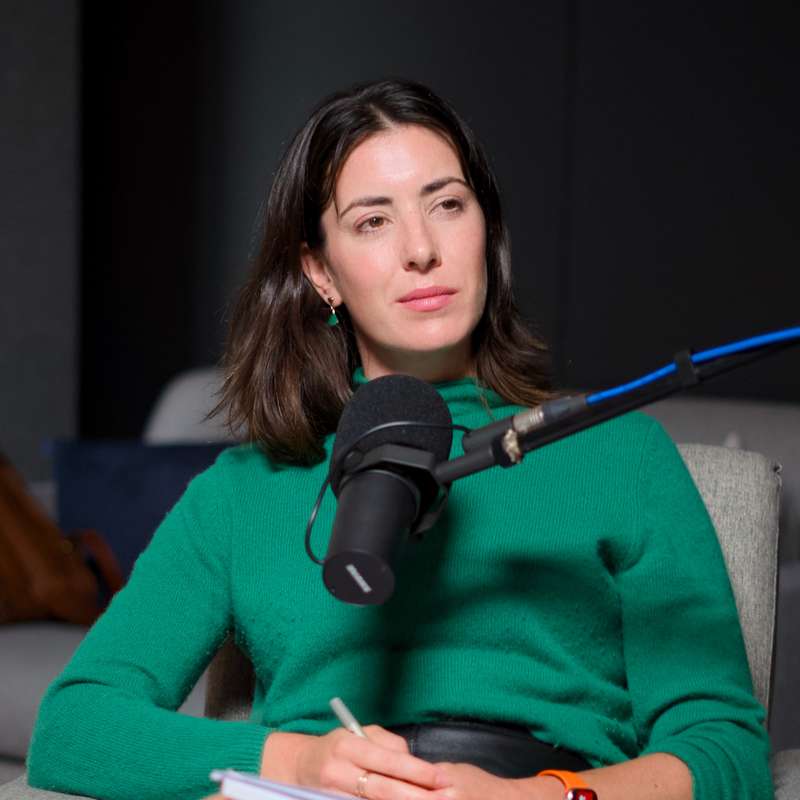 Susannah de JagerHost
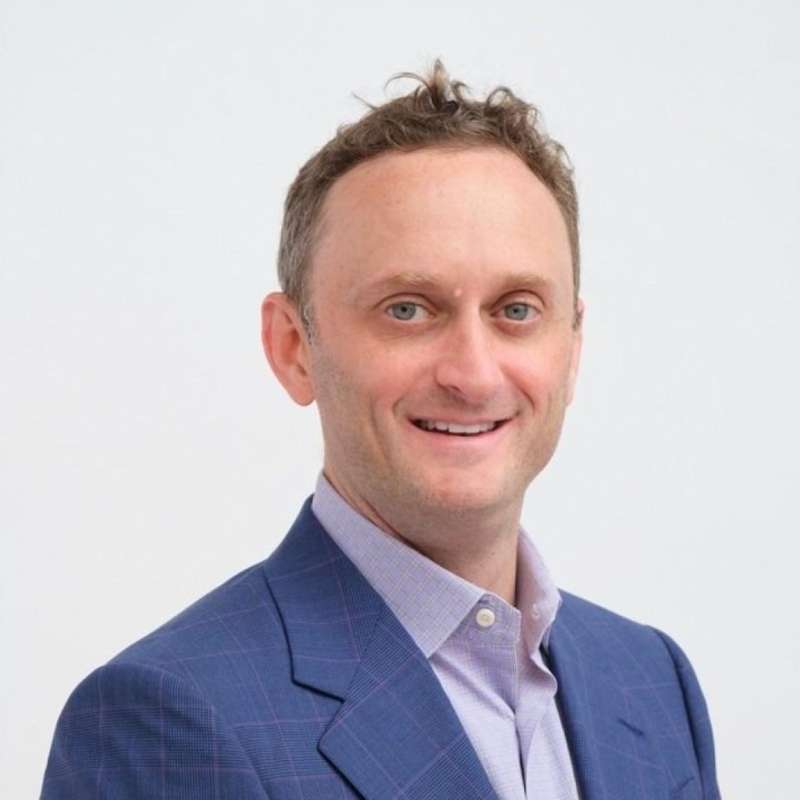 Benny AxtGuest
 Matt Eastland-JonesProducer
 Story Ninety-FourProduction Company
 mishcon.com
 oxfordequinox.com