
Ethics & Innovation: The Social Media Ban, Sovereign AI, and the Race We Can't Stop
Susannah de Jager·Oxford, United Kingdom
Lord Lionel Tarassenko discusses governing AI as an accelerating arms race, the UK's ethical AI advantage, and why he now supports a social media ban for under-16s as necessary leverage against platforms.
Listen on
Now playing
Ethics & Innovation: The Social Media Ban, Sovereign AI, and the Race We Can't Stop
Episode 1 · 7 Jul 2026
Featured
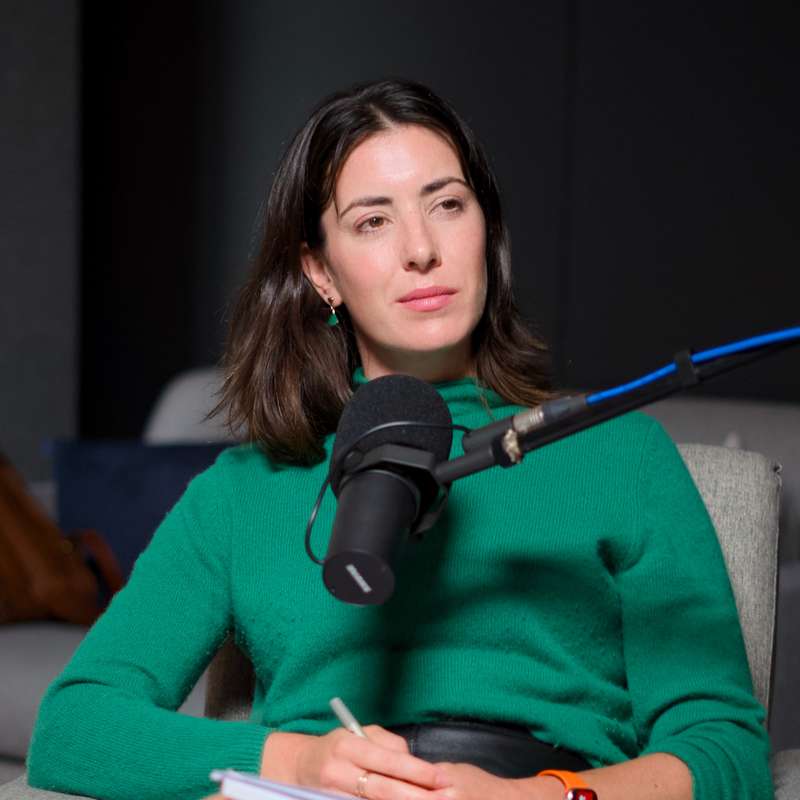 Susannah de JagerHost
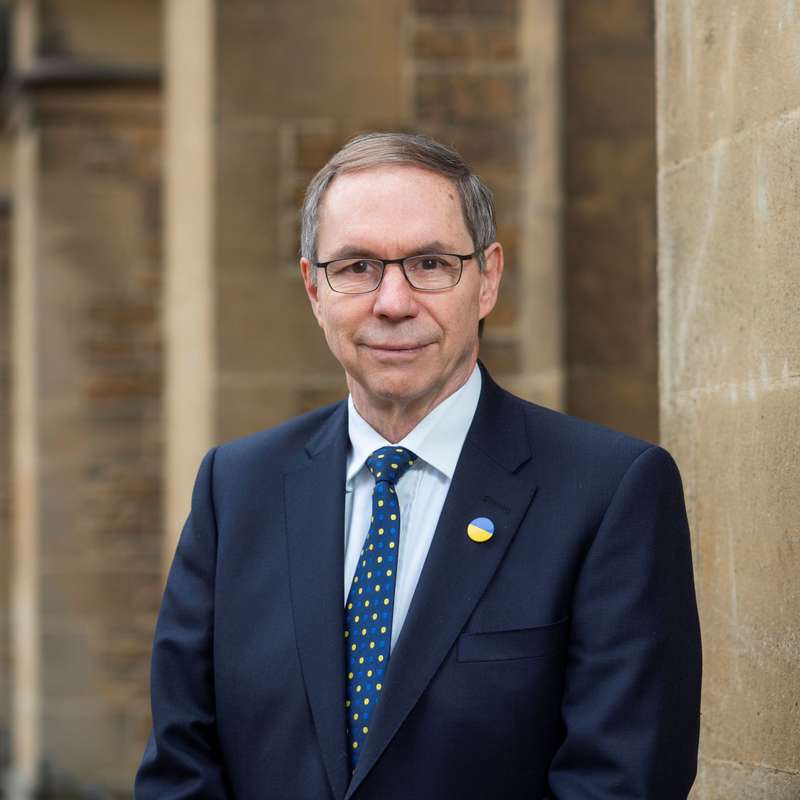 Lionel TarassenkoGuest
Production
 Matt Eastland-JonesProducer
 Story Ninety-FourProduction Company
Show notes
Can democracies capture the economic benefits of AI while protecting citizens from the unintended consequences?
In this episode of Ethics and Innovation by Oxford+ brought to you by Equinox, host Susannah de Jager speaks with Lord Lionel Tarassenko, founding President of Reuben College and a pioneer of machine learning in safety-critical systems, about why the race to build ever more powerful models increasingly resembles an arms race. They explore whether the UK's long focus on ethical AI has become a competitive advantage, how Britain should position itself between the United States, Europe and China, and why sovereign AI and sovereign data assets matter for defending national values.
The conversation lands at a pivotal moment. Days after the UK government announced a ban on social media use by under-16s modelled on Australia's, Lionel explains why he changed his mind and now sees a ban as the only real leverage over platforms that have resisted safety by design for a decade. From AI literacy in schools to the case for putting the AI Security Institute on a statutory footing, this is a clear-eyed look at governing a technology moving faster than policy.
Lord Lionel Tarassenko: Lionel Tarassenko, Baron Tarassenko CBE FREng FMedSci, is the founding President of Reuben College, Oxford, Pro-Vice-Chancellor and Research Professor of Engineering Science at the University of Oxford. A world-leading expert in the application of signal processing and machine learning to healthcare, he was among the first to apply machine learning to real-world, safety-critical systems, from Rolls-Royce jet-engine health monitoring to NHS patient monitoring. The critical-care system he designed was the first machine learning system to gain FDA approval, in 2008. He founded four University spin-out companies, directed the Institute of Biomedical Engineering, and edited the 2019 Topol Review of NHS technology and the workforce. He was appointed a non-party-political life peer in 2024 and sits on the crossbenches, where he speaks on AI, healthcare and digital policy.
Connect with Lionel on LinkedIn
Susannah de Jager: Susannah is a seasoned professional with over 15 years of experience in UK asset management. She has worked closely with industry experts, entrepreneurs, and government officials to shape the conversation around domestic scale-up capital.
Connect with Susannah on LinkedIn and Subscribe to the Oxford+ Newsletter for Exclusive Content
Oxford+ is hosted by Susannah de Jager and supported by Equinox.
Produced and Edited by Story Ninety-Four in Oxford.
Transcript
Susannah de Jager
Welcome to Ethics and Innovation by Oxford Plus, a special miniseries hosted by me, Susanna de Jager and sponsored by Equinox, Equitable Innovation Oxford.
In recent days, the Trump administration has signalled a markedly different approach to AI regulation in the United States. At the same time, the UK government has announced sweeping measures to restrict social media access for under 16s from Spring in 2027 and begun exploring broader safeguards around AI-enabled platforms and digital wellbeing.
These developments raise fundamental questions. How do democratic societies capture the economic benefits of artificial intelligence whilst protecting citizens from unintended consequences? What responsibilities should technology companies bear when their products influence behaviour, health, and decision-making, and can regulation keep pace with the technologies that are evolving faster than traditional policymaking?
Few people are better placed to explore those questions than Lord Lionel Terrasanko. As a pioneering engineer, entrepreneur, and academic leader, he has spent decades at the intersection of innovation, healthcare, data science, and public policy. Long before today's debate over generative AI, he was examining how intelligent systems can be deployed responsibly in high stakes environments.
In this conversation, we will explore whether the UK's longstanding focus on ethical AI has become a competitive advantage rather than a constraint. How Britain should position itself between the regulatory approaches emerging in the United States, Europe, and China, and why the next phase of AI adoption may have more in common with an arms race than a traditional technological adoption.
In your recent speech in the House of Lords, you spoke about a rocket ship and that we should, I think it was Eric Schmidt had said we should just take the ticket, and that feels like the rhetoric that we as a public are being asked to take at the moment. That this is going so fast and we must just accept that.
But at the moment there feels like there's a clap back to that and I would love to understand, from your perspective, the ways in which perhaps we can reject that discourse and what we might have control over in a time when the commercial models are driving so much momentum around technology and our use and acceptance of it.
Lionel Tarassenko
Well, thank you for inviting me to join you this morning. It's a very important question. Before I address it, could I possibly correct something? I sent you a copy of the speech I planned to give in the debate that had been called by the Archbishop Canterbury and the House of Lords about the impact of AI and human relationships.
But if you asked to speak in the House of Lords, unlike the House of Commons, you don't have to bother with that and you know you will speak. The only issue is 45 peers wanted to speak on this issue so we were all limited to five minutes. So my 10 minute speech got cut to five minutes and the part about the rocket ship and, Eric Schmidt, I didn't have time to say.
Now as the point stands that, a starting gun was fired when OpenAI released ChatGPT in November 2022. They released it with a chatbot and that was new. They were startup, there were new kids on the block, they wanted to have first mover advantage, unfortunately triggered a race that we've not been able to stop since and the models are getting better and better all the time and very quickly.
Interestingly, very recently, President Trump signed an Executive Order about models having to be reviewed by the US Government before they're released. That's a change of mind from the Executive Order that only three weeks before he had decided not to sign three hours before he was meant to sign it. And secondly, as you will know the White House has also stopped access to Claude Mythos and Claude Fable Five for all foreign nationals. And as a result of that Anthropic decided to remove the models from public release to everybody, including US nationals.
So I think we had a race that was started I think prematurely because there's absolutely no doubt OpenAI knew that their model hadn't been fully tested. And in fact, they wrote a very good paper, a team of Open AI researchers, on the problem of hallucinations, except the date on the paper is September 2025 and the model had been released in November 2022.
Other generative AI was being developed in all the US big tech companies. If they hadn't been, Bard could not have been released in February 2023, literally three months afterwards. But it created this effect of having to release because they want to win the race and I think they've come to realise that because models are getting smarter and smarter all the time, maybe we ought to stop and think and even Anthropic is called possibly for pause. The problem with that is everybody's got to agree with the pause and the other point that is made is that not just the US, but also China, should agree with the pause. I think that is one of the issues.
I do believe and I probably can't tell you why I know this, but I do believe this was discussed when President Trump met with Xi Jinping last month. I think there is a realisation that we have to think about this race and possibility that we might fall off the cliff edge if we don't act now.
Susannah de Jager
Yeah. I'm digesting that because it's true and the obvious, and it's often made, so I'm not saying anything original parallel here is an arms race and a nuclear arms race more specifically that people were very aware of the implications. What seems to have happened here is that possibly those that really understood it were aware, but it's taken the rest of the world a bit of time to catch up on the implications of this particular arms race.
Are you hopeful about people's ability to work in concert on that?
Lionel Tarassenko
Well, I'm an optimist by nature, so I've got to say yes. I do know some of the original actors because I was doing machine learning before it's called machine learning. It was very much a niche activity when I started in the mid 1980s. So people like Geoffrey Hinton, Yann LeCun, I know very well. I've met Yoshua Bengio and so one.
So I have a lot of respect for those people who are saying it's time to pause. It's time to think about what we're doing. I don't know, the people who actually have got the executive power to make those decisions and whether they themselves are becoming worried. Jack Clark one of the co-founders of Anthropic was in Oxford about a month ago and it is quite clear that Anthropic are thinking about these things and what is interesting is the most advanced model has come out of Anthropic and they're very much thinking about that. Having said that, they still went ahead and released the model. So that's the pessimist.
The optimist in me says that, there will probably be some kind of realisation that there needs to be some AI governance in the same ways that there are nuclear non-proliferation treaties. But if you are a pessimist, you will know from history that there were two nuclear bombs released over Japan and so there was evidence of the damage they could cause whereas we haven't had a kind of Hiroshima or Nagasaki or even Chernobyl, moment in AI which would make the legislators sit up and take action.
I'm hoping that we don't need one of these moments before action is taken, and certainly in the UK, in both Houses of Parliament, Parliamentarians are very much aware that we should push as hard as we can with the limited influence that the UK government has and I'm sure this has been discussed in the margins of G7 as we speak and the change of heart in the White House I think is a key moment. But as that only happened, it's hard to predict ahead how much of an impact they will have.
I do know, as I say, that China has to be in the room when this is being discussed and I'm very hopeful that they are. And there's a question, are we designing them as an engine itself or are we designing them, for the benefit of humankind?
And I think in an arms race, which is what you and I discussed and agreed what the AI race has become is an AI arms race it's all about getting the next product out rather to think, is this going to enhance humankind or not? And of course there are plenty of AI for good applications and that's what I've devoted most of my career to in the last decade or so on AI for healthcare and there's some amazing work going on in early detection of cancer, for example, in trying to identify certain patterns in your healthcare data that a doctor might not be able to pick up in order to deliver early detection of cancer, for example, because of course the earlier you detect cancer or indeed any other condition, the more likely that the treatment will work.
So there's huge potential as well for AI for good. But because the race, I think there isn't enough time being devoted to not just winning the race, but why we're actually trying to develop these tools.
Susannah de Jager
Switching from the sort of broader perspective of AI which covers so much and so much risk that it's almost hard to grapple with, to something more specific and very of the moment. Two days ago, the government in the UK announced the social media ban, which is not just AI but is predominantly about algorithms. So it has a lot in common but more specific.
I've already heard a number of people in conversations and in the public discourse comment that perhaps as healthy as it is, we should have used, I don't want to use the word threat, but the potential that we would ban these things to leverage those companies to change some things about the mode of operation and the algorithms and what they promote. As opposed to just banning but not improving them. Is that something that you've looked at all?
Lionel Tarassenko
Yeah, certainly, and this has been in the House of Lords repeatedly the last few months. And if you look at my voting record, I've changed my mind and I think it is important that I hate the language of U-turns as if it was a politically weak thing to do.
Susannah de Jager
I think it's a very strong thing to do.
Lionel Tarassenko
Changing one's mind after reviewing the evidence is a good thing provided it's an evidence-based decision.
I was against a ban for almost exactly the reasons that you've highlighted. In other words, banning in some ways is make it easier for the social media platforms not to worry about safety by design. Which is really what we want is safety by design. And again, this is another race. My kids are in their 30s, one of them went to Cambridge when Cambridge was the only university outside the US that used Facebook and that was a kind of literally social network. It was the early days. It was completely different from what it is now.
We have these very dangerous algorithms which do affect the brain of teenagers and so on, in terms of giving them dopamine hits and so on. We need to look at that. Neuroscientists are beginning to and we need to go back to safety by design. That's where the pressure should be applied.
However, the reason why I've changed my mind is I read a blog from Meta after the Australia ban came in December 2025. So about, they're about six months ahead of the UK probably further ahead because the implementation of the ban was December 2025 in Australia. And within a few days, Meta had put out a blog saying, " We wish that the Australian government had come to talk to us so we could have had a conversation about how we could maybe make our algorithms and our platforms safer for teenagers, et cetera." So they could have made them safer a long time ago. The Online Safety Act has taken eight years from the first discussions in parliament to legislation being enacted. So there's been a lot of discussion almost for a decade and the social media platforms have done nothing. In fact, they've made the platforms more dangerous for kids.
So let's have a ban as a way of actually having some leverage over these social media platforms. Many countries in the developed world are introducing bans. It's a very blunt instrument and we had a briefing from government ministers in the House of Lords yesterday and the government acknowledges that teenagers will go on to other platforms. It might push some of them onto the dark web, so there are some negative consequences. But it's more about in some ways preparing the next generation. I have got two granddaughters who are age eight so I'm hoping by the time they get to be teenagers, they will live in an environment here in the UK where 14 and 15 year olds are not on social media platforms.
So it's about changing the whole conversation. The way parents talk to their children. A lot of parents are very keen to have a ban because then it's easier to say to your children, "No, you can't go on those platforms because it's now illegal." Also, the UK government is thinking about not just Australia, they've called it Australia Plus because they will also look at live streaming, AI companions, AI chatbots and that's what the UK government is looking at.
I see that as a whole package of measures to put pressure on the companies, social media platforms mostly, and I think as a result of that nevermind the fact that a ban is a blunt instrument and will lead to some unintended consequences, it's the only tool that I think we have to put pressure on the social media platforms.
Susannah de Jager
Yeah. I think that makes a lot of sense hearing you articulate it in that way because you can think that you're going to leverage it before you do it, but actually these companies are will agree in public and then go and do what they do perhaps in private. And it's interesting earlier, you referenced the fact that aI hasn't had a Chernobyl nuclear moment. But actually by degrees in this arena, there are personal tragedies on a smaller scale that if you were to aggregate them constitute a real burning platform for this generation and so it's reassuring as a parent to hear this this perspective.
This Oxford Plus miniseries is brought to you by Equinox, Equitable Innovation Oxford. Equinox is a major regional partnership established by the University of Oxford to drive inclusive innovation and sustainable economic growth. Bringing together universities, local authorities, government, industry, investors, and community organisations, Equinox provides a unified voice for Oxfordshire, championing innovation that delivers economic impact alongside social value.
More than 80 organisations have signed the Equinox charter, committing to attract investment, remove barriers to growth, and ensure the benefits of innovation are shared more widely. By aligning Oxfordshire's world-leading research, enterprise and talent, Equinox aims to unlock nationally significant growth, reinforce the county's position as a global innovation hub and ensure that success creates skilled jobs, attracts investment and delivers lasting prosperity across the region.
In the spoken part of your speech in the House of Lords, you drew apart some of the things that we put upon AI and there's been a lot of discussion about what AI is and isn't. Insofar as people imbuing it with human characteristics and obviously Pope Leo recently published his Magnifica Humanitis and was talking a lot about this. You are clearly a religious man yourself, but I've seen a ripos to that already saying it's not a religious concept that AI is not human. That even atheists, have a very strong sense of the way in which humans are distinct, both from machines and from animals and actually somebody that I'm gona have the pleasure of interviewing on this subject later, Dr. Edward Harcourt references a particular academic Professor Diamond, I believe, talking about why humans are not food and that there's something innately different about humans.
And I just wanted to draw you upon that because I sometimes think that as timely as that publication was, there is a risk that things published by religious leaders are alienating to people outside of that group.
Lionel Tarassenko
It's good to have the debate.
Susannah de Jager
Yeah.
Lionel Tarassenko
And everybody, whether their people of faith or atheists has an equal right to become involved in debate. And I think the interesting thing is to lay down what your assumptions, what your prior beliefs, are and then have the conversation and if you can't have that kind of conversation in academia where can you?
So I have some prior beliefs that I'm bringing to this debate, but equal respect to the people that don't. But I do think it is important to lay out one's prior beliefs on this because I think in the end that will influence how you think about AI. My prior belief is same as the Pope, that human beings are being created in the image of God and that is a belief that is part of the Christian faith, but also the Jewish faith and some Islamic tradition. So many people across the planet will have that belief whether they realise it or not. The fact that we're created in the image of God makes us different and I believe that there's certain aspects of being created image of God that cannot be reproduced in Silicon.
Now, interestingly, there are atheists like Geoffrey Hinton, when he came to give the Romanis lecture here in Oxford, what a couple of years ago now said, "I really do believe, and I think it is a belief, that these AI do understand. It's not a simulation, it's real understanding." And Richard Dawkins recently in a piece talked about one of the anthropic models Claude being conscious. So very much human characteristics. Interestingly, not all atheists agree with Richard Dawkins and Geoffrey Hinton and I was discussing this with a peer and a hands of Lords who speaks on AI whom I really respect Lord Clement-Jones, Tim Clement-Jones, who's an atheist. But says actually he agrees with me on this rather than Richard Dawkins and Geoffrey Hinton. So you'll get spectrum of views.
What I was trying to say is once you hear my views on AI it is important that you should understand they're informed by those beliefs and it's the same way with the Pope. Now what is very important to explain, and this is part of media literacy, digital literacy, to kids who really believe a third of them in the UK believe that when they have these conversational chatbots, the chatbot is conscious and 40% of them have had some kind of emotional conversations and you have to explain to them that it's because the machine learning takes place at astronomical scale.
The amount of information that goes into training a model is the equivalent of 25,000 times the amount of information that an Oxford professor who lives into his or her 70s will have learned in working in an eight hour days since they were teenagers. So it's astronomical scale and because of that, there are properties that we cannot imagine and we're talking about trillions of data points to train models and we banded these words about it and I try to explain to people to understand what trillion means by getting them to think about how long a trillion seconds is.
So a million seconds is five days, a billion seconds is 32 years, a trillion seconds is 32,000 years. That's the sort of quantity we're thinking about. And that astronomical scale learning gives you, when you are interacting with it, the impression that the chatbot is truly conscious when you're discussing with them. And I think the best analogy I can think of, if you had one of these chatbots trained on watching millions of hours of football games, because you've got the World Cup on the moment. It was as if they'd learned the rules of football. They would know when the referee was about to blow for a foul and yet they've never learned the rules handbook of football. But it's as if they had, because the chatbot would have seen so many games of football in its training.
So it's as if the chatbot you are in conversation with was conscious but it's still a simulation. What is very interesting Mustafa Suleyman of Muslim tradition, now the Chief Executive of Microsoft AI says the simulation is getting better every year and that's why it's going to get harder and harder for people to understand it's still as if the chatbot was conscious but isn't conscious.
Susannah de Jager
And back at the kind of dawning of AI, there was a decision as to which route to pursue and very early on there was a kind of, do we teach the rules the kind of grammatical rules and then the decision has been taken to go the other route, which is effectively, no, we'll just show all the data and they will work out almost to your point, the rules that they are adhering with.
The problem with that, of course, is from an energy perspective, you talk about 25,000 times, but so much of it will be a repetition of the same data input. So that's not to say that chatbot has taken in 25,000 times more useful data than an Oxford professor. It's to say that actually it's such an inefficient route of learning that it needs to see things multiple times because it is not human and therefore it does not learn as fast as we do. Ah, that's the experience and the rule and therefore I can now apply it after maybe two, three, possibly even four interactions. A chatbot needs thousands before it can work that out. And I just make that point because we're still much more efficient as humans.
Lionel Tarassenko
And we learn quite differently and the example I use when I give a talk about this is a vision language model. So instead of having language input, you can use videos and so on, and the example I give is teenagers emptying a dishwasher. For a humanoid robot, driven by AI, to be able to remove the plates from a dishwasher so removing them, removing the cups and putting them on the table and so on, it has to be trained with tens of thousands of hours of video. Millions of hours of video.
And by the way, this is happening in China. They are training humanoid robots to do all the things that human beings do by literally filming people in the actions every day. Here I'm picking up my glass they will video that and that will go as part of the training data for these humanoid robots because they need millions of hours of showing people emptying dishwashers before the human robot can do it. You'll need to show your teenage kids two or three times. Now, they might be reluctant to do it, that's a different question. But you'll need to show them two or three times.
So human learning is completely different from the way that AI learns using machine learning where effectively you have all these random connections, random weights we call them and initially because they're random, 50% of the time they'll get the right answer, 50% of the time they get the wrong answer for a two class problem, a binary decision. And we keep showing them examples and keep tweaking these weights, these connections, by tiny amounts every time until they start to get the answer progressively right more and more often. And that's the error back propagation algorithm, which was first described by Hinton, Roman Hart and McClellan back in 1986, and amazingly, even though the complexity of the models has grown multiple orders imagined since we still use the error back propagation algorithm, these tweaking of these random weights in order to teach a large language model or a vision model to reproduce what human beings do, either in terms of language or in terms of analysing scenes and knowing how to act. Sometimes they call vision action models because from the input data, the human and robot is trained to generate the correct action.
Susannah de Jager
So you and I are in agreement that, having spoken to people that really understand these things, having read into it ourselves, we can say, "Well it is inefficient and it is not human. It doesn't have consciousness in the way that you and I might quantify that, whether that's from a religious or an atheist perspective."
But before we went into that kind of detail, we're talking about the fact that children do not perceive this and we obviously have already spoken about the social media ban and there is, of course, an emerging gap there. Which is that we need to educate and, hopefully, encourage towards better algorithms that serve values that we actually want to uphold the social media companies, which again, we've discussed. But the other side of it is to be teaching the younger generation, about how to view these things and how to engage with them in a way that doesn't leave them very vulnerable.
What do you think we should be doing to educate children about those differences?
Lionel Tarassenko
So the government does a programme of media literacy which is effectively AI literacy which is going to or has already begun rolling out to schools. Because I'm fundamentally a University Professor and hence university teacher, I've tend to be involved further downstream of that and also I think it is important to, and I suppose as a university professor, you trust experts. So I have some idea of how to teach at university, but also, how to teach, 16 and 17 year olds applying for universities.
So I put a proposal to government and I explain how it came about. In the UK we had the review of the national curriculum, by Professor Becky Francis. This happened pretty soon after the new Labour government came into power in 2024, summer of 2024. But it was gona happen anyway because we had 10 years of the national curriculum. Professor Becky Francis was asked to review all GCSEs, all exams for 16 year olds and all A levels, all exams for 18 year olds.
So I was asked to do a review of Math in the age of AI and very quickly talking to Math education experts and others, we came to the conclusion that the last thing you should try and do is to crowbar AI into the Math curriculum. Instead, what you try and do is teach people fundamental mathematical principles and how to think mathematically, how to develop critical thinking. So for example, you understand probabilities, which means if you understand probabilities, you can understand why AI chatbots hallucinate, for example. So that's mathematical knowledge.
At the same time, because everybody's using these tools, I thought, how can we maximise their usefulness when these young people get to university? So I propose what's called a level three qualification, which is both, can either be an A level or an extended project qualification, an EPQ, which is half an A level in Data Science and AI with the Raspberry Pi Foundation. And as we speak, we are developing the syllabus for that because the government, the Department of Education accepted the proposal, and the idea is not to teach data science and AI to kids who are going to read computer science at university. But actually to lawyers, to biologists, to people who are going to read economics at university. So that they know how to use these tools properly when they get to university. So that's why we're developing now. There will be a pilot project starting in September, with about 10 to 12 schools and I'd be very much involved with that. So that's teaching 16, 17. I do realise that you have to do something before that, but there are people who are more expert than me thinking about how to introduce media or AI literacy.
Susannah de Jager
And coming back to our earlier discussion around bringing the top table together, there is some discussion around bounding models, setting values. Do you think that's the responsibility for that sits at a country level or where do you see that potentially being able to evolve?
Lionel Tarassenko
So I think in the UK we have the best instrument at the moment to think about this and that's is ACAISI, was originally called the AI Safety Institute when it was set up by the former Prime Minister Rishi Sunak and it's now called AI Security Institute. Interestingly, when Labour came to power, they realised that this was a good thing that the previous government had done and they actually amplified the role of AC and AC was the only non-US governmental institution to be given access to Claude Methos must be a couple of months ago and wrote a superb report about the vulnerabilities and it's an independent institute and it's got the respect of the whole of the community around the world.
The last time I spoke about it in the House of Lords, I wanted to see it strengthened, because as I said, it's acquired its credibility very quickly and I do worry that a government could close it down and therefore wanting to make it responsible to parliament as well as to Ministers and put on a statuory footing because it is a very important tool that we have to look at the possible dangers that come with these models. And it is well respected and its reports are read throughout the world and as I said, Anthropic released a model to AC, the only non-US governmental institution to which it was released very important that continues gets amplified and the UK is the world leader in its domain.
Susannah de Jager
And coming onto a slightly separate, but I see them as very related, you and I have discussed in the past, I along with lots of other people, have looked at pension capital reform and there's now the scale up European Fund, which it looks like the UK will be part of, which is fantastic.
It does feel, but I'd love to hear from your perspective, that people are understanding how important being able to have some heft economically on the apparatus that we're using for AI is going to be in having any control over these issues and quite frankly, ultimately our values and being able to defend them.
Do you see that from your seat, literally in the House of Lords, that those two things are being acknowledged as important together?
Lionel Tarassenko
Absolutely and yesterday, very much asked a question about this in the House of Lords. We had a private notice question from Barron's Kedron about Claude Methos and Fable access being restricted to well, no one outside of the US. No access for foreign nationals and as part of that we've started to discuss and the meaning would take quite a long time to unpack but the issue of sovereign.
So be able to make decisions and the question I asked because this is now being discussed within government is what sovereign AI model should the UK have? One which respects UK values, we have a very ancient, three centuries old, copyright law in this country and no models have been trained in this country for that reason because they would infringe UK copyright. I believe it is possible to train a model using some of the UK's sovereign data assets, amazing data assets like the BBC, like the Met Office and so on, as well as other material which is available open data where there'd be no infringement to copyright rules. That's a sovereign decision that we make about UK values.
So I think it is important that the UK sometimes on its own, sometimes working with Europe, with the kind of values that we have is in the room when these things are being discussed. So it's values in terms of government in terms of universities, so the public sector, and you can include the BBC as part of that and values within companies that are funded in UK and Europe. And I think this is becoming aligned, large amounts of capital needed and very slowly I think the Mansion House Compact, I think it's gone up from a fraction of a percent and it's nowhere near the target, but hopefully it's moving in the right direction.
Susannah de Jager
I'm very hopeful and I think that the momentum in the UK feels very different from even two years ago. And some of that is where we are in the cycle and the opportunity and the maturity of innovation in this country and the opportunity. But some of it is this sense of there's a bit more of a burning platform that we need to regulate have a degree of sovereignty and control and put our own capital to work in order to maintain those boundaries.
Thank you very much and Lionel, thank you so much for the part that you're playing in this debate and active engagement at the House of Lords and making this a hopeful conversation.
Lionel Tarassenko
Thank you very much indeed.
Susannah de Jager
Thank you for listening to this episode of Oxford Plus, hosted by me, Susannah de Jager If you wanna keep up with all things Oxford Plus, visit our website, oxfordplus.co.uk or sign up for our newsletter on Substack.
Oxford Plus is a podcast produced by Story 94.
Partners
 mishcon.com
In partnership with
Mishcon de Reya
The Mishcon de Reya Group is an independent, international professional services business with law at its heart, employing over 1450 people with over 650 lawyers. It includes the law firm Mishcon de Reya LLP and a collection of leading consultancy businesses that complement the firm's legal services.
 oxfordequinox.com
Sponsored by
Equinox
Equitable Innovation Oxford is a major regional partnership established by the University of Oxford to drive inclusive innovation and sustainable economic growth locally, nationally and globally. Equinox serves as a voice for the region, championing innovation that delivers economic impact and social value.
Ethics & Innovation: The Social Media Ban, Sovereign AI, and the Race We Can't Stop
Oxford+