
Ethics & Innovation: What Makes Us Human in the Age of AI?
Susannah de Jager·Oxford, United Kingdom
Edward Harcourt, Director of Oxford's Institute for Ethics in AI, argues that what makes humans irreplaceable is embodiment, mortality, and relational connection that no algorithm can replicate.
Listen on
Now playing
Ethics & Innovation: What Makes Us Human in the Age of AI?
Episode 4 · 27 Jul 2026
Featured
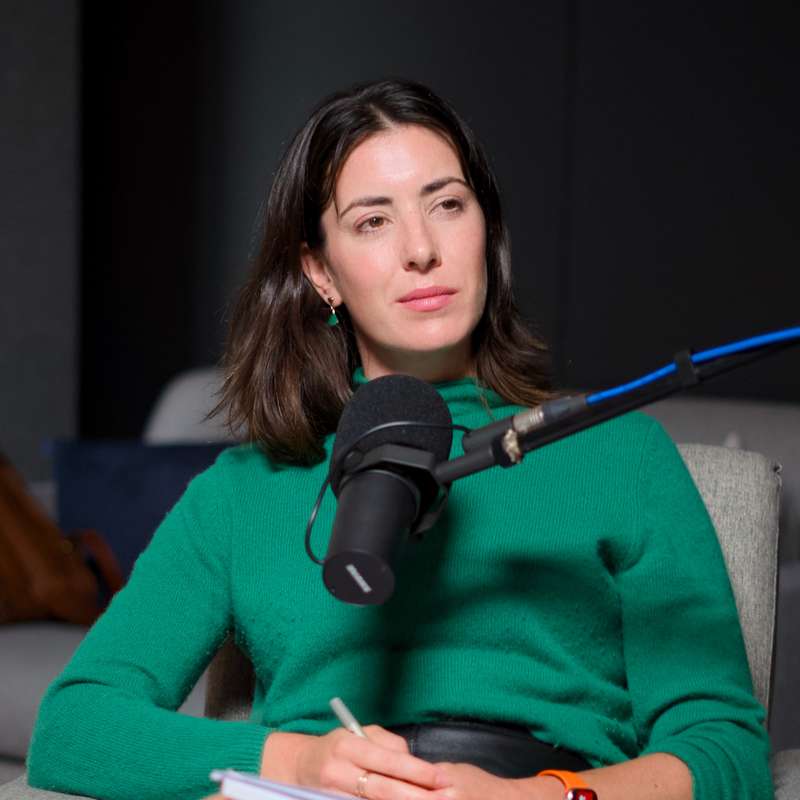 Susannah de JagerHost
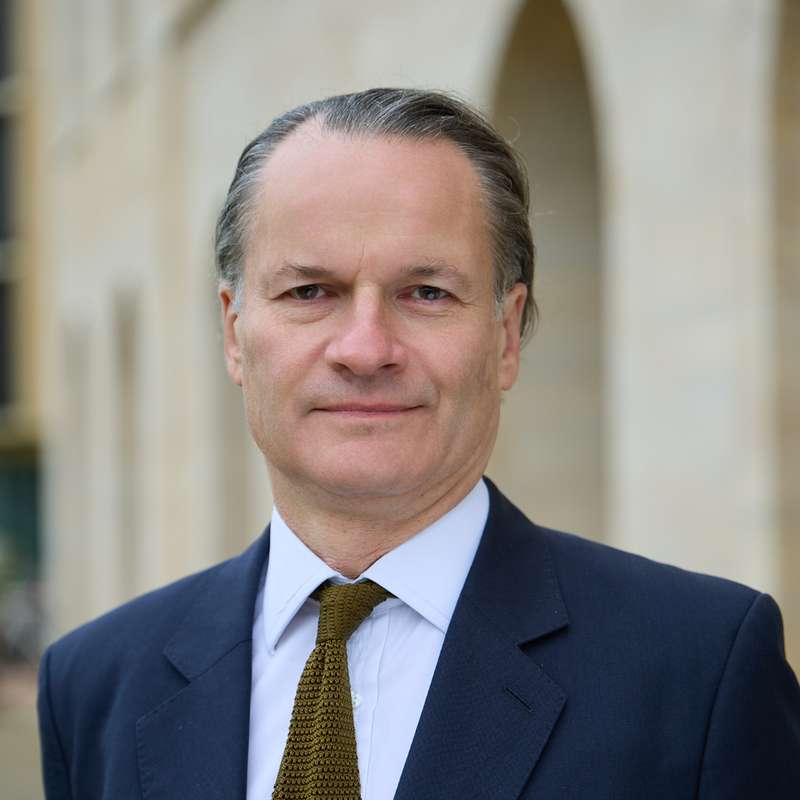 Edward HarcourtGuest
Production
 Matt Eastland-JonesProducer
 Story Ninety-FourProduction Company
Show notes
What do our conversations with machines reveal about what it means to be human?
In this episode of Ethics and Innovation by Oxford+ brought to you by Equinox, host Susannah de Jager speaks with Professor Edward Harcourt, Director of Oxford's Institute for Ethics in AI, about the parts of human life that no algorithm can reproduce. Edward argues that the real risk of chatbots is not that they reshape social life, but that people mistake them for something real.
Recorded as the UK government confirmed a ban on social media for under-16s from spring 2027, the conversation moves from embodiment and mortality to attachment theory, pluralism and the limits of machine minds. Edward warns of two quieter dangers: cognitive atrophy, as we outsource our thinking, and social atrophy, as we trade human contact for efficiency.
Edward Harcourt: Edward Harcourt is Director of the Institute for Ethics in AI at the University of Oxford, where he is also Professor of Philosophy and a Fellow of Keble College. His work sits at the boundary of ethics and the philosophy of mind, and his research at the Institute focuses on AI and humanity: how human values should shape the design, governance and use of AI, and what philosophical reflection on AI reveals about what is unique to human beings. From 2018 to 2022 he was Director of Research, Strategy and Innovation at UK Research and Innovation's Arts and Humanities Research Council, where he helped develop its Bridging Responsible AI Divides (BRAID) programme. He is the editor of Attachment and Character (Oxford University Press, 2021) and has written widely on moral psychology, child development and Wittgenstein. He was appointed MBE.
Connect with Edward on LinkedIn
Susannah de Jager: Susannah is a seasoned professional with over 15 years of experience in UK asset management. She has worked closely with industry experts, entrepreneurs, and government officials to shape the conversation around domestic scale-up capital.
Connect with Susannah on LinkedIn and Subscribe to the Oxford+ Newsletter for Exclusive Content
Oxford+ is hosted by Susannah de Jager and supported by Equinox.
Produced and Edited by Story Ninety-Four in Oxford.
Transcript
Susannah de Jager
Welcome to Ethics and Innovation by Oxford Plus, a special miniseries hosted by me, Susannah de Jager and sponsored by Equinox, Equitable Innovation Oxford.
As artificial intelligence becomes increasingly embedded with everyday life, ethical questions are moving from academic seminars into boardrooms, government departments, and product design teams. Professor Edward Harcourt has spent his career examining some of philosophy's most enduring questions about responsibility, character, decision-making, and human flourishing.
Today, as the Director of Oxford's Institute of Ethics and AI, he is helping shape one of the most important conversations of our time. In this discussion, we move beyond questions of technology and ask deeper questions about human values. What does responsible innovation actually mean? And how should we be measuring it? Can ethical frameworks keep pace with technological change? And how do we ensure that increasingly powerful technologies remain aligned with the interests of the societies they are intended to serve?
Edward, thank you so much for joining today in your office.
Edward Harcourt
You're very welcome.
Susannah de Jager
When most people think about ethics and AI, they're often looking at very broad questions thinking about jobs, the economics, inequality. Your particular angle on it is much more specific and actually very relevant to the fact that social media just got banned - two days ago where, as we record in the UK.
Just for anyone listening, can you give a sort of brief outline of your subject matter expertise and what you focus on? Because I think it's helpful to contextualise.
Edward Harcourt
Right. So there is a tendency for people to label, to slap the ethics label, on the bucket where they put any difficult issues, whether it's, are we all going to be out of work? Are robots going to take over the world? Questions and anything that they find very difficult to cope with and I don't object to that use of the word. But I try to use the word slightly more specifically.
And in the institute, we deal with issues about AI ethics, issues to do with AI safety, and issues to do with AI governance. So what is an appropriate regulatory regime for AI? Who should be held liable when things go wrong? What the right balance to strike between regulation and innovation? All those big questions that are on lots of people's minds. What I think is our intellectual USP, if you like, our intellectual brand, is the following that, questions about ethics and about the nature of human mindedness have been around for a very long time in philosophy. But I think something that they've suddenly become relevant thanks to the advent of AI in the way that they weren't before.
If you go back, 20 years or something, people I told people what I was interested in. They say, "Wow, Edward, that's so abstract, yawn." Now it's, "Oh, really? Ethics, the mind. Tell us all about it. " Because people have suddenly woken up to the fact that there are other entities, or at least potentially other entities cohabiting with us on this planet who might also have minds, who might also be ethical subjects, and who might also edge us aside in all sorts of important contexts in the context of psychotherapy, that labour market, friendship, they might take the role that had previously only been occupied by human beings and not just contingently occupied only by human beings, but where the very question, "I want to get some advice about where to go to eat. Shall I ask a human being or not? " Well, who else would you ask? Now, you can ask a machine.
Many people think that the beginning and the end of AI ethics is training AI models to reason ethically. And I think that's not the case for a variety of reasons. First of all, what is thinking ethically? There's a whole lot of ethical argument that needs to be settled before you decide what to train the models on. And so in a way, many of the very interesting cards have been dealt already by the time you decide what to train them on. But the other point is that I think many positive ethical values are realised by the AI ecosystem as a whole, not just by the content of what models are trained on.
And a key point here is pluralism. It's not a defect in a free society that people have differences of view about how to live. We regard it as a positive feature of a free society that people w have really quite deep-seated differences about what constitutes a well-lived life, what constitutes a worthwhile thing to pursue in life can live together without coming to blows. That's one of the things that a free society does. It contains difference in that way. Now, if you pose the question, "Well, what is the ethical code that I should teach my model?" You're forgetting about the value of difference, but I think difference, pluralism, has a value in its own right.
It has forced us to think about what, if anything, is the unique contribution that the human presence makes to the meaning or value of a situation. And I don't think that question is the whole of AI ethics by any means, and it's no accident that this institute is located in the philosophy department, which in turn is located in the humanities division of this university.
I want to make that the starting point of our inquiries, not just let's think about machines and their effects on us and our future. But what is it that the existence of these machines forces us to realise is unique about ourselves?
Susannah de Jager
And what is it? A big question in a small sentence.
Edward Harcourt
Well, I'm not sure that there's an extra thing that's unique about ourselves. But I think there is something unique about the embodied human person that is not reproducible by, or not substitutable by, anything else. However cognitively sophisticated it is. And there are various ways of thinking about that.
The first is human minds have all sorts of bits to them. Our cognitive capacities is one of them. That's one of the things that makes us so successful as a species that why we've accomplished all these clever things, including inventing AI. But our intellectual capacities come in a very complex package in human beings with the capacities to move. The fact that we're embodied and we're therefore mortal and we're capable of suffering various kinds. The fact that we're subject to appetites that we can't control and that are only problematically related to our reasoning capacities. I can reason all I like, but it doesn't stop me falling asleep when I'm tired. Plato talked about that two and a half thousand years ago, and that comes with having a body, and also the way in which human relationship can be mediated by our bodies. The fact that touching another person is such an important way of communicating, not just about conveying messages or sentences from one mind to another. So that's one way of thinking about what we have and artificial minds don't. We have an awful lot beyond our intellectual powers.
And the other thing is, and this is an example which is supposed to provoke thought rather than sweep all before it, but dead human bodies have a very special significance in our lives. Sometimes, archaeologists will say that we can detect the first presence of homo sapiens by two measures. The first is, do we dig up tools? And the second is, do we dig up human bodies that have obviously been deliberately arranged for burial? And it's as if the desire to dispose of the dead with solemnity and our humanity as our existence as a species come as part of a package. And I don't think there is any culture that does not solemnly dispose of their dead. And if you walk into a room, there's a dead body lying on the floor. Woo, that's a big deal.
Susannah de Jager
And in one of your blogs you articulated that in contrast to a robot
Edward Harcourt
A robot that doesn't work is just rubbish and that's a huge contrast. And so I think embodiment is important because it brings with it all those complicated capacities in the living human being that go along with intellection. But embodiment is important even after we cease to be alive in a way that it's not with artificial life.
Susannah de Jager
So acknowledging those differences as you frame them there, we're talking about an agreement that there is a difference. We just spoke to Raphaël Millière, your colleague, who was talking about that increasingly models that were historically trained on large language data sets are now looking at vision inputs and video content and even as he was saying that, I was thinking, but there's the sensory element.
You've gone even further. You're talking about a sense of what it is to be human and to engage physically with one another. It's very hard to imagine a scenario where actually all those gaps can be closed, and yet, people are conflating human consciousness onto AI models even as they are. Why does it matter to draw those two things apart?
Edward Harcourt
Okay. Well, several thoughts there. The first is that I think it would be a lot harder for people to engage with large language models with chatbots in the way that they do, if they had not already got used to certain other technologies. The letter is one. The telephone call is another. The text message is a third. So the idea that, we can be presented with another human being in the very restricted medium of written text or heard text is something we've got very used to. But before writing, you'd think some letters appear on a piece of paper. You think, "Well, what on earth is that? Do you have to be in the actual presence of a person?" So we're used to remote communication and that makes it far easier to imagine that there's a mind behind a chat bot.
Susannah de Jager
A lot of your work is looking at childhood development attachment theory. In some of your blog work and your articles that I looked at what jumped out at me is that children are used to engaging in the way you described.
They are used to that distance interaction, but perhaps to a lesser degree than adults realise it. They are conferring human attributes and understanding upon that interaction. What is the implication of that?
Edward Harcourt
Okay. I've two things to say. I think the basic reason why things can go wrong when children or indeed adolescents or adults interact with chat bots as if they were real is that they aren't. So the interaction is vitiated by a false belief. I'll come onto that in a second. But it's important to recognise what I'm not saying. So many parents, and I think if my children were still young, I would be having the same worry. Many parents are terribly worried about how children's development will be affected by their excessive or overly early interaction with small screens.
And all I want to say about that is, look, the evaluative significance of technological change is very hard to assess.
Susannah de Jager
That's not as reassuring as I was hoping you were going to be, Edward.
Edward Harcourt
Well, I'll come back to the illusion point in a minute. But take writing. People will often say small screens are rewiring our children's brains and no doubt they are, but literacy rewired our brains, right? Because there are huge bits of our brains that were not used before writing was invented and writing has made a whole lot of things possible, but it also devalued certain other things. Going back to what I was saying a minute ago, face-to-face interaction no longer has the significance that it does post-writing because you can communicate with somebody when they're not there.
I can imagine people thousands of years ago saying, this is ruining human society, because you no longer have to be in the physical presence of somebody in order to communicate with them. If the only thing you've got is speech, that makes a certain kind of human interaction essential. It's optional post-writing. But I don't think any of us regret the invention of writing because we're so used to the things that it has made possible. We think of it as a net expansion of our capacities. Even though we can imaginatively cast our minds back into a society in which people would experience the invention of writing as it were on the cusp of its invention as a loss, what's going to go missing if we adopt this technology? I don't think anybody wishes that it'd never been invented because we're so much creatures of that invention. We've grown up valuing the forms of social interaction which have been made possible by it.
That's why it's very hard to assess the evaluative significance of technological change, because even though it seems dreadful while it's happening, the people who will tell its history will be people who've been shaped by it. It's not saying everything's fine with chat bots. It's not supposed to imply that. But it's a general reason to not, reach straight for the panic button when we're in the face of some technological change. And in particular, saying that it'll rewire our brains is not a good reason.
I do worry about the excessive use of small screens, excessive reliance on computers. I was giving a talk to some sort of 18 to 21-year-olds recently about chat bots and it became apparent to me that when they talked about their social lives, what they meant was their online social lives. For awhile, I though, "Well, you must been meeting in the common room or meeting in the bar or going for a walk." No no, they were talking about social life is something you do in front of a small screen. And I though, "I wouldn't like that. What kind of a life is that?" But they've got used to it. They've still got friends and so on.
So I think that the objection to chat bots is totally different. It's not that social life has been reshaped. It's that people have the illusion of interacting with something real and it isn't and so people need to understand that there isn't something on the other end of, as a friend is on the other end of a text message or a telephone call, there isn't something on the other end of the chatbot and people are victims of an illusion. Not saying it has no use at all. I got a rather moving message from a woman in the Ukraine recently who is responding to that blog that you read about chat bots saying, "Look, what if you've got nobody else to talk to because you're living in a war zone and you're completely isolated? There's no other opportunity to interact with your professional peers." And I said, "Well, yeah, that's a good point and I'm very sorry to hear that's the situation that you're in.
But of course, if it's a choice of interacting with the bot or interacting with nothing at all, go with the bot, but just don't believe that what you're talking to is a person, A, because it isn't. But B, because if you think about it for five minutes, you'll realise that there are all sorts of conversational moves or all sorts of articulations in the relationship that are there if you're interacting with a person and which are not there if you're interacting with a bot and which are valuable in the case of a person.
So a person can say, I'm fed up with you. I've had enough from you from one day. Enough of you and your woes, ask me a question or just go to bed.
Susannah de Jager
And you have articulated a lot there, but you've actually articulated sort of three different relationships there. One is with a chat bot, and you've articulated some of the pros and cons of that. One is in person and you've done a lot of work on how people typically and historically have developed and how that forms character and personalities and social structures. But then in the middle you slightly skimmed over a modern phenomenon, which is people socialising, not in person.
And actually, I would love to dig into that a little bit more because it is so much more common. We are seeing things like anxiety and kind of sadness and feelings of being subject to the world rather than having control of your own environment and you could argue that's to do with a lack of development of a locus of control.
And I want to know your opinion on that middle ground because you and I are of a generation where we would have socialised in person. It is less common. And the implications of that seem to me very large.
Edward Harcourt
I think that the difference between, interacting with a real person and interacting with something that is not a person, those are very different differences. And so as I say, the interaction with the chatbot is viciated if you're under the illusion that it's a real thing and you can't step back from the illusion as even small children can step back from games and understand that it's just make-believe. That's one of the weird things about people's interaction with chat bots is that at least some of them seem incapable of doing that. Whereas I don't think it's great if social life or the preponderance of people's social life is conducted online. But I feel hesitant about, delivering an opinion that this is "it's not like the old days."
So in lockdown, when teenagers were only interacting with their peers via social media, I can see that's a huge stressor, right? But if their relationships with one another are both via social media and face-to-face, you see kids on the bus going home together and they're looking at their phone and laughing and pointing at stuff and you think, well they look like two friends having a good time, not two friends who victims of the small screen and that's not to comment on the ban about social media under 16s. And I think I could actually argue that both ways, but, it seems to be many people's default view. I think it's going to be really popular with lots of parents, even if it's not really popular with lots of teenagers. But I think there's a big difference between, as it were the way in which small screens bed down in face-to-face social relationships and what you would have if they replaced face-to-face social relationships.
Susannah de Jager
I interviewed earlier Lord Lionel Tarassenko and interestingly he gave a speech as lots of people actually wanted to do in the end on this subject, in the House of Lords on Friday. And clearly two days ago, as we're recording, Kier Starmer announced the UK ban from Spring 2027. What he said on it that I though was interesting was that he had changed his mind from thinking we should use this as a carrot - to try and encourage companies to alter for the positive their algorithms and the impact on cohorts, especially children. But that actually he had swivelled, having seen some initial responses on that. Swivelled sounds rather capricious actually that he had researched and changed his mind in a meaningful way to their saying, actually, social media companies really seem to be responding much more to having been given the ban and being forced which was informative to me and I mentioned.
This Oxford Plus miniseries is brought to you by Equinox, Equitable Innovation Oxford. Equinox is a major regional partnership established by the University of Oxford to drive inclusive innovation and sustainable economic growth. Bringing together universities, local authorities, government, industry, investors, and community organisations, Equinox provides a unified voice for Oxfordshire, championing innovation that delivers economic impact alongside social value.
More than 80 organisations have signed the Equinox charter, committing to atract investment, remove barriers to growth, and ensure the benefits of innovation are shared more widely. By aligning Oxfordshire's world-leading research, enterprise, and talent, Equinox aims to unlock nationally significant growth, reinforce the county's position as a global innovation hub, and ensure that success creates skilled jobs, attracts investment, and delivers lasting prosperity across the region.
Drawing you again on the impacts on, as you said, on mental health, I'd love to understand a little bit more how we are deviating without perhaps enough focus from what's optimal for our children at the moment. There are these gaps from what we know and the impacts it has, what we have that's a sort of working live experiment, and what perhaps, those that study it such as yourself know are bad for long-term outcomes. I'd love to understand a little bit how you see the experiment we're running through those lenses.
Edward Harcourt
Yeah. Well, I think we're running more than one experiment at a time, aren't we? And I think the social, not withstanding the fact that social media is an partly AI-driven technology. I don't think that the argument about social media and the argument about the widespread deployment of AI, let's say, in the workplace, is that they're not the same thing. My gut tells me that banning social media for under 16s is a good thing to do. I think people should have other things to do. One can imagine social media filling a gap, that's left by having two working parents, parents' anxiety about the safety of going out into the street, parents, I think, are much more content if their children stay at home all day because they think they're safe. So what are you going to do, than they were when I was a child?
But my worries about the rollout of AI in the workplace are different. So if I was a young person, I would be worrying about the effects of AI among other things on the labour market and which skills of mine are going to be useful in future. That's a totally different worry from worrying about the effects of social media on mental health. Not that looking a future in the eye in which you are worried about not being able to work would not have an impact on your wellbeing. I think it has a very significant impact on young people's well-being. What am I supposed to qualify myself for? How do I make myself useful? What skills constitute preparing to be an adult?
Susannah de Jager
It's interesting, because if you dig into the more restrictive parenting that is pretty broadly acknowledged to be the common model now, you will know this, but those listening may or may not that, and correct me if this is wrong. But my understanding is that this comes from there was a high-profile kidnap of a school child in America.
In response to that, there was a large scale manhunt and then after that, they started publishing on milk bottles, pictures of missing children thinking that was a helpful thing to do, and therefore what happened was that the perception of the risk of child abduction became much greater than the probability of risk.
I think that at the same time, it conflated with obviously sort of propagation of the news in a different way and social media and a whipping up and so parents have been told that this risk is much greater than it is. As a parent myself, I don't spend my whole time thinking about the risk, but you are primed to be aware of it as a risk along with others, by the way.
And I wonder how we should be training parents to realise that the harm they do is greater on the other side of that.
Edward Harcourt
Goodness, I've no idea. Risk is a very difficult thing to think about in a clear-sighted way because partly people's attitudes to it vary a lot. A given individual's attitudes to risk, what seems like a rational course of action, will vary a lot depending on the size of the risk. And also because I think there is this cultural pressure and I don't know where it comes from. I wish I knew more about it to identify, rationality really, with being risk-averse. But as it were, taking out insurance, not taking risks, being cautious in all sorts of ways, almost equal to in thinking in this part of the world anyway, being practically rational. You're taking risks with your health if you smoke. Nobody wants to die of lung disease, but it doesn't go without saying that it's irrational.
Susannah de Jager
I am a fully paid up member of the risk-averse party. I'm not a somebody who jumps into a sports car or gets onto my bicycle without a helmet on because I want to feel the wind on my forehead, I don't.
But that's fine because that's what comes naturally to you. So coming back, how should one be thinking about our children's engagement? What is it perhaps that we need to be very protective of in our engagement with our children versus their engagement with technology? I mean, If somebody's listening and saying, "Well, this is all quite theoretical," what might be the more practical thoughts that we could perhaps imbue them with from this conversation?
Edward Harcourt
Well, one thing, and this seems to be a real no-brainer, is regulation of toys that are AI-powered seems to be quite ineffective. So even though you're not allowed to expose children under 13, and this is not looking forward to the social media ban to chat bots.
There are toys, teddy bears, that will talk back to you because they include AI-powered chips. Any child can have one of these because they're bought for them by parents, but they're obviously geared to a market for extremely young children. And I think that is not right. If there's some reason for not exposing children under the age of 13 to AI, you shouldn't be able to get in through the back door just because it's the teddy bear that's got the miniature chat bot in it. And I think that, that would be an easy thing to correct for.
Of course, if you've never been exposed to AI and you're not interacting with it in your everyday, it's not clear that a lesson in personal social and health education session at primary school, in which you were taught to think of chatbots as not real, would that make any sense to people who hadn't been exposed to chat bots? Well, I think it'd be good to have a go. Because you know that people are going to graduate onto this. If they graduate onto it, then the lesson will come too late. So I think asking little kids questions like if you were talking to a machine and it was talking in the first person, how do you think it feels? Do you think you can have feelings? Did you know that, your parents can go on talking to these machines all night if they want to? Do you think the thing gets tired?
In these lessons, kids do get taught, "Have you ever had a pet who died? Has anybody else in your family died?" And get them to think about death. "Well, do you think one of these machines could die? And if so, what does it mean if they can't die? Is that because they're like gods that they live forever or something? Or is it, they're magic? No. Well, if they can't die, if they can't suffer, can they really understand what you're saying when you try and share something difficult with it? I think those are questions that it'd be well worth asking children.
Susannah de Jager
I think that your point around what are the questions that for a child will bring that gap between what they might think they're interacting with and the real differences of no, there isn't a person on the other end of this, and therefore you must view it, with some caution.
If we take that as red that we want to do that, taking a slightly more regulatory lens on it, what in your opinion should we be lobbying for as parents or asking for from regulators in order to do the other side of that coin and to actually be more restrictive? We've obviously got the social media ban. You were saying you could argue on both sides of that. But, if we were to improve these things to be safer for children or indeed adults to interact with, what might that look like?
Edward Harcourt
Yes, I wouldn't want to frame the potential downsides of interacting with chat bots solely in terms of safety. So as I said in relation to the woman from Ukraine, there can be cases where interacting with a chatbot can be beneficial if there's no other human on the scene. Or somebody who's socially isolated and not in a war zone or an adult or young person who can't get a psychotherapy appointment and who needs to talk to somebody because they're suffering in some way.
So I'm not saying that interactions with chatbots can't be instrumentally valuable. They can be. Nor do I want to say that the only thing that can go wrong with them is that they're unsafe, for example, that they could give rise to addictive patterns of behaviour, although I'm sure they can.
Here are two other risks. The first is, and this is a much talked about problem now, is the risk of cognitive atrophy. So I don't think that's exactly a safety question, but if in your working life or your life as a student, it's so easy to ask a chatbot, an LLM, a question rather than trying to find it out for yourself. If you go on and on doing that, the huge risk is that you'll get out of the habit of answering those questions for yourself and indeed of figuring out how to even address the question. So you acquire a dependency. What happens if there's a power count and you can't ask that in a very boring kind of case and you can't ask the chat bot anything. But also if you lose your powers to question, lose your powers of open-ended inquiry, lose your powers to summarise text and extract a view from it, you are bargaining away a lot of power to somebody else because what comes out of the LLM is not under your control and you may lose the capacity to criticise it. You may lose the capacity to take critical distance on it and that, I think, is a huge risk that I wouldn't put under the safety heading.
The other is that, and I wouldn't put this under the safety heading either, that if I'm right, that there is something specially valuable about the human presence and that artificial entities can't replace. That we'll become lonelier and lonelier or there's certain sorts of human contact that we will unwittingly deprive ourselves of, but that we need in order to thrive because we'll think, "Oh, well, we don't really need a human carer in this situation. We don't really need a human friend in this situation. We don't really need a human colleague to bounce ideas off in this situation. It's cheaper or more efficient or more productive to replace those people with artificial entities." Just as, and this isn't an argument, a wholesale argument, against automation, but just as people say that they suffer from social isolation because at the checkout at the supermarket, you now don't talk to a real person, you just put the barcode under a scanner.
Obviously, if you're me and you interact with people all day long, I don't really care what the checkout is like at the supermarket, it's convenient. But if your only opportunity to interact with somebody socially is when you go to the supermarket and talk about the weather to the person at the checkout or say, "How are you? It's going to make a big difference. And I think that unwitting bargaining away of opportunities for human contact that are non-instrumentally valuable, but that mitigate the risk of social isolation, bargaining them way in the name of efficiency or productivity is a huge risk of AI but not one that I'd bring under the heading of safety, exactly.
Susannah de Jager
No, well it's interesting. You used the phrase "cognitive atrophy" and below it I wrote "social atrophy" and what you've just articulated is exactly that. And actually, it came up earlier in the discussion, when you were talking about younger people interacting through social media primarily and then you were talking about do chatbots get tired. There's a sort of further bridge of, do we lose an ability to be patient with people who are frail and demanding in their own ways? And actually, do we completely lose the ability to have human connection that we just find less satisfying in the immediacy?
Edward Harcourt
I absolutely agree with you. I think that a risk that is very closely related to this risk of social isolation that I was describing is that we will render ourselves less able to take part in human social interactions. Just think about the psychotherapy case. You might see a psychotherapist for an hour a week, right? And pre-AI, that might be a very special hour.
But will it continue to seem special? Will you continue to concentrate on it? Will it mean the same to you if you can ask the same questions to a chat bot, whether it's a specialist chatbot or a general chat bot, potentially for 24 hours of the day? And I think the answer to that in many people's case would be no. So we're disabling ourselves for ordinary human contact by getting too used to this form of contact with artificial entities.
This is a sort of a guess. It's a hunch because, as I said to you earlier, I think it's very hard to evaluate the changes brought about by technological innovation. But still, my gut feeling is that we do need human contact. That is something that we thrive on. The co-presence of another human is special to us and we're hardwired to see things that way. But that if we don't think very carefully, we will bargain away opportunities for that sort of human contact, whether it's the deliberate pursuit of human contact, like inviting somebody over dinner or just casual human contact, like talking to somebody at the checkout. That territory will be seeded to artificial entities in the name of efficiency or productivity and then it'll be too late.
Susannah de Jager
And if you, which I'm sure you will have done, if you look at the characteristics of people in blue zones some of them are diet and some of them are environmental, but a lot of them are social. The social fabric, if you look at a concept such as Ikagay, there's a lot to do with community and then there's another one to do with purpose. And actually, I think that, the kind of discourse around, well, if we get the robots and AI to do everything, then we can go off and write poetry, which by the way, for some people would be amazing. I'm not disputing that, for those that are really creative. But maybe it's just how one's conditioned in a modern world and we all would be able to become more in tune with our creative selves. But there is something about purpose and productivity for a lot of people that if you were to say, "Here's a universal income, go do nothing all the time or work out what the thing you can do is." I wonder if it would actually be, beneficial or whether it would, like people that retire and the death rates are extraordinarily high in people that retire too fast and too speedily.
Edward Harcourt
Yeah. You might well be right. I don't buy at all the idea that, if we were suddenly liberated from work, we would be able to do be creative beings in some other sphere. I think it'd be a very painful adjustment.
Susannah de Jager
Edward, thank you very much.
Edward Harcourt
You're very welcome.
Susannah de Jager
Thank you for listening to this episode of Oxford Plus, hosted by me, Susannah de Jager If you wanna keep up with all things Oxford Plus, visit our website, oxfordplus.co.uk or sign up for our newsletter on Substack.
Oxford Plus is a podcast produced by Story 94.
Partners
 mishcon.com
In partnership with
Mishcon de Reya
The Mishcon de Reya Group is an independent, international professional services business with law at its heart, employing over 1450 people with over 650 lawyers. It includes the law firm Mishcon de Reya LLP and a collection of leading consultancy businesses that complement the firm's legal services.
 oxfordequinox.com
Sponsored by
Equinox
Equitable Innovation Oxford is a major regional partnership established by the University of Oxford to drive inclusive innovation and sustainable economic growth locally, nationally and globally. Equinox serves as a voice for the region, championing innovation that delivers economic impact and social value.
Ethics & Innovation: What Makes Us Human in the Age of AI?
Oxford+