
Breaking the Myths Around University Spin Outs with Irene Tracey
Susannah de Jager·Oxford, United Kingdom
Irene Tracey, Oxford's Vice-Chancellor, discusses findings from the University Spin Out Review, addressing myths about university innovation, the challenges female entrepreneurs face, and gaps in funding and support across UK institutions.
Listen on
Now playing
Breaking the Myths Around University Spin Outs with Irene Tracey
Season 1 · Episode 9 · 13 May 2024
Featured
 Susannah de JagerHost
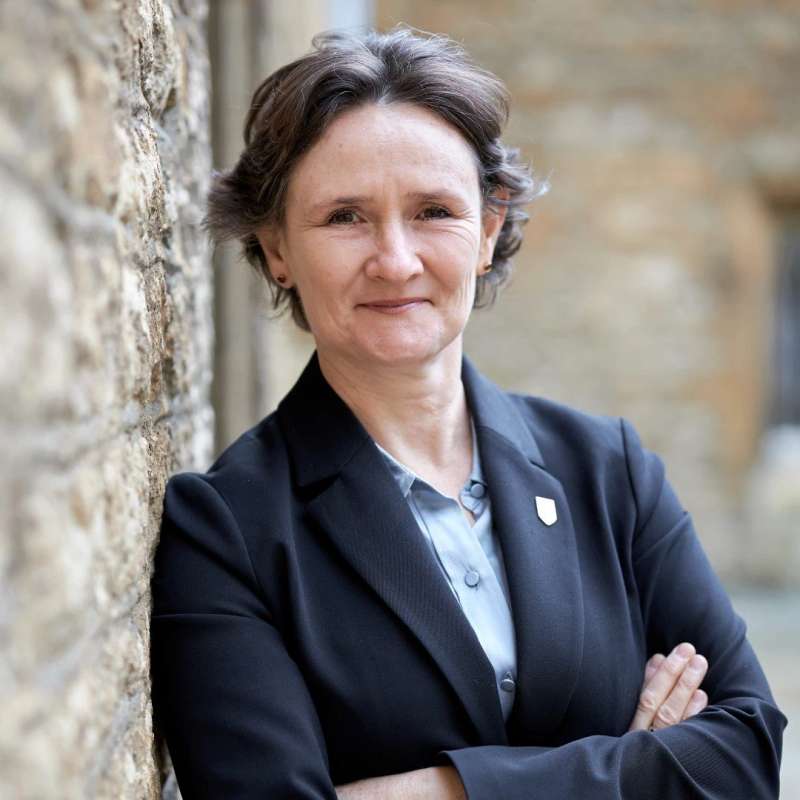 Irene TraceyGuest
Production
 Matt Eastland-JonesProducer
 Story Ninety-FourProduction Company
Show notes
In this episode of Oxford+, host Susannah de Jager is joined by Irene Tracey, Vice-Chancellor of the University of Oxford and co-author of the University Spin Out Review, to delve into the myths and truths uncovered through the review.
Through the conversation, they discuss the role of universities in fostering innovation, the challenges faced by female entrepreneurs in the sector, and the importance of private investment in university projects.
Introduction
The University Spin Out Review
Can every university town can have its own cluster?
The future for Oxford
Addressing the entrepreneurship gender gap
Exploring university funding
About the guest:
Irene Tracey is a distinguished academic and current Vice Chancellor of Oxford University. Her association with Oxford dates back to her undergraduate studies in biochemistry.
After graduating from Oxford, she specialised in Magnetic Resonance Imaging at Harvard Medical School before returning to Oxford in 1997 as a founding member of the Oxford Centre for Functional Magnetic Resonance Imaging of the Brain, where she served as director from 2005 to 2015.
Irene has occupied numerous senior leadership roles within the University and has contributed to numerous national and international committees in her field of research. Notably, she co-authored the University Spin Out Review with Andrew Williamson from Cambridge Innovation Capital, contributing significantly to discussions around the investment ecosystem in and around Oxford.
Find out more about Irene's work with the University of Oxford here.
Read the University Spin Out Review here.
About the host:
Susannah de Jager is a seasoned professional with over 15 years of experience in UK asset management. She has worked closely with industry experts, entrepreneurs, and government officials to shape the conversation around domestic scale-up capital.
Connect with Susannah on LinkedIn
Visit our website to learn more and subscribe to our newsletter - oxfordplus.co.uk
If you have a question for Susannah, please get in touch - oxfordplus.co.uk/contact
Oxford+ is hosted by Susannah de Jager, supported by Mishcon de Reya and produced and edited by Story Ninety-Four in Oxford.
Transcript
Welcome to Oxford +, the podcast series that takes you deep into the myths and truths of the Oxford investing landscape. I'm your host, Susannah de Jager and I've spent over 15 years in UK asset management.
My guest today is Irene Tracey. Irene became the Vice Chancellor of Oxford University in January 2023, but her connection with the university goes back to her own undergraduate degree in biochemistry.
After leaving Oxford, Irene focused on Magnetic Resonance Imaging at Harvard Medical School, before returning to Oxford in 1997 as a founding member of the Oxford Centre for Functional Magnetic Resonance Imaging of the Brain, later serving as its director from 2005 to 2015.
Irene has held many senior leadership roles within the University, as well as serving on many national and international committees in her research area. Of particular interest to the discussion about the investment ecosystem in and around Oxford is her co authorship of the University Spin Out Review alongside Andrew Williamson of Cambridge Innovation Capital.
Irene, thank you very much for joining today and I have a special thank you for you because one of the taglines of Oxford Plus is here about busting myths and your spin out review, as you co authored with Andrew Willinson, is a massive one for busting myths and some of them that you've busted and some of them that you kind of corroborated. So if I were to give a laundry list for those that might not have read, but should for what it's worth.
The ones we may be busted, or you busted, University IP stakes and the percentages taken versus perhaps our US counterparts, every US uni is better and actually it transpires perhaps just two are marginally ahead and universities cashing in. But focusing on some of the ones that we suspected are the case, the golden triangle getting a disproportionate amount of funding, more scale up capital needed, more government support at both the early and late stages, potentially with the middle being pretty good and academics aren't necessarily the most commercial.
Now, not taking it in any particular order, because I have so many questions for you, which one of those are you most focused on at the moment for Oxford? Well, first of all, thank you for reading the report and I do encourage the listeners to read it and it was a really interesting journey to be on, actually, throughout the year and it was terrific to work with Andrew and we were very grateful to all the stakeholders. I mean, I think I joked that there was nobody left in Britain to talk to. We had such engagement and we tried to do that to make sure that we really did listen to all the different stakeholders at every stage. Just a caveat maybe before I answer specifically where I'm focused. The report was constrained in terms of what the government wanted from it. It was very much for us to focus on that first phase, so within the university sector, as you are developing your ideas, you know, in your potential research discoveries that are IPable, I say that as a scientist myself with it was the journey from that sort of immediate transfer out there, that first phase of spin out and even just reminding, you know, the government that not all people spin out companies. There's a lot of licensing, in fact a lot of it is licensing and what that means and why one makes the choice between spinning out a company or licensing to an already made company and not so much to focus on the sort of scaling up bit of it, or indeed the sort of more series B where the companies then grow even bigger. But we were very keen that we'd speak to that in the report because we felt that there was a pipeline that needed to be discussed and this was a one off opportunity to say, okay, let's bust some myths because there was a lot of twittersphere and commentary that was incorrect and factually just wrong. So let's use this as a vehicle to bust some myths to really celebrate actually how well the university sector has done in this space, considering actually it's very constrained at the moment and struggling financially. But despite that, how well they've done to actually make this even happen and what a fantastic achievement that is and to put in the appendix some of the success stories that you could point to, but then point to some of the things that we felt would make Britain more competitive, more interesting, have a particular USP, so not just to, again have the rhetoric, which you know, I teased Jeremy Hunt, the Chancellor, around about just doing a Silicon Valley Me Too. It's like, that's so unambitious, britain can be much bigger and better than that and we don't want to just be a Silicon Valley Me Too. Yes, we're great at the life sciences and the physical sciences and the deep tech sciences, but we're awesome at creative arts and we're awesome at the humanities and there's a huge opportunity in entrepreneurship and innovation because of all our amazing ability around the creative arts. So let's speak a little bit to that. Let's speak about some of the issues around women founders. Let's speak about the bits that aren't in our control but are in the government's control, which is why is it we lose a lot of companies at that sort of more secondary stage because of capital investment, planning, restrictions, access to a skilled workforce, we can come on to all these issues. So to go back to your point about, you know, maybe you made a comment about a disproportionate number and that's an interesting loaded word, it's that there's just a huge volume, and we've been at this in that golden triangle a lot longer. It's as simple as that. So there's just a lot more to invest in, but there's just not enough capital. So it's not disproportionate. It's that there's not enough capital to invest in other places and there's just a disproportionate amount of opportunity in this region because we've just been doing the innovation piece longer. So part of the report was also to say, learn from how we've learned the journey for the new places around the country, the universities that want to be a part of this and want to do innovation, what is it that we've learned that you should learn now and go and start here, not where we were 20 years ago? How can we help you? How can we encourage the government to think about more innovative ways, forgiving the pun, of facilitating some of those university places to be a part of this because there is no shortage in this country in our brilliant university sector, fantastic ideas, amazing opportunity to generate more IP and there's a thirst and an appetite for entrepreneurship. So, long answer but you know I'm very focused obviously in my role as running the university here is to continue to inculcate an excitement around the opportunities that innovation and licensing and spin out bring because I recognise in our students, whether undergraduate, graduate and our young early career researchers, they want in parallel, many of them do this type of thing. Not everybody, some people don't want anything to do with that and that's absolutely fine too, but as a modern day institution, we're really good at this, this is a fantastic way we can make impact, further impact beyond our discovery research and contribute to the betterment of society, which is what a university is about. We are pretty good at it and we've learned a lot in the past 20 years, there is more we could do and there are ways that we can definitely improve and do that better and that's at every level of the institution, so again, training, awareness at the undergraduate, graduate level, creating opportunities, getting people to buddy up and meet with entrepreneurs and be inspired by those investigators in my university that are serial entrepreneurs and have four or five companies spun out, to be inspired by them and to get opportunities to work with them and then to continue to facilitate ways that we can think about how, when we are developing people's careers, that we make it just easier for them to, in addition, if they want to, be an entrepreneur and to spend some time spinning out and to have what has been historically quite a rigid tenure track process where sort of you're in the job and that's it and if you go, you go, to have a slight more flexibility, I call it porosity, to sort of, for us to think about what does a modern academic career look like and it should be more porous, it should facilitate people who want to take some time out or they want to be part time in maybe the private sector that might be their private sector that they've spun out or somebody else's and then in the public sector which is being part of a university. What is it that I can do to again encourage that way of thinking and to develop the mechanisms by which we facilitate that more readily and of course then there's the sort of lowering, hopefully, more capital investment in, because for every company we spin out, there's several we can't, because we just don't have enough capital, how do we then facilitate in our ecosystem, and I'm sure we'll come on to this, new ways that we can also hold on to that incredible talent pool and all those companies, because that will drive regional economic benefit for the region and I'm born and bred in the city, so you know, it really matters to me that we, as a university, which of course we do as a big anchor institution, the major employer, and we pump billions into the economy, but there's more we can also do and how can we do that through the innovation spin out opportunities? Yeah and I think that's a really important point you raise and one I was discussing yesterday at Harwell, talking about, you know, Blackbird Leys are right there, you know, what can we do more to create opportunities, not just for the elite that they primarily would appear to serve.
Coming back to something you said about, you know kind of learning for other universities and being able to do things there, I had a recent guest, Dave Norwood, who was saying that actually the levelling up agenda being layered onto the innovation ecosystem belies some of the realities of clustering and clearly, universities all have hopefully brilliant academics and the ability to spin companies out. But those companies thriving locally, is not necessarily always going to be easy and that clusters have a lot of things that you have alluded to that they need to survive, not least talent and mobility of talent and density of talent, housing, supply, financing options, etc. Oxford has many of those here and is expanding and the science parks, but we would all like that to be the case. Do you genuinely believe that it's going to be possible that every university town can have its own cluster? It's a really important point and there's a lot in there to unpack. So yes, whilst Oxford will look good on the UK landscape in terms of density of people in the ecosystem, it is a far cry from my competitors which are sitting in Kendall Square in Boston and Stanford and San Francisco and those, I remind people, even though we beat them in every league table, which we should be very proud of, it's like winning the World Cup year after year. We do it, we're a public university, publicly funded, they sit on private investments, they are private universities with sixty billion of endowments and yet we do really well and they've of course in the innovation space been at it a lot longer which is why they've got trillion dollar companies sitting on them but what they do have which is sort of again a place that we need to be competing with is just such a volume in that ecosystem. They just walk across a corridor and there's people that they could bring into their companies the CEOs who are experts that academics need you know capital investment you know all that is just there at scale, at a level that's just jaw dropping. Now we will get there in Britain, undoubtedly and you know, places like Oxford and others are sort of on the journey there, but we're not anywhere close. People should just, the listeners should be just reminded of some of the challenges that we even have. Now, to go back to your question around the clustering, it's key that when you're creating these innovation systems, you do have the ambition and scale to want to have that mix because you need to signpost people again to the capital investors, to the IP lawyers, to the people that are going to be your great CEOs, to ease of planning and building at scale, to a great workforce, as you say, in areas that you've got school kids coming out and want interesting new different jobs or people want to reskill into different jobs and you can create that opportunity. We need skilled people to come and work in these companies and that's something again that part of what we need to think about also, it's not quite in your question but something to again reflect on, is how much we need to think about what more we need to do within the school system as part of the training or apprenticeships to help facilitate that and actually get involved in the training of the skilled workforce in Britain, that is one of the reasons as we point in the report a lot of companies go when they want to really scale up because they just feel they haven't got the skilled enough workforce here or the capital investment or the ease of planning to go and scale up a company and we lose them, right when they're ready to contribute massively economically and we just let them go and it's tragic and we just got to stop that happening having invested in them with publicly funded money in our public institutions. So one of the things you note in the report we did is say very clearly, to run the volume of companies say Oxford spin out 25-30 a year, to run a tech transfer office that's doing the bit, just for the listener who's not aware of how it works, you've got me as a researcher working, I have an idea, we patent it, we want to then potentially license it or spin it, you have an office inside the university that advises you. They're going to get you the barrister who's going to then protect it with a patent in different territories, they'll point you to different people who might want to invest or to different people who'll be skilled enough to help run your company or whether you need to be advised to go with a licensing route to sell it to, say one of the big pharma companies instead, rather than always spinning out your own company. But to make that tech transfer office be really good and really skilled with great quality people, as we have in Oxford, such a fantastic tech transfer office with Oxford University Innovation, you've got a big volume that you've got to be generating to make that wash its face and you're not going to be able to do that in every university, particularly small universities, they just won't have the volume and neither should they. So what we pointed to was to say in regions and maybe you would start where the government's already decided to create investment zones, you would create a one stop shop, which not that you're creating a cluster within the university's cluster around that one stop shop so that you can have a really quality one stop shop where you've got all that advice and that signposting. Each university isn't then going to the cost and the effort of trying to invent it all and have it all in house, but you've got a quality place that you can go to in your region that can help you get going on that journey with really good advice and that's again what I was saying to the start, you know, with some of the things it's not under our control, but that's where the government need to now do the work and decide where they're going to put these, you know, one stop shops and these clusters so that you can start to within a region where you've got three or four universities in a geographical area, they can get going, they can have a really good quality, you know, set of advice, they don't have to set it all up in house, particularly when, the financial constraints of universities is very tested and then they can start to think about how does that shape then other aspects of growth in that region in the context of those companies being successful and wanting to stay and putting in more investment. Now where places like Oxford and London Universities and Cambridge are helping in the context beyond just advice and this learn from us and this is how we've done it, it's some very specific things that also speak to the leveling up and that is to say we can't, you know, I can't place all the companies that we generate, but there are other universities that are trying to build innovation space because they've got spare land, they've got areas that they'd like to use, but they can't fill them. Well, what a happy marriage that is, so we signed a deal with for instance, Birmingham University, where we're placing companies there and again, we're looking at other places where we can move talent, move money, move opportunities and place them in different parts around the country and that's a real win-win and we're doing that, not just in this innovation spinner. We're actually doing lots of things in our basic research and collaborations anyway. A lot of the research that we do, particularly in the medical sciences, is in very much collaborative context and is setting up ways that you exchange talent, you know, and the talent pool can be distributed. So these are the more, as I often say to government, you don't asset strip to level up. You know, you've got great assets that are phenomenal. You know, if they're strong, everybody's strong. If they're weak, well, it's all done. But we do have to address the fact that there's not a spread, but you need to make the pie bigger and you need my to... yeah, it's just obvious, it's not rocket science. So, you know, we're strong. We will do and grow stronger, but we will also spread that beyond our geographical boundaries as we are and as actually we have done, it's just often people don't know that. No, that's really wonderful, thank you for explaining that, that's very clear. So within our boundaries, one of the things that again was mentioned in the report was sort of liaising between business schools for that more entrepreneurial, commercial talent and often the people going into those forums are already more experienced in the commercial world and twinning up with the academics. It's not something one has a sense is happening optimally in Oxford as it stands. I think somebody explained to me once that the history of the Saïd Business School was that the university didn't originally want it and that there's some sort of weird hangover from that but clearly there's so much mutual benefit from this amazing business school and this world leading university being combined. Is that something you're focused on here and how do you see that evolving? Yeah, it's such a good point and again, I'm just going to bust that myth. I've been in Oxford my whole career for 35 years and I've never heard that and I'm on the inside. Oh, I love that! That's myth number one. Apologies to the listeners! It is, well, I think it is fair to say that, you know, the business school in its development and growth from ground roots is very focused on just developing a business school that could quite quickly get up, you know, to a successful level and naturally, you might have some people feel that it's not integrated enough. But that's an evolution of how any new thing is going to develop, it's got to be brilliant itself and focus on what it's doing and then as it matures, it starts to make that connectivity both internally and then more externally and that's just an evolution thing and that's absolutely the phase it's in. Sumitra Dutta, who's the new Dean, he's coming in and inheriting a business school that's now, you know, up the league tables, doing well, attracting more students than we can take, et cetera, et cetera. So in this evolution, it's very much about, right, how can I benefit even more from being in the university and all the amazing talent? How can we reciprocate and put things in? So that's just a sort of explanation about how things really work when you're building new enterprises and again, there's always lots of commentary and myths in Oxford, which, you know, I'm often staggered at and I've been there for 35 years! I was given a very detailed version of that, we'll discuss it offline, that's hilarious! There are always anecdotes of things, but you know, the anecdote of the anecdote as opposed to the generic sort of broad understanding. But Sumitra is brilliant as the new Dean and is absolutely, you know, he's running a leadership program for all our, you know, heads of department, there's all sorts of stuff he's doing, so it's very integrated. But the point you're making, having sort of just corrected that, is that it's not just Oxford. There was a really surprising lack of engagement across the country of business schools, tying in with the innovation piece and that was a real surprise to us when, you know, we identified that one of the challenges was, as you spin out, the quality of the CEOs you can get access to, the ability to grow that company and meanwhile, you've all these business schools around the country and the two weren't meeting or talking, so that's why we flagged it as an issue more generally and certainly, obviously I'm talking to our business school and Sumitra and there's huge appetite and they're running innovation schemes, entrepreneurship schemes, running summer programs, they're all part of some of the programs that we run anyway and have been running. So they have been quite integrated. But what we need, again, it's holding on, I refer to it as the challenge and the trick we've got is how do we hold on to that talent pool once they've graduated and left, because you want them to stay and of course, these are very attractive students who've got lots of amazing opportunities and offers. Oxfordshire is beautiful, I love it, I'm borne and bred in it, but there's not that many different types of jobs, to do here and that's part of the growth opportunity and then you can hold on to more of your talent pool because there's interesting things for them to want to stay and do and that's where the two will meet. So I think it's, again, it's all part of, you're always on a journey, always evolving, you know, naturally quite a lot of the people coming to our business schools will be heading into London or they'll be heading into sort of bigger cities where there's just bigger businesses. So one of the challenges you've got and I've got is making Oxfordshire an opportunity innovation ecosystem, you know, with a stunning, beautiful city in the middle of it, juxtaposed to the greatest city in the world of London. Cambridge is another great city close by, all the rest is in Britain and a place where not just for our own people coming through our school system, but also people that come in as students, we hold on to amazing talent and we build and drive economic growth and all the benefits that come with that in this region. So we address some of the challenges of worst life longevity in the country, you know, within our own city, some of the schools that are not performing as well as, you know, we would like them to be considering their city next to a great world leading institution. These are all the things that, you know, we hope that we can be a part of fixing by creating that broader ecosystem and I often go out, you know, to my alumni who sit out on the West Coast and they're part of the Silicon Valley lot or Boston or out in Asia and they will say, and I will agree, and it's like, where else in the world is there such a phenomenal combination of things that's so amazing and capable of developing something that is truly world beating. When you think you've got a world great city, you've got two historic 1, 000 year old universities that have beaten everybody else in the world, you've got extraordinary creative arts on the M4 corridor, you've got some of the greatest national labs that are knocking socks off what's going on in Europe, you've got beautiful cities and countryside. There is nowhere else in the world that's got that constellation anywhere, tell me and nobody can and these are people sitting on the West Coast and the East Coast of America and in Asia. We've got them licked. So let's do it, let's be ambitious, let's think about what we create in this region and we can absolutely do this and it will be phenomenal and that's how you will build Britain back strong and economically and that's the sort of opportunities I see and try to sort of instill the report and what I'm saying very publicly, you know, under my stewardship, which is, you know, obviously a short period. I will do my best to set this in train. It'll take longer than my stewardship, but at least I'll set it off and that's the ambition and aspiration I have for the region, but it's also for the country. You make a really interesting point about the broader ecosystem, jobs that are outside of the current domain. Funny enough, when I moved to Oxford, my background is financial services and I was struck by how few investment companies there were here and it's something that you bring up in the report, is about diversity of capital and Cambridge does have more of it. I remember thinking, gosh, I've picked the wrong city for my background! I don't feel that way now, but I really, I thought gosh, I thought there would be more and there isn't and you do point very explicitly towards universities, as you say, learning from the experience of those that have gone before and very much making sure that they can appeal to as wide a range of investors as possible.
How do you see Oxford evolving and what do you think in five and ten years it needs to look like? Because it is still relatively constrained compared to Cambridge. Oh, yeah, it absolutely is. I mean, we always laugh because Cambridge obviously is brilliant and it's doing very well. But on many metrics, we have them beaten. We've had them beaten for ages, but there's a, we somehow don't sort of communicate that and if I can say that their ability to build at scale, different areas has just been a lot easier and that's really a major difference. But you're right, I mean, you know, going back to sort of, why did we suddenly take off in Oxford? And it goes back to the sort of capital and then how we must develop the capital and I know that you've interviewed Ed Bussey, who's the new terrific, you know, head of Oxford Science Enterprises. But, you know, when I was a young, early career scientist, you know, we patented things and then you put them in the drawer, did nothing with it. Occasionally, a bold, brave scientist would sort of pack up the job and have a go and get some venture capital money somehow and some of them were brilliantly successful and did really well, but a lot just chose not to do that because it's just too high risk and a lot didn't succeed. But the moment we created a fund and it wasn't a big fund at the start, and that was the sort of subsequent, it's been renamed many times, but now it's OSE. You just look at the graph, the moment we created the capital pot, bang, we went off and then the curve just rocketed to, you know, 300 companies now in that past decade, right? And it's absolutely causal. So all it needed to light the fire was a dollop of money and then we were there, we were doing our bit, generating IP, had the ideas, ready to go. We just didn't have the means to actually do anything with it and so do not underestimate the importance of capital. Obviously, we've got to see a more model, but we just need more money in the system and of course, venture capital is one way to do it. But as we say, the report is not the only way. You've got some, a lot of students and early career researchers want to do different types of spin outs, they want to be more social enterprise, they want to be a bit more of an NGO maybe model, they want to have different types of investors that may be more angel investors, there might be some people who will do it through a philanthropic donation. There's a whole range and I think again as ever in life, you want diversity, you want a menu of different ways of having capital come in and support you dependent on what it is you're aiming to do with your particular idea and so you know, where do I see things in five to, I would love to have billions of pounds in my ecosystem here and a range of different ways that people would want to invest and we have opportunities to think about how would we like to be invested in, because not everybody wants to go down the VC model, but that's a sort of common model at the moment and what we're trying to do is also remind the government, it doesn't have to just be VC. Here's a set of examples of how people did it very differently and there's pros and cons with that different way of investing. But we don't have enough, the short answer is for the volume of opportunity that's coming through, we do not have enough capital by a wide margin and we've just got to keep growing it. So part of it is to, you know, excite and interest people to come into our ecosystem because it's a phenomenal place to be and work, you will not be short of opportunity and it's exciting opportunities. These are really interesting projects that are not just going to make money, they're going to do great things in the world because everything we're doing by definition in an academic environment is stuff that's good for people and the society and the world and the planet. So whether it's our amazing new work developing extraordinary new generation batteries and the capabilities to store efficiently the energy there, whether it's amazing new chemistry materials on solar panels to be more efficient in the cloudy weathers of Britain, you know, obviously drugs and vaccines are a given obviously with the COVID one and then with malaria one, you know, we save lives and we make the world a greener place and this is what we do. So it's not just that you'll also make a lot of money, you'll be doing good for the world and my sense is that, you know, I look at my children's generation, they want something different and we've gone through a phase where it's all just about the money and that's very much a hard driven model that has borne and bred the brilliance that's happened on Silicon Valley and the East Coast, but I think, again, think about what Britain wants, think about sort of what our value system is. Sure, you need to make money and there's no shame in making money and that's great, that fuels everything. But you can do it and do good too and I think, you know, we can build an ecosystem that will again, embrace more the creative arts in addition, and our brilliance in that in Britain, it will also embrace women as founders and investors and the capabilities there that we're missing out on, it feels to me a little bit like where we were in academia 25 years ago, you're just missing talent because of, again, the usual old biases that exist and then you're investing in things that will absolutely make you money if that's the direction you want to go. But you'll also be doing extraordinary contributions to the world and that's got to be good and I feel that the next generation, that's what they want and what they're looking for. So my hope is I can create and help create and be a part of creating an ecosystem that delivers on that. I hope so too.
You talk about companies growing here and values based and I couldn't agree more. Funny enough, I was saying I was from a financial services background. I'm now doing two days a week in a cancer vaccine company. So I am one of those people and it is much more fulfilling. Nothing against financial services for what it's worth. You talk about those companies and it's not all for money and you talked about the restraints of the reporters you asked, but the scale up capital part of the equation is meaning that sometimes our best companies, sadly, if they are really successful, almost more so are likely to end up being bought, listed and not always, but sometimes subsequently moving some or all of their headquarters or their operations elsewhere, often America. So there is this sort of quandary of a missing segment here in the UK and I wanted to know what your interactions with people like Jeremy Hunt and obviously on the Mansion House Compact and the changes that might bring to that end of the ecosystem, what your view is on that? Yeah, no, it's a great, question and you know, we touched a little bit on this in the report, even though that was not the remit of the report, but we wanted to make some commentary about the downstream issues, because we see them and we see them at both a sort of ethical, moral level, if you like, because we feel, well, hold on a minute, you know, it's the taxpayers money, these are publicly funded universities, we've developed all this, we've then supported them to grow and be successful and then just when they're ready to really go big and really help drive things back, we just let them walk off into the sunset and there's no penalties. So we did discuss a little bit, you know, this wouldn't happen in America. If you left America, there'd be a tax penalty, there'd be some penalty. So again, these are things we've got to really think about in this country. Let's be bolder about the fact that, hold on a minute, we've got to hold on to you. So we've got to incentivise people to stay, that's the first thing.
We've got to make it easier and better and more attractive to stay. We've also got to maybe think about, you know, like they do in America, maybe there's a penalty if you do decide to go and... Do you not worry that might disincentivise the most commercial people? It might do, but it happens in the States and it doesn't seem to and they stay. So again, I think we need to at least analyse what happens there, what happens here, where are their differences and let's not be unwilling and let's have a bit of humility to at least analyse what goes on there. Is that a causal factor for what drives there, and what would be the penalties of not doing that? I'm not saying that's my recommendation, I'm just saying it's interesting to observe that we, there is no, you know, problems with that. Now having said all that, of course I can absolutely see why people will do it because they want access to a skilled workforce, they want easier planning, right? They've got access to a huge market that they can sell in and they've got access to capital and so, almost, you're forced to go and that was sort of why we did put in the report. These are the things that aren't in my control. I'm doing my bit. We are generating ideas and we're generating the talent and the skills, the next bit now is over to you and you've got to start to think about how do you incentivise people to stay. Incentivisation is always better than penalties, so I'm not saying I'm recommending you tax or whatever, you know, a carrot is better, but you know, it is interesting that there are... other countries do it differently, right? So, let's do that. Now, it's interesting, as you know, Julia Hoggart, we quoted from the London Stock Exchange and obviously I've had many conversations with her, and they've been doing some analyses of companies that did go off on lists on NASDAQ versus, you know, ones that list here and just, actually, what is the five year journey, and what are the pros and cons of doing that? It might be a short term gain, but a long term... not so much. So I think there's again, as ever, there's maybe some perceptual interesting things to unpack there and we have to see where that lands. But there's no doubt there is recognition that we have to make the listing more attractive to stay here. So those are things that need to be sorted and I keep referring to sort of planning, but I wouldn't underestimate and this has been a touchstone now for many different aspects of our society at the moment. We're all talking about it and the different parties are recognising that this is a problem. We are, we're suffocating ourselves because we've got a very anti growth of a sort of philosophy, which I totally get because sometimes we've made a real hash of the way we've done buildings and plannings and developments, but we do have to breathe and grow as well and that can be good. It needn't always be bad and so there's a cultural thing that needs to be worked on because that's also a big factor why people will go is they just feel they can't, it's just too painful and too long and too slow to be able to develop the physical facilities that you need to grow the company at the scale. So, and of course, you know, we have had Brexit. I don't want to get into the politics of that, we are where we are, let's move on. But again, you've got to think about the market you're selling to and when that's now a different ease of selling to a large European market, America is, you know, it's a big market to sell in, and we're not a big country, right? So, again, those are factors that we have to own the decisions we have taken in this country. But if we want to, again, hold on to these companies that we're developing, we've got to think about all these different issues that are the factors that people will tell you are why they upped and upsticks and left. And again, to the point around domestic market, one of the criticisms that I've heard levied in the UK is the NHS should be the first purchaser, the government should be the first purchaser, helping with proof of concept for our start up companies and so often those procurement exercises are just like wading through treacle. So I completely agree with that. I think there's a lot to be evolved there and Julia Hoggart is excellent. She's super, absolutely super person. Actually I spoke to her, I mean this is down in the weeds but even things like MIFID2 which is very boring piece of financial regulation have... they are now going to be reversed. It was gold plated probably by us as part of EU regulation. We do now have an opportunity to roll that back and help with the depth of the research market, which again is impacting people's confidence in listening here. She absolutely gets it and she gets the pipeline and innovation. No, she really does and she, you know, as I say we've discussed, you know, several times this issue and I'm very confident in her absolute desire to get this right and to do the changes that's necessary, you know, we're all part of this pipeline and we've all got to do our bit well and so yeah, over to them.
And so we're talking about Julia, I'm talking to you, I'm here hosting this and yet it was identified and you've mentioned it a few times that women, partly to do with structural difficulties of the inference is childcare outside of working hours, fewer women necessarily stepping into the ring at all, but the report also alluded to TTOs needing more convincing and I was wondering A, if you could illuminate a little bit more on what came out around that and B, what maybe you're doing to help educate, because it does seem to me, through work I've done, the conversations I have, the industries that I've been in, that women's leadership qualities, unless they fit a more masculine mold, are sometimes overlooked and we need to do a big educational shift. Yeah, absolutely and I was... this was something new to me. So in doing the report, I had obviously access to other types of reviews and reports that were done. Actually one interesting was ongoing at the time coming out of our business school. So a person doing their PhD on the gender gap and Thomas Hellerman's done other reports. So I was privy then for the first time to just the data and the stats and my jaw was on the floor. I did not realise it was this bad and it did, as I say, the best I could use is that it felt like, wow, this is where we were in the academic sector 25 years ago. That's, you know, we're just glass ceiling, no women getting through, etc., and what a waste of talent, you know, that you're not using.
So then, you know, in the brief period I was doing the report, sort of my diagnosis that's always data informed and evidence based was, of course there's the usual pressures that on top of already trying to just keep going as a successful academic, whilst simultaneously having a career, you know, other responsibilities around care, that's just one extra thing that just has to wait. You know, there's a reason I'm only now actually probably discussing spinning out a company in my own right, because it just was not possible to add that onto... And that's typical for women, that it will be later. A bit later, exactly right, because there just was no way I had bandwidth to do that. There's also some evidence that would suggest and this is not just in Britain, this is sort of global data, that women are more prone to want to spin out companies of a more social enterprise type nature, they're not going to be so commercially profitable and that's just less attractive to investors, particularly the VC model of investment, unless there's women investors and then they tend to want to do that. So there's some very interesting things there and then there's all the usual, like if a woman's the founder then it's less invested, if she's just on the panel but not the investor, they'll get more, all that sort of stuff going on, which is all usual implicit biases. But there's a little bit that could probably be explained just on some facts that women tend to want to produce companies of a different nature. There's the timing thing, but then there is just the implicit biases. Now that requires just education and facts and good examples of women. So things that we've been doing actually for the past five years is running a program called IDEA, Improving Diversity in Entrepreneurship and we've had lead champions of some of our women founders who've been terrifically successful, who were sort of early and then quite seasoned researchers, and then them running workshops, running panel discussions, exciting and inspiring the next generation of women, so that they can see, because visibility, I've learned that as a woman myself in a leadership roles, is that you underestimate as a woman, you know, it took me till quite late in my career to realise it matters, Just the visibility of me being a woman in that role, actually, was all I needed to do. It just made such a difference to a sense of empowerment that, you know, you could do it and it was possible to, you know, be head of a department and have a family and you know, run a lab that was doing well and all those things and you do underestimate as a woman. So we've been working hard to recognise that we need to improve the representation in this space to use the champions as great role models, great visible role models and then to be really active about supporting and encouraging and then, you know, as I say in the report by flagging it there, you know, it was very deliberate for me to want to put that in, you know and Andrew. So it's there and it's in black and white and then just next time there's a decision at a maybe a board meeting for VC and their sort of thing they might just remember oh yeah maybe I am being biased here and maybe I should invest in her as opposed to somebody else or give them a bit more because it's not just investing in the binary decision it's also how much so again significantly less money being given so it's, as ever there's never one unitary reason there's always a set of that you need to understand and diagnose and then you need to start to think about how do you start to address them and again, we're trying to do our bit in that way as an example and then we'll see what the rest of the community does. Well, the government through the British Business Bank have now got the Women's Task Force, which is absolutely pointed at this subject matter and I'm very passionate about also, so it does sound like they're picking up that mantle and in really positive ways. So that's really exciting. It is exciting because you're just losing, you're losing money, you're just losing talent. You know, I see if you sort of digress, but you know, many of the colleges, you know, were celebrating over the past few years, 40 years of women being admitted. Okay, I was at Merton College was my undergraduate and graduate college, I was very fortunate to be its warden, its head for a few years before I took on the vice chancellor role and we too celebrated our 40 years of women, I was the fifth year women were there and what struck me, and this is, You know, sounds like I'm going way off piste here, but there's a point here, is that when we started to celebrate, you know, just a sample of our women over those four decades from each of the decades, it was just extraordinary, the things that they'd gone on and become and done and you couldn't help but look at it and just say, wow, look what they've achieved in just 40 years of having an opportunity of that transformation that education brings and what we've missed by not having that happening more early, you're just missing, you're just wasting talent and that's a great tragedy, so you know, it's a good investment. Absolutely. I have one final question, I wanted to speak to, you alluded to the kind of the endowments in America, you didn't allude, you explicitly spoke about them and in the report it talks about them and the difference. In Oxford, it's further potentially exacerbated by the college system and the alum networks being held within individual colleges. Is that something that, I appreciate it's pretty difficult to get people to open up those lists, but in conversations I've had, it seems to me that giving to your college and potentially giving to innovation, to science and technology, to departments, they're quite separate. Is it something that you have plans to try and open up more or is it just completely intractable? No, it's another myth actually and I can say that, you know, hand on heart, I've run a college, I've run a department, I've on both sides. Well, I'm pleased. There's a lot of, you know, I'm an alum, so I get approached. There's a lot more talk and rhetoric around, oh, it's a big competition between the two. It really isn't because the reality is people give to the colleges because it's your family, it's your home and the college's needs are quite different and circumscribed and at the end of the day, everything the colleges are doing is core university, it's core business, right? We're all doing the best teaching that we can to the most outstanding students that we can find and we're trying to do the most impactful research with the best academics after delivering it. That's it, that's our core business to make the world a better place, right? That's what we do and that's happening everywhere and so I don't care where the money goes because it's all supporting core business and the truth is alumni database is one, it's one big shared database anyway and it has been for years and years, so everybody buys into one big database, it's not like they're secret lists. That is literally not what one hears. You know, people shouldn't listen to what they read in the press or sort of the hearsay. So the truth is, for years and years, we have a large big database where everybody signs up because it's more efficient to communicate by email to everybody in one big bit and colleges can then have, they access it and run theirs if they're doing bespoke stuff, or if we need to communicate to everybody in one fell swoop, we can and everybody sort of signs up to that model, right? The alumni that tend to give will give to the colleges for, you know, because it's your home and your family and then when you want to give to the university, it's for something quite different and separate that the college can't do. So often it's for a major project or a new big initiative around a large building and the honest answer is most of the big gifts don't come from alum. So if you look at our last campaign that we ran and we're going to launch one at the end of this year, we do one every sort of 15-20 years, most of the money that came for the large gifts for the university projects, the largest percentage of it is from non alum. So it's people who are extraordinarily generous and very wealthy, and they want to buy into excellence and sustain excellence and they want to buy into what is going to make great impact and you know, that's the way. So there's no competition, you know, rarely you might get something where maybe somebody's just at the moment of wanting to get a person to support a, you know, leaking roof or something in your, you know, 13th century grade one listed building and then maybe the university's indirectly been talking about something else, but it gets resolved because you don't talk to an alum about a gift unless you've cleared it with the college and the college is 99 percent of the time will say that's absolutely fine, go ahead and have a chat. I never said no once if I was approached for one of my alums to have a conversation about something. So it works far more, well one, it just is very harmonious because there's actually not much competition, we have complete line of sight on all sides. At the end of the day, everything that comes in is very welcome because it's all support and core business and most of the big university projects anyway are supported by none of them. That's super interesting and of course, you know, corroborated by what's about to happen with the really exciting Ellison Institute. Yeah, exactly. I mean, Ellison is, you know, got this amazing standalone institute. Obviously, our wonderful professor of medicine, John is retired from that post and will be the first president, we're doing already amazing, exciting collaborative projects with them. It's going to be a phenomenal component of this ecosystem, absolutely amazing. Schwarzman supported the new big center for the humanities. So that's a bold statement about the importance of supporting the humanities at a time when, you know, they're under pressure and struggling in universities. We're going out there and saying, not on our watch, we will look after these subject areas because it tells you why you are you and why society is society. It tells us about ourselves and that's such an important thing to do. So we're making a bold statement there, generously supported by again, a person that wants to buy into and support excellence in an area that they care about. So yeah, so you know, there's always these anecdotes. So I'm very pleased to be able to rectify that, now there's one big database and we all work quite well together. And I think that's a great note to finish on is just that point of buying into excellence, which I think is what it's all about and I'm going to say thank you so much Irene, it's been an absolute pleasure.
Thanks for listening to this episode of Oxford + presented by me, Susannah de Jager if you want to stay up to date with all things Oxford +, please visit our website, oxfordplus.co.uk and sign up to our newsletter so you never miss an update. Oxford + was made in partnership with Mishcon de Reya and is produced and edited by Story Ninety Four.
Partners
 mishcon.com
In partnership with
Mishcon de Reya
The Mishcon de Reya Group is an independent, international professional services business with law at its heart, employing over 1450 people with over 650 lawyers. It includes the law firm Mishcon de Reya LLP and a collection of leading consultancy businesses that complement the firm's legal services.
 oxfordequinox.com
Sponsored by
Equinox
Equitable Innovation Oxford is a major regional partnership established by the University of Oxford to drive inclusive innovation and sustainable economic growth locally, nationally and globally. Equinox serves as a voice for the region, championing innovation that delivers economic impact and social value.
Breaking the Myths Around University Spin Outs with Irene Tracey
Oxford+