
How Gordon Sanghera Built Oxford Nanopore
Susannah de Jager·Oxford, United Kingdom
Gordon Sanghera, co-founder of Oxford Nanopore, discusses building a deep tech sequencing company from Oxford spinout to London listing, and the funding gaps that persist for UK scale-ups.
Listen on
Now playing
How Gordon Sanghera Built Oxford Nanopore
Season 5 · Episode 2 · 12 Oct 2026
Featured
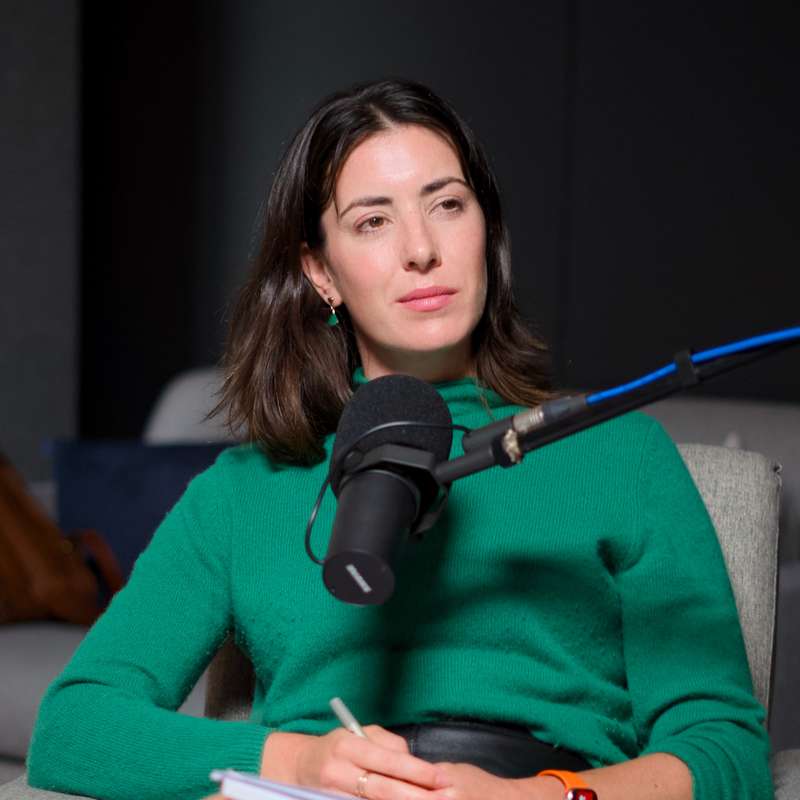 Susannah de JagerHost
 Gordon SangheraGuest
Production
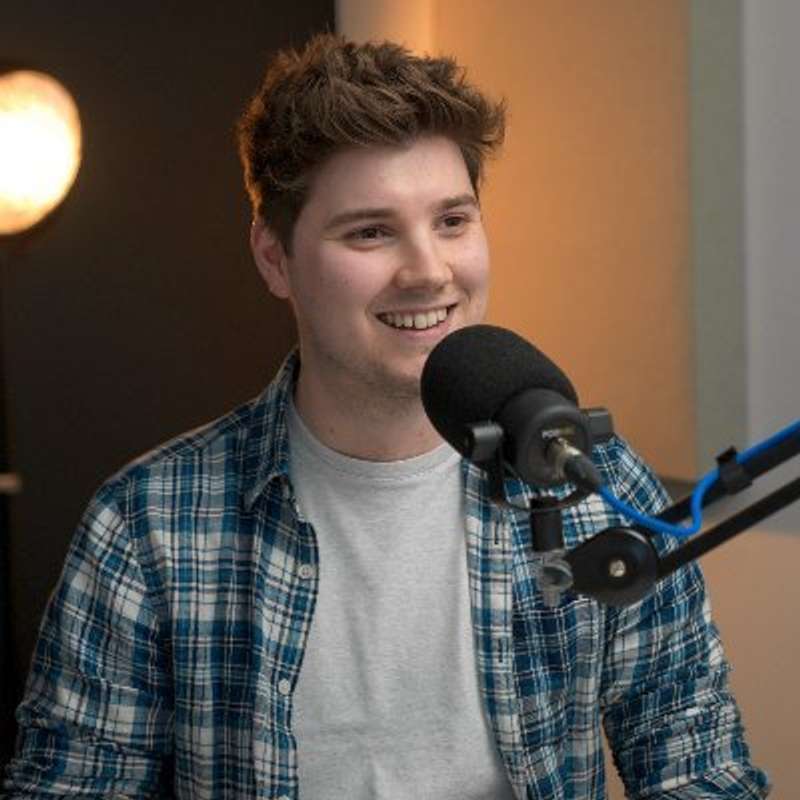 Matt Eastland-JonesProducer
 Story Ninety-FourProduction Company
Show notes
What does it take to build a global deep tech company without leaving the UK?
Oxford Nanopore co-founder Gordon Sanghera joins Susannah de Jager on Oxford+ in partnership with Mishcon de Reya to explain how an Oxford spinout became an international sequencing business. From his earlier work at MediSense to Nanopore’s London listing, Gordon describes the decisions that shaped the company and the gaps that still hold UK founders back.
His account challenges cautious fundraising and the habit of proving a technology before planning its manufacture. He explains how honest budgets attracted patient capital, why building production capacity helped speed up development, and how employee share sales supported continuity through years of growth.
The conversation comes as British Business Bank research published on 29 September reports UK venture funds matching US pooled total-value returns for 2002–2021 vintages. Fund performance and access to growth funding remain different questions, a distinction that runs through Gordon’s argument.
Gordon also considers technological sovereignty and AI in genomics. His case is for continued investment in biology, chemistry and electronics, with AI helping researchers make better use of the data those fields produce.
- - Welcome to Oxford+
- - Oxford’s Progress and the Scale-Up Funding Gap
- - From MediSense to Oxford Nanopore
- - Choosing the Hardest Technical Challenge
- - Finding Patient Capital through Honest Budgets
- - Building Manufacturing into the Strategy
- - Choosing London over NASDAQ
- - Employee Equity and Private-Market Liquidity
- - Ambition, Culture and Technological Sovereignty
- - AI and the UK’s Scientific Strengths
- - Genomic Data and the Next Opportunity
Gordon Sanghera: Dr Gordon Sanghera CBE FRS is a co-founder of Oxford Nanopore Technologies and its technology innovation adviser. He led the company for 21 years, from an Oxford spinout to its London Stock Exchange listing in 2021. His work centres on bioelectronic technologies, including blood glucose monitoring and DNA sequencing. Earlier roles at MediSense covered research, manufacturing process development and worldwide marketing, experience that informed Nanopore’s approach to production and commercial growth. Gordon was elected a Fellow of the Royal Society in 2026.
Susannah de Jager: Susannah is a seasoned professional with over 15 years of experience in UK asset management. She has worked closely with industry experts, entrepreneurs, and government officials to shape the conversation around domestic scale-up capital.
Connect with Susannah on LinkedIn and Subscribe to the Oxford+ Newsletter for Exclusive Content
Oxford+ is hosted by Susannah de Jager and supported by Mishcon de Reya, HSBC Innovation Banking, and James Cowper Kreston.
Produced and Edited by Story Ninety-Four in Oxford.
Transcript
Susannah de Jager
Welcome to Oxford Plus the podcast focused on innovation around Oxford. We look at everything across the ecosystem, the institutions, the people, the technology. If you need to learn anything about Oxford, whether it's how to take a first step in through the door, or as an experienced investor wanting to go deeper, this is the podcast for you. Few people have had a front-row seat to the evolution of the Oxford innovation ecosystem over the past two decades, quite like Gordon Sanghera.
When Oxford Nanopore was founded in 2005, Oxford was already producing world-class science, but the ecosystem we see today with its scale-up companies, maturing venture capital, specialist infrastructure, and growing global reputation was still in its infancy.
Since then, Oxford Nanopore has become one of the UK's most recognised deep tech success stories, pioneering a new approach to DNA and RNA sequencing, building a global customer base, listing on the London Stock Exchange, and demonstrating that a company built on Oxford science could scale internationally while remaining rooted in the UK.
Today, I want to explore not just the Oxford Nanopore story, but what Gordon's experience tells us about the evolution of Oxford itself. What has changed, what has improved, what challenges remain, and as we look ahead to the next 20 years, what excites him most about the future of Oxford, the UK innovation economy, and the next generation of founders.
Gordon, thank you so much for joining today.
Gordon Sanghera
Thanks for having me.
Susannah de Jager
So you founded Oxford Nanopore in 2005, 21 years ago. People often talk about how much Oxford has changed, but I'd love to hear what it was like then and how it happened.
Gordon Sanghera
Yeah, 21 years is a long time. I'm often referred to as patient number one. It's a long time to be doing these things. In many ways, there's been so much change, but unfortunately, I think some of the really deep things that have to change, we're still stuck. And just to get my tackle in early, reflecting on coming out of Nanopore and talking to companies where you might see a US company looking at 30 million to 50 million dollars. We're talking about three million, three to five million pounds. So that piece is still a bit stuck.
But on the upside, the energy from the next wave of people coming through. Money always helps, and there is a lot of money here. Which is great and that really is very different. Could you argue there's a bit too much money and it's a bit too easy? Because in 2004 when we started looking for money, it was pretty challenging. Is that why we are so successful? Because there was so little money, only good companies got it. And it wasn't just us. It was a handful of companies from that era. One thing I will say, there is too much seed and not enough series A or B and that's a real problem that we have to address. We can look at the stats and the government can say, "Oh look, we're doing better than France and Germany combined, but it's not enough to just have a lot of startups."
Susannah de Jager
So the ratios that somebody was telling me the other day are that at startup, the ratio of capital in the US to the UK is three to one. When you get to scale out capital, it's seven to one. I'm not sure that I agree with the idea that necessarily means we shouldn't fund more of it.
Gordon Sanghera
And maybe it's because we're still learning and we're an ecosystem that's very young. There needs to be the brutal correction as well. We don't kill companies as much as we should.
Susannah de Jager
Well, now that's a slightly different point and I think you're right in that because that thing of fail fast rather than funding things into perpetuity. And actually when at Oxford Tech Week, I had the pleasure of interviewing Tom Adeyoola, who's the new head of Innovate UK. He was saying the same thing. We shouldn't just be smothering things with grants if actually they're not going to make a dent anywhere or commercially viable. So I think that is increasingly coming to the fore.
Just going back though, before we dig into all of these enormous concepts, which I'm dying to do. When you founded Nanopore, we've spoken about some of the things that perhaps weren't the case. What was here?
Gordon Sanghera
I was also involved in a mid-80s spin-out, called MediSense. Now, at that point, it was a complete backwater. There was two people in a technology licence office. I think they were in a portacabin on South Parks Road. That was all we had and there was nothing else and Professor Allen Hill, who'd developed this blood glucose stuff managed to raise some Harvard money and it became a spinout. By 2005, because of the success of that, something significant had happened, and it was a conversation between Dave Norwood and Professor Allen Hill, which led IP to IPO, IP Group as they are today, putting in some money into Oxford Chemistry. They were just completing a chemical biology breakthrough building and that resulted in Professor Hagan Bayley, kind of the reverse of the brain drain. Oxford graduate had gone off to Harvard, UMass, Texas A&M, successful American academic career. But he came back and IP Group, as everybody knows, were incentivised IP to IPO as they were then to spin companies out.
So I was like rang up and said, "There's this interesting bioelectronic thing called Nanopore, single molecule sensing, and they're looking for a CEO for it." So just a stark contrast tumbleweed to the beginnings of that ecosystem, and it really was the beginnings.
Susannah de Jager
And you and I have discussed that that meeting between Allen Hill and Dave Norwood almost didn't happen because as he said on, when I interviewed him, he got bitten by an adder on the day that he was going to have that dinner at Keble and he called up to say he wasn't going to go, only to be told by the person hosting him, "I'm so excited to introduce you to this guy." And so he went all bandaged up with an adder bite, Gordon. That's so Dave.
Gordon Sanghera
And that's such a sliding doors moment, it really is not just absolutely for Nanopore, but I think for the whole ecosystem, which then emanated from that.
Susannah de Jager
Yeah, so interesting. What are the other moments that have articulated a shift in pace?
You spoke about OSE briefly as well.
Gordon Sanghera
When you kind of look at the beginning, Dave and I sat down and I said, "I think there's a lot of interesting things you can do with a single molecule sensing thing and it is a thing because it's not a blood glucose test or a heart disease test or a drug for this, that it's a measurement instrument and it's like a camera or a telescope or a microscope." So I said to Dave, "We have to sell this as a measurement device and not let anybody distract us into saying, why don't you measure this with it and focus on that? We never did that.
I think that led to a really important moment for us in 2007. So we raised seed money, Dave put some in, IP Group put some in, it was great. We built a story, we corralled some IP, and then we'd show a slide of all the things you could potentially do.
Susannah de Jager
How much did you raise?
Gordon Sanghera
Half a million. And it was just enough for me to leave Abbott and negotiate the licence. Hagan Bayley had got himself mixed up with some German entrepreneurs, East German entrepreneurs. We had to go and acquire that asset. So we needed the half million just to get all the pieces in place. We immediately started to map out the IP landscape and also the commercial landscape. I pretty much knew coming into it, there aren't any handheld single molecule sensing things. You need a giant room with ultra-high vacuums and scanning tunnelling microscopes and electron microscopes and things like that.
So we started saying you can do all these things. You could look at drugs of abuse, you could use it for environmental, for healthcare, for drug discovery, and then we had at the end DNA sequencing because ultimately that's the really hard thing that you could potentially do, but the upside would be phenomenal. We're having a meeting with Lansdowne and Pete Davis just focused on it. He actually said, "Can we do this, please?" And he didn't look at me or Spike, co-founder, he looked straight at Hagan, and Hagan said, "Anything's possible." And I thought, "Great. I'll be out of a job in two years time because it seemed impossible at that time."
We were going to raise three, two, three million pounds to get to the next level. I immediately said, "Oh, we'll need about 10 million if you want to do that, Pete. It's an enormous challenge compared to all the other things we're looking at." And so we raised seven and a half million.
That was an important moment and at one level, if you can do the hardest thing on that chart, you can do everything else. In my head, I decided to de-risk doing the hardest thing by saying, "Well, even if we don't get the market right or the market doesn't want Nanopore DNA sequencing, we can do all the other things that are on this list and so do the hardest thing first and then work back." That was a big moment.
Clive Brown, who had done, had a major role in developing the sequencing that came out of Cambridge, which was Solexa sequencing rocked up and said, "Oh, I've been looking at this and I want to be your Chief Technology Officer." I said, "But I'm not looking for one of those." He said, "No, you need me." And we had a great chat, one hour conversation ended up like five or six hours. I said, "Yeah, you're right. I actually do need you." And he came in and said, "We're going to make a measurement technology and sequencing will come out of it if we push the hardest specs on every facet of the technology, we'll be able to do sequencing."
So there was that mindset that was created and going into it, I had no idea that this was the direction the company was going to go in at all. I was thinking pick a diagnostic, focus on that and make an application. And we actually, in those first two or three years, landed on a strategy that would mean that we had no choice other than to behave like ambitious American West Coast entrepreneurs, because we need large amounts of cash to do this. We were forced into it
Susannah de Jager
And it's so interesting to hear you articulate that point around not being corralled into one application. There are plenty of founders and companies that I speak to either on the podcast or separately who have almost schizophrenic presentations where they're trying to draw a picture very broad of what their technology might be able to do, particularly in diagnostics or applications or cancer vaccines or delivery mechanisms or molecules, whatever it may be. And then they're having to almost sort of articulate the vision more narrowly to either look for a product market fit and a commercial route or because of a lack of technical, I should say, aptitude by the people appraising them often.
So that people are there wanting to understand it in a smaller way and I think it's very difficult because something I observe is that if you go broad and then they want a narrow application, you look like you're being a bit strange if you pivot and say, "Oh, we can do that too." And if you go narrow, and then they say, "Oh, well, we want something else," then you look a bit strange if you go, "Oh, well, I can do that too." You almost don't get a second bite of the cherry.
Gordon Sanghera
It's a balance and you know, in retrospect, at the time, we just ploughed in and talked to any investors and all investors. But actually what we did accidentally was start ruling out the smaller VCs. Because I said it would take five years and we'd need 100 million pounds. I wasn't trying to frighten investors. I was just coming out of Abbott where we wrote tickets like that. We did programmes at that level and we just wrote down realistic timelines and risk factors to do that. That brutal honesty, it switched off a section of the community but it attracted a different personality. Patient capital wasn't something talked about in 2006, 2007.
Susannah de Jager
No, you were you were filtering for it.
Gordon Sanghera
Yeah, we stumbled across it and that was really important really, really important because once you find one or two seams of money...
Susannah de Jager
They lead to the other ones that are similar.
Gordon Sanghera
Exactly. But also you get a taste for it. You still think, "I need that kind of money." The technology was coming along and we were making good progress, but I just kept thinking, "How did we get that money? And how do we get more of that?" And it's really interesting that once you've got one or two wins you can get momentum. Everybody talks about it's all about the story, but the story takes a life of its own. But you do have to deliver as well.
Susannah de Jager
Yeah, you've said it, but just to play it back to you. The thing that perhaps you don't even put enough weight on in that kind of communication of how you ended up raising larger sums of money and having that ambition is that you had credibility, not just knowledge that it would take that much money having come from Abbott. So you're able to talk to investors in an authoritative way about running something at that scale with those kind of budgets. And I think that it's something that one often, and it's becoming less now because we've got more recycling of talent coming into the ecosystem, more maturity here in the UK, but it is a weakness that has been levelled at the UK historically, is that lack of experienced talent.
And actually the other day, I was doing a pre-call with Hermann Hauser, and he was talking about the fact that in Silicon Valley you've got these large global companies that have departments being run, and then you can go and poach these people to come and run a scaling company, and they have experience of a larger company and of a big department and that sort of corporate grade experience, but of technologically fast developing companies.
But that additionally they can be there within two weeks. there is this difference in the ability both historically and even today because of labour laws to bring on that level of talent with that experience. And you had it, and then you had somebody that presented themselves as a chief technology officer, and you effectively, then were able to build a credible team and a bit of FOMO, to put it differently to how you put it.
Gordon Sanghera
There were two things, right? We were fearless. I mean, our mantra was, "Well, what's the worst that can happen?" I can always go and flip burgers. I certainly didn't have a reputation as an entrepreneur or I didn't have a reputation to lose. And I really didn't think about that and Clive was brilliant because he hadn't really been properly incentivised for the work he did at Solexa. So I couldn't have sought a more highly motivated, angry, brilliant mind, putting it right.
Susannah de Jager
So you did something quite unusual then, still in many ways, quite unusual today, which is that you did scale a global company here in the UK without completely moving the headquarters, listing in the UK. You, clearly, they're saying that to you, some of this was just a mindset, and it was obvious, and perhaps you didn't have other objectives that constrain other people either in their ambition or their money raising.
But take me through some of the steps of that journey, because it doesn't happen overnight, and there are steps that facilitate that. So, how did it go from there?
Gordon Sanghera
Recycling back to MediSense, I joined as a jobbing scientist in R&D, and we had 27 things we were going to do, cholesterol and cardiac markers and this and that, all these brilliant things. And it all fell by the wayside and we spread ourselves too thinly. But the only thing that really worked was blood glucose testing. The technology was radical enough, but that brings with it a problem in that you can't just go to a third party and "Can you make this for me, please?" It's all brand new. So we, as MediSense, built a factory in Witney and we scaled it.
So when I came into Nanopore, it's bioelectronics, very analogous, I kind of came in with the mindset when somebody said to me, "Well, you've never run a company. You've never raised money" and my counter was going to be, "I know how to scale this, and we're going to make it. This is a format and this is how we can scale it." That was the thing I did know from the outset. So in my mind, the goal was to just steal the brilliant people who had a lot of fun and 10 years of building Abbott, MediSense's factory, bring them over and do it again. Which is exactly what we did and it played out like that.
There was a very difficult period in '10 and '11 when the tech wasn't quite working, but we really needed to start to build the scalable factory. Too many companies make the tech work then think about how to scale it. We started with, "This is how we're going to scale it." and in fact, we had this idea that if we scaled it first, we could accelerate product development. And what I mean by that is, if you could make the consumable, you could have 300 or 400 individual channels, machinery, working for you. If you did it on the bench top, you had one or two channels working.
And so by scaling it, you almost guarantee success because you can go 100 times faster. We also knew that if we could manufacture here, it would be a superpower because 21 years on, there are generics, they're trying to build them in China in particular, they're struggling because there are some very specific things that we didn't share beyond maybe half a dozen people the Coca-Cola secret, what's in it.
So it wasn't just we're going to scale for the sake of scaling. We saw it as an incredible moat to prevent competitors to get in.
Susannah de Jager
Interesting. You've actually articulated a lot there as to why you thought it was important to stay in the UK and that makes a lot of sense. Were there ways in which it was very difficult for you to stay here at both different points?
Gordon Sanghera
Let me just talk about why it was important to stay in the UK. So I'm first-generation immigrant. I was born here. When it comes to the England cricket Test, I support England. I'm a massive football fan, as most people who know me know. I went to live in Boston for five or six years as part of Abbott. Had a great time and learned so much both about life but I didn't want to have to alienate my upbringing. So I wanted to come back, and I just felt that I really wanted to build it out here. But not afraid to go to NASDAQ if that was the right thing to do.
We're just a bit tired of we don't produce entrepreneurs. We can't do it. I've been going to these meetings for 30 years and people still talk about the A34. It is what it is, right? You build your factory outside the ring road. It's what we did. And the one thing I really hate is the tall poppy syndrome. The minute it looks like you're doing quite well, let's bring them down.
Susannah de Jager
You touched upon the fact that if it had been the right thing to list on the NASDAQ, you would've done, but you didn't. Why was that?
Gordon Sanghera
So there's 10 things we wanted to do. We had to cross seven chasms to make it. The last was which stock market will we go on? In 2021, fourth quarter, October, we chose London, but prior to that, we spent the previous six months doing a really in-depth analysis of London versus NASDAQ.
Now, before everybody shouts it's obvious that it's NASDAQ. NASDAQ is phenomenal, brilliant, sophisticated investors who back risk. But that's not the whole story. You're a private company for 18 years, and you've had a board that is almost like part of the team you know it's nothing compared to how you have to run PLC. And for us to go from private to NASDAQ for reporting quarter, it would have killed us.
At the same time, we also looked at valuations. Now, you can argue we were cheating because it was post-COVID and Nanopore sequencing had been a huge contributor to helping with the pandemic. So we had that froth. Yeah. I'm not going to pretend we didn't. So valuations look similar. Two reporting versus four, very attractive. London's less than an hour from Oxford. So it all felt right. At that time, we talked a lot about favouring growth over profitability and that seemed to chime because everybody thought we would come out of the pandemic, maybe a year or two recession and the hangover would be shed and we'd be off to a buoyant few years and that's what my crystal ball said. But then everything, the Four Horsemen of the Apocalypse rocked up and we know what's happened in the last four or five years. But if you look at the collapse in share price of our peer group and Oxford Nanopore here in London we've actually fared a bit better.
Which people need to remember that, and the other thing is, which nobody thinks about, we raised 500 million pounds before the collapse, which is the main reason we are now probably two years away from profitability because we raised enough money at that moment when the markets were buoyant and good. This really nicely encapsulates this mentality we have. People don't go, "Wow, that was smart." We raised 500 million at a four billion pound valuation. Great. Instead it's, "Oh, look at this share price. It's collapsed to a quarter of what it was." And that's all you get talked about. I tell entrepreneurs, "We got that money and that's why we're still here today."
Susannah de Jager
Entrepreneurs have more autonomy than I think they sometimes perceive. You've spoken about it, that you and your co-founders and your executive team, and indeed your board and initial investors were quite minded to do that and actually, you can set out your stool to a degree. Now, the difficulty is if you come across hard times, if you're subject to market forces, clearly some of those may have to be left by the wayside. But it does feel that because we have, as we've discussed already, got a bit of maturity in the system now, there is more ability to founders here to push back on some of those assumed pathways.
Gordon Sanghera
I agree. When I talk to the sort of societies, student societies of entrepreneurs, I tell them that they've really got to go in there, right? Go on strike. It's time the entrepreneurs went on strike and pushed back. We did something which has really resonated with a lot of people. We let employees privately take 10% of their vested equity out up to in 2015 or 16, and again in 18 or 19 and that really helps crystallise what a lot of technologists don't really understand as a share option. But it also brings about a momentum and growth.
I got lots of brilliant people to join Nanopore and say, " you'll make more money and it'll be more fulfilling than joining the banking fraternity," which is what a lot of scientists and engineers do. Not there's anything wrong with the banking fraternity, very important. But I wanted to create a career path where they could do something similar. Some of the engineers and scientists who'd been with the company 10 years, they could then sell some equity, buy a bigger house. They'd moved from being graduate students, single to families, and it works. Cause what you're then creating is this kind of like bond with the employees, which the shareholders are connected to.
Susannah de Jager
Yeah.
Gordon Sanghera
And it integrates the whole thing in a much tighter way. When I first proposed to advisors that I wanted to do that, they just laughed at me.
Susannah de Jager
I think this is really underestimated in its importance in so many businesses, but especially in the innovation end of the sphere where people, not necessarily in Nanopore, but if they're starting their own companies, they have effectively foregone a salary that might be their market rate in order to do that for a number of years and we spoke about a lack of ambition around the size of raises, right? That can be a problem too, because effectively then the time to success is even longer and then I think that there is a lot in this pattern of perceived early sale or not optimised sale, perhaps I should put it. If you raise too little money, you are slower to get to the moment of bearing fruit, and you have basically become professionally exhausted, and you haven't had any money off the table and so there are a number of solutions to this, you know, early secondary markets. I know that PISCES, they're trying to do this.
Gordon Sanghera
PISCES would be great.
Susannah de Jager
With the pre-listing stage of companies in the UK, for anyone listening, that is the London Stock Exchange's initiative of creating effectively a marketplace for private companies before they might want to list.
And I think that it also has an impact on, and you spoke earlier about having not taken smaller VCs, sometimes the return cycles of investors also has a big impact on these things. And so, all of these forces, I don't think, get enough attention. I've done a lot of remuneration and things over the years
Gordon Sanghera
I agree and in that middle period when we were scaling we stayed private, but we had higher turnover of shareholders than a lot of listed companies.
Susannah de Jager
Probably lower turnover of employees.
Gordon Sanghera
Completely and you have that continuity and again you should go public at the right moment.
Susannah de Jager
Yeah, not be subject to forces that are not the right ones.
Gordon Sanghera
Yeah. I think entrepreneurs should fight for their rights. It feels like they don't have the right workers' rights, I feel that they should have.
Susannah de Jager
You should set up a union, Gordon.
Gordon Sanghera
I'm going to write a little booklet.
Susannah de Jager
Excellent. I look forward to it. Just digging into some of those things, because you're talking about that you wanted to stay here, but you're also, in the same sentence, drawing out some of the things that actually people are perhaps a little bit negative and not supportive of success in the way that historically, the American dream, it's felt like more of an every man thing. Even though we're now refocused on the importance of innovation in the UK, we still don't seem to have entirely fixed that tall poppy syndrome, that we're not really great at celebrating our wonderful technological entrepreneurs.
So, I already referenced him, but Hermann Hauser said exactly the same thing. Then you can see it with Richard Branson, in COVID when they took money to keep Virgin Atlantic, that he came in for so much criticism would be an example. We've got Jim Ratcliffe, who's taken off elsewhere. James Dyson, the same. It does seem that that's still something we need to work on. Is that a political problem? Is that a press problem? Do you have an opinion on that? Class problem?
Gordon Sanghera
Definitely a class problem. I don't understand why we lack that kind of street fighting culture, you know? Not accepting that failure's an option and if you raise enough money, you'll pivot into something else. I think the proudest moment at Nanopore was we pivoted from one chemistry to another.
That point on ambition and culture, I don't understand why academics think if you're trying to spin their technology out, you're a heathen, you know? Now, what's brilliant and different now is with the way the world is shaping up, we, Europe, we have to stand on our two feet and so I think there is a mind shift that we better work out how to create our own AI superpower companies. Otherwise, the Chinese and the Americans are not going to, give us Europe what we used to get for free. It's going away. And I think there is at least some acknowledgement that's got to change. But it's almost something that radical to shake us out of our torpor.
Susannah de Jager
We effectively have been bemoaning the economic impact of losing our scaling companies for quite a long time. But I think that the discourse has shifted, as you are articulating, into a sort of burning platform of, oh, we're going to be leveraged against our will potentially, against our values, against things that we actually want to defend if we do not have technological sovereignty to a higher degree than we have at the moment and that does seem to be coming to the fore, albeit maybe not as fast as one would want.
Gordon Sanghera
Yeah, and for the wrong reasons, but it doesn't matter, as long as it's the top of agenda.
Susannah de Jager
Well, it's an arms race. Yeah. And as somebody I was interviewing earlier, Lionel Tarassenko was saying we haven't had a Chernobyl moment. We haven't had a Hiroshima, but by degrees, partly because of conflict that's been going on both in Ukraine and in the Middle East, I think the UK and Europe have really woken up to the fact that our increasingly global outlook and being quite capitalist led, which by the way was not just us, that there needs to be a contraction to defend ourselves both physically, perhaps, and invest in that and in the technological assets.
Gordon Sanghera
Yeah and everybody talks about the knowledge economy and how great the UK is and yet even now we continue to let great technologies escape us for too small amounts of money and we celebrate it and that's not acceptable. Fortunately, geopolitical issues are forcing the agenda, which I'm very happy about.
Susannah de Jager
Yeah and they are. Part of it I think is maturity of venture capital in this country. Part of it, we've already covered a bit of more recycling of experienced talent that we were perhaps lacking before. And then this kind of sense that there's more of a burning platform to free up meaningful institutional capital such as pension capital, which is hopefully going to really start more meaningfully impacting both Europe and the UK's ability to draw upon scale up capital for our domestically founded companies.
How do you see the opportunity going forward therefore? If we take it from this moment and your experience of being able to keep a company here, but perhaps in spite of some of these forces, do you feel more hopeful as you look forward?
Gordon Sanghera
Completely. And I think this moment we're in, and it's not just AI. In fact, actually, AI is a bit like the steam train. It enables, it doesn't drive the industrial revolution. Chemistry, biology, human innovation is not a subset of AI. It's the other way around. We can harness AI to really enable and drive and scale in unprecedented ways and we are, this country per capita punches way above its weight when it comes to academic excellence and we mustn't just think that we should focus on the sort of hot topic of the day, which is AI. AI needs killer applications, therefore we must push hard on the brilliant biology, chemistry, physics that we have, because it's those things that we make that AI can accelerate and if we do that it's almost like the field has been levelled. There's all this rhetoric around AI this and AI that we've got to harness it in the right way.
Susannah de Jager
So I'm just going to play something back to you that came out of what you said for me. And I've never had this thought before, so this may be a nonsense, but there's a lot of discussion at the moment about sovereign AI capability, but an acknowledgement in spite of pension capital potentially coming online that the sums of money involved are not hundreds of millions, as France have just announced 600 million. They are into the billions and trillions, right? So our ability to catch up on baseline models and to hold the apparatus of those models is already quite far away from us in Europe, potentially.
Taking what you've just said about our excellence in other areas, it strikes me that what we should be doing is really investing a lot in those so that we can hold our technological leverage in places that are really our USPs, but also potentially take not no funding, but not the same quantums of funding that we're talking about.
Do you think that that plays out at all or should play out?
Gordon Sanghera
So I'm a firm believer that it's the killer applications that enable and drive the technology and we should absolutely invest the right amount in AI. But it should be balanced off with what we're brilliant at and we are brilliant in life sciences, we're brilliant in chemistry, we're brilliant in electronics and we're in danger of cutting funding across those areas that will be enabled by AI and we've got to think of it that way around. Because the real danger that people think the AI can do it for us and it can't. There's not a single breakthrough that isn't some accidental human brilliance or designed human brilliance that leads to enablement.
Susannah de Jager
I agree. Taking it back from a sort of broad spectrum, conceptual discussion, I want to go into something you've touched upon lightly, but I'd like to get some more detail. AI not as an enabler, but just as the driver. In genomics, in the area that Oxford Nanopore has predominantly been focused on and that you have spent now the lion's share of your career focused on, what do you see as the biggest opportunities that are coming at us?
Gordon Sanghera
I want to use multiomics, so that's more than just we know about single point mutations, but there are many other drivers that we now know most of it catalysed by what nanopore sequencing can enable. But where we are now there's an interesting stat that we've probably sequenced five to 10 million genomes or three to five million genomes. The numbers vary depending on who you believe. But the amount of information that we use from that huge dataset for either drug discovery, research, understanding some of the hardest diseases out there, rare diseases, neurodegeneration, CNS disorders, diseases that haven't shifted in terms of treatments for 50 years, we're better understanding all of those.
When you take that huge data set, untapped, and you look at the way in which we can utilise these AI models, we're going to be able to make unprecedented breakthroughs in both drug discovery, in pre-diagnosis, and ultimately in therapies and treatment and that's where I want to play.
In 2003, first genome was mapped, cost three billion, took a decade. Acquisition of data is now commoditised. You can get a human genome for three, four, $500. And yet, nobody is really properly analysing all that data. I think there's a data mainstream moment coming for sequencing. So I think there's going to be a huge opportunity. Really understanding the data we now have about ourselves and the living systems around us.
Susannah de Jager
It's very hopeful. Thank you so much. This has been a really wonderful, not necessarily quite the threads I thought we would pull on, but actually all the more interesting for it. So I really appreciate you taking the time. Thank you.
Gordon Sanghera
Thank you.
Susannah de Jager
Thanks for listening to this episode of Oxford+, presented by me, Susannah de Jager. If you want to stay up to date with all things Oxford+, please visit our website, oxfordplus.co.uk and sign up for our newsletter so you never miss an update. Oxford+ was made in partnership with Mishcon de Reya and is produced and edited by Story Ninety-Four.
Partners
 mishcon.com
In partnership with
Mishcon de Reya
The Mishcon de Reya Group is an independent, international professional services business with law at its heart, employing over 1450 people with over 650 lawyers. It includes the law firm Mishcon de Reya LLP and a collection of leading consultancy businesses that complement the firm's legal services.
 oxfordequinox.com
Sponsored by
Equinox
Equitable Innovation Oxford is a major regional partnership established by the University of Oxford to drive inclusive innovation and sustainable economic growth locally, nationally and globally. Equinox serves as a voice for the region, championing innovation that delivers economic impact and social value.
How Gordon Sanghera Built Oxford Nanopore
Oxford+