Susannah de Jager
Alongside our main episodes of Oxford Plus for Season Four we are introducing a short fortnightly miniseries in between the main episodes. Brought to you by me, Susannah de Jager, and in partnership with Mishcon de Reya. In each episode, we ask our guests the same four questions designed to reveal how they think, what shapes their decisions, and what they're curious about right now.
The questions stay the same. The answers rarely do. This is Oxford Plus in brief.
So Hannah, I've got a few questions now for the mini series. First one, what would success look like if we got this right for you, for Oxfordshire Greentech?
Hannah Scott
I think a crucial way of seeing success at the moment is how quickly can a startup scale and get its solution to market and get deployed at the, national and international scale. At the moment, especially with climate tech because it's often playing in the sort of deep tech and the hardware spaces rather than software, it's a much longer lead time to scale. It requires a lot more capital to get it on its feet.
Susannah de Jager
And some people just don't invest in that at all.
Hannah Scott
Some people don't invest. They think it's too risky and they don't see returns on investment that are attractive enough to them. In truth, there are lots of attractive returns that can be made, but it's just that patient capital piece. So for me, success would probably look likea slashing in that time to get to market and to commercialise.
I wouldn't quite want to put a number on it because climate tech is so broad and that's going to look different for different sub-sectors. But I would love to see that happen and I would also love to see those technologies being deployed locally as well. The county and actually Enterprise Oxfordshire have done this piece of work around the Oxfordshire story, trying to identify like this shared hymn sheet that we're all singing on when we're talking outside of Oxfordshire about what makes Oxfordshire great and why it's so important to build a business here.
I would love it if, everyone in the county had that sense of what makes Oxfordshire great because people were involved and participating actively. I think it comes back to that sort of community and equity side of things again. So for me, success would look like solutions deployed locally and benefiting people locally as well.
Susannah de Jager
Just going into something you said there in your answer that point around how tricky it can be to scale some of these companies and the forces that aren't needed to play into that. You've spoken a little bit, and everyone uses this phrase, the Valley of Death.
What are the elements that are really structurally missing at the moment that are pitfalls?
Hannah Scott
So, securing sort of seed funding, pre-seed, not that much of an issue. People are willing to back what looks like a good and an exciting idea. Series A, again, we do have our members who have managed to secure series A funding. It is that sort of touch more difficult and the gap really comes between series A and series B, I'd say.
It's because the quantum just increases you know, so much more. So for example, company A is a hardware company and maybe their series A is 10 million pounds. Their series B might have to look like a hundred million. It's like a vast leap, but it's like that because of you know developing this technology, manufacturing, you can't just scale it the same way that you can scale an app. It's very different and I think for a lot of investors, they may be willing to take that initial series A step, but follow on funding wise, that's a different dimension. There's that sense that they're not maybe the same investor type. So you having to build new relationships again when you get to series B fundraising stage. I think family offices could really help with this actually and I think increasingly more of them are. They they have patient capital. They have mission and legacy behind what they're doing. So again, this is a shout out to any family offices who are interested in integrating into our, or seeing a little bit more of our community because that kind of capital could be groundbreaking in some ways.
Susannah de Jager
And how do you see pension capital potentially playing through in that after the Mansion House Compact and Accord? Have you seen any shift on that or is it still waiting to come down the pipe?
Hannah Scott
I think still waiting to come down the pipe.
But I think that sort of reform hopefully should be pushing us to think more about what our pensions are being invested in, in general. I think there's that sense of we need to invest more in our country's IP and I think at the moment, if you look at other countries like China. Last year, Chinese firms invested $80 billion into clean tech. It's just a different story. They're surging ahead. and I think we need to take that challenge seriously and pension funds could be a really good way of putting a stick in the ground and saying, yes, we believe in UK PLC and we want to see this flourish on the global stage.
Susannah de Jager
Which I think a lot of pension holders would if they felt like they had more control and sort of ownership of their own money ironically.
What advice would you give somebody entering the ecosystem tomorrow knowing what you now know?
Hannah Scott
Sure. I mean, if you're an entrepreneur entering this ecosystem tomorrow, I think we are your first port of call. I like to see us as like an umbrella organisation for the climate tech space. We have contacts and roots into the various Science Parks. So looking for a space to set up is your sort of cup of tea, you know, Oxford Innovation Space, for example, it's a great place to start and they have lots of different facilities as well as the other science parks and then other places that are more co-working and office space.
Again, we have, a large, what's the word, like directory book. We don't literally have a directory book. But there's a list.
Susannah de Jager
A rolodex it used to be called. That dates me somewhat, but yeah.
Hannah Scott
I was about to say, I don't know what I'm talking about. I've barely used one of those. There's a long list of investors that we are connected to. I think the sense from me is that if someone was to enter into this ecosystem tomorrow, I'd love to sort of like map it all out for them, basically.
Susannah de Jager
You heard it here first. Come to Hannah, she'll map everything for you.
Hannah Scott
I'll map out everything. Yeah.
Susannah de Jager
That's what people need, right? It's complicated. What is Oxford uniquely good at and what is it structurally bad at?
Hannah Scott
Oh, wow. Okay, Oxford is uniquely good at ideas that can change the world. We've seen thatwith the COVID vaccine, we've seen that OrganOx recently exited at a tremendous scale which was fantastic to see. So there's amazing ideas being built here and a lot of people are like, oh yeah, we're all ideas, but no sort of scaling. We don't do that. Other people, you know, they leave Oxford and they go scale somewhere else. But I think that tide is shifting as well, actually, and I think we have a huge amount of advanced manufacturing and advanced engineering capacity here in the county. And I think with the industrial strategies, there's that real sense that manufacturing they want that to come home again. I think we've, utilised sort of global trade and all the rest of it in a really positive way, but manufacturing locally as well can bring that sort of prosperity back to local communities, can sort of help de-risk supply chains, et cetera and contribute to our sovereignty in this space. So.
Susannah de Jager
I feel like you answered that very diplomatically. Well done. And then in your opinion, what do you think Oxford will look like in 2050?
Susannah de Jager
25 years.
Hannah Scott
Wow. I mean, yeah, it's a long way away and also not a long way away, because I remember back in 2020 the UN sort of asserted2020 to 2030, that's the decade for climate action and we need to have hit many different SDG goals by 2030. Well, we're now four years away from that, which is terrifyingly close. So we can't imagine that 2050 will be that far behind 2030 in some ways.
So in terms of what it'll look like, I think that's really, really interesting, and I think there's these almost like competing forces in some senses. There's the needs to protect the heritage, the visual heritage of Oxford City, and all of the beauty that we have here and the natural spaces and there's also that sort of need for housing and needs to support people in what is now a cost of living crisis and has been for a while. And there's also, that needs to surge ahead in this innovation space where we are building a real global stronghold. So, I couldn't say what it'll look like in 2050 because I think that's a very political question and it will really depend on the levers of power and what people will choose to prioritise.
My hope would be that we find a way to meet the needs of the growing population at the same time as enabling those science base ventures to scale. But that's a tricky question for someone in planning to decide on.
Susannah de Jager
And then just finally, we haven't really touched upon it much, but do you see AI as primarily an opportunity or a threat to your goals at Oxfordshire Greentech, or, quite frankly, Net Zero because the demands of it are vast, but obviously the opportunity within it.
Susannah de Jager
is also vast.
Hannah Scott
It's a Pandora's box. The box is open now. We can't shut the box again. We can't do away with AI. It is here to stay and I think what we now have to do is figure out what are good uses of AI and what are bad uses and what are potentially threatening and dangerous uses of AI. So at the moment, it's now well known that there is a big environmental impact associated. I think one AI search comparable to a Google search requires 10 times the energy. So it's big figures and at scale that could really cost us environmentally.
But at the same time it also can really contribute efficient ways of working. It's the sort of the learning and the adaptive learning that can help optimise some of the climate solutions that we're supporting. So I actually think that this year we are going to see lots more of our startups thinking about how to integrate AI sensibly into what they're already doing so that it becomes a superpowered version of itself and actually hopefully will outdo the negatives with the positives that it can deliver instead. I think there's still a lot of questions aboutmassive data centers where they're placed. Again, that's a political decision, and it often affects people that are powerless to sort of refuse, if you like, and there's lots of water required and all the rest of it.
So there are big questions that are still not solved yet, but I think there are also big minds working on it and thinking actually if we are to live with AI, people have seen what AI can do. They've seen how AI can optimise and make efficient. I don't think they'll want to go back. So if we can't go back, how do we go forward? But more sensibly.
Susannah de Jager
Thank you. Really enjoyed this.
Susannah de Jager
Thank you for your time.
Hannah Scott
Thank you for yours.
Susannah de Jager
Thanks for listening to this episode of Oxford+, presented by me, Susannah de Jager. If you want to stay up to date with all things Oxford+, please visit our website, oxfordplus.co.uk and sign up for our newsletter so you never miss an update. Oxford+ was made in partnership with Mishcon de Reya and is produced and edited by Story Ninety-Four.

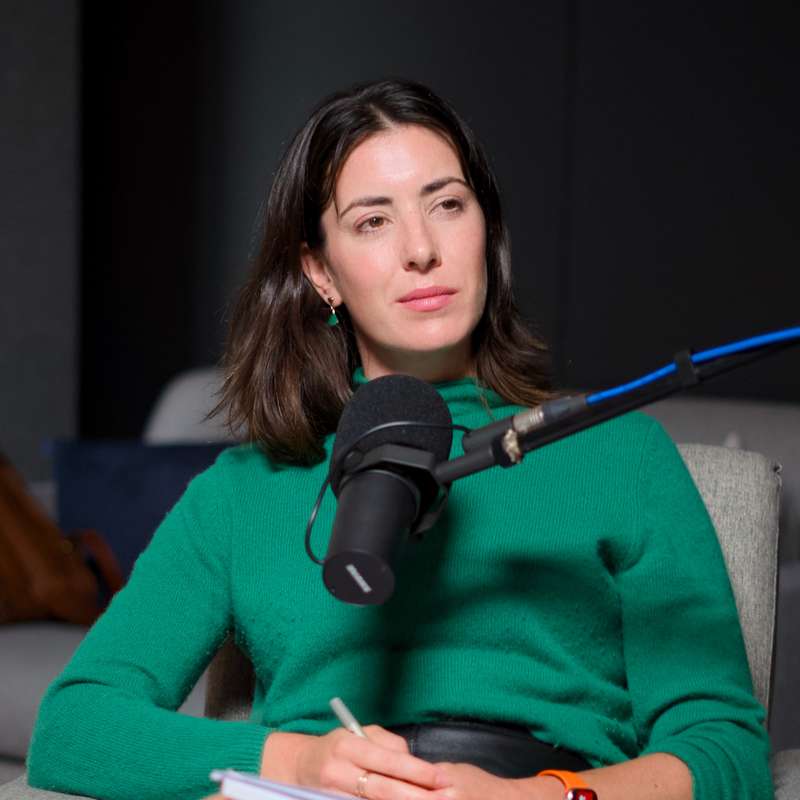 Susannah de JagerHost
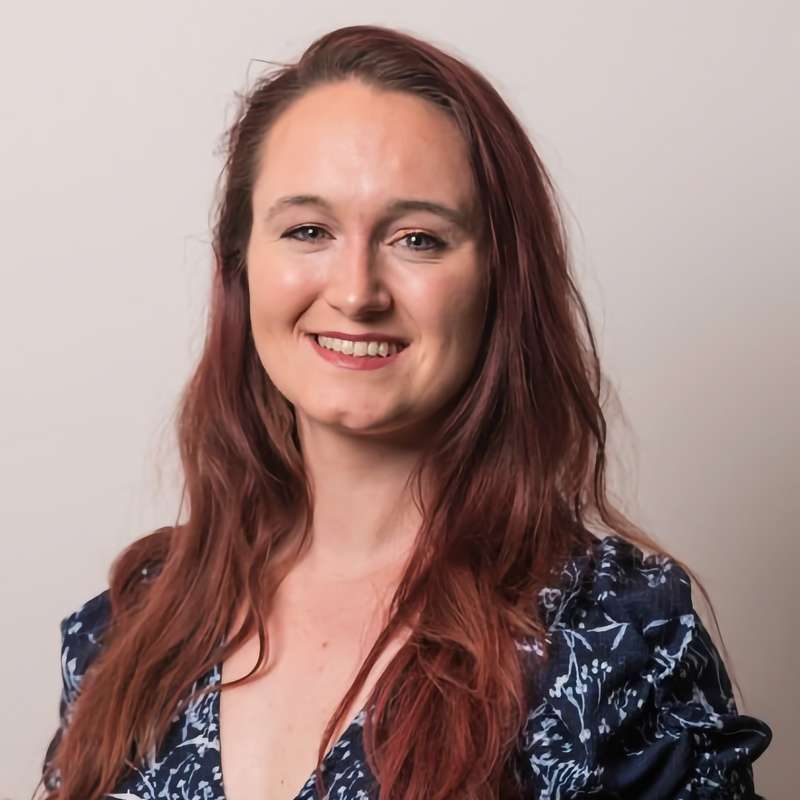 Hannah ScottGuest
 Matt Eastland-JonesProducer
 Story Ninety-FourProduction Company
 mishcon.com
 oxfordequinox.com