Susannah de Jager
Alongside our main episodes of Oxford Plus for Season Four we are introducing a short fortnightly miniseries in between the main episodes. Brought to you by me, Susannah de Jager, and in partnership with Mishcon de Reya. In each episode, we ask our guests the same four questions designed to reveal how they think, what shapes their decisions, and what they're curious about right now.
The questions stay the same. The answers rarely do. This is Oxford Plus in brief. So Holly, we've now got the mini episode questions. What would success look like if Hydrogen got this next stage right?
Holly Reeve
If we get this right and we get into commercial scale manufacturing for our lead processes, that unlocks us using Biomanufacturing more widely and I think really helps us as a society blend between the benefits of chemistry and biology. We really look to be that link. Some of chemistry's great, some of biology's great and we want to blend those together.
Susannah de Jager
Amazing. Do you think Oxford has an edge in that area out of interest?
Holly Reeve
Oxford has a huge amount of chemistry startup companies. So I think in that regard, yes,
Susannah de Jager
Do you think it has that because the chemistry department originally had the commercialisation deal, or do you think that's a coincidence?
Holly Reeve
I definitely think it helps. I think that there's a lot more knowledge and kind of less being afraid of commercialisation potentially in chemistry. And also because some of those companies have had great success.
Susannah de Jager
What advice would you give somebody entering the Oxford ecosystem tomorrow?
Holly Reeve
Some of the rules are sensible and some of the rules just need a little bit of bending. I remember my PI telling me that it's okay sometimes to do things the Holly way. because the Holly way works and the structures are there for really good reason. You need to understand what they're there for, but you also need to understand when they're, overkill.
Susannah de Jager
What is Oxford great at and what is it structurally not so great at?
Holly Reeve
Oxford has so much capability to do great things, have great ideas, push things forwards. I just want to pick Oxford up and shake it and tell it that talking to the rest of the world only makes everything better. Never think that you can't learn from other people, work with other people. I think sometimes really understanding your niche and what you are really good at gives you the kind of freedom to see where other people can help you and do better. Sometimes it's nice to know I'm really good at this thing and no one can take that away, but actually all these things are on the edge why am I reinventing the wheel? Let me go out and find people that do this easier or better. So I'm not saying, you know, everything's better with other people like you're not bringing anything special or unique. Like sometimes knowing what you are special at helps you go find people that can help with everything else.
Susannah de Jager
And sometimes the best technology doesn't win.
Holly Reeve
Sometimes the best technology doesn't win. Yeah, and sometimes that's because you didn't go talk about it yet.
Susannah de Jager
Yeah. Go share your idea and iterate. On the plus side hearing you speak about that we've just had this big super cluster board formed between, the Oxford, Cambridge arc and obviously including London as well. They all just went out to France to look at Station F and the Tibi Initiatives and things and so I am encouraged that there seems to be a genuine realisation of a rising tide raises all boats and that we need to act more in concert with one another in the UK that we fit in the pocket of California or many of these other tech ecosystems and I'm hopeful that that will break down some of this kind of slightly defensive mindset.
Holly Reeve
Yeah, and it's not all just the defensive mindset. Some of it is that we still in chemistry labs for sure have this belief that scientists belong in the lab and that anytime they take out of the lab is preventing progress and results. I got asked over and over again in my career, how did you make time to go do all this training and go to events and talk to industry?
And I was like, no one can make time. Like that is not a gift any of us have given. You have to believe that it's a valuable place to put your time. I believed that going and talking to people and going and getting new training would help my research, but also help my research into the future and help me as a person and my career into the future. You have to believe that. You have to believe that stepping out of the lab. We'll get you further and your boss has to believe that too.
Susannah de Jager
Yeah, that's why we need your structural kind of framework for all of this. What do you think Oxford will look like in 2050?
Holly Reeve
Well, the rate they're going, the entire centre of Oxford will be lab space, so that will be exciting. I see some of the, drawings of some of these new kind of public slash university slash industry slash startup ecosystems, and I love the thought of that. You know, I often think that as a startup from Oxford and finding myself now in the kind of startup and business ecosystem, I wish the walls were a little bit lower between the two.
For example, have often said, why can't my staff come to postdoc training programmes in like leadership and project management? Like, how much could those different perspectives and mindsets like aid each other and help everyone see all the different perspectives more easily and like learn from, you know, the different paces and the different pathways that we all use. There's so much value to both, and they're not independent. People in universities sometimes need to deliver stuff. People in startups sometimes need to go back and be a bit more innovative. I wish that at least in that people training area, the barriers and the walls were lower, and I think that's what Oxford will look like in the future.
I think we'll start merging the spaces that students and startups and big businesses are in and running more of those events and opportunities for us all to bump into each other more often.
Susannah de Jager
And I think there's lots of things again that are working on that. So Equinox obviously recently launched and I had a chat the other day with Tim Haynes, who's running the investor side of that, one of their work streams, and of course Olga herself. And they're really focused on exactly some of these things and trying tohave more collaboration across all the different institutions and parts of the ecosystem.
And then additionally, we've got OX Tech Week, which is coming up, which will put lots of people together. So I'm hopeful about all of these things as well.
Holly Reeve
2050 is a long time away though, so, maybe we'll be doing it in little spaceships. And
Susannah de Jager
It is a long way away.
Holly Reeve
it's a long way. It is a long way away.
Susannah de Jager
If you had a magic wand, what would you change?
Holly Reeve
This is such a hard question to answer. I'm so human focused. And I wish that we all got given these little leadership coaches and stuff that helped us understand where our strengths are and where our weaknesses are, and made us realise that we don't have to do everything.
I think there's so many things that get stalled in universities and in startups because humans don't understand humans well enough. That's where I want to wave my magic wand one day, is trying to get everyone to remember that behind funding science, we are funding scientists and we have to be more strategic about that. I go to so many events where they talk about scale up facilities and like, how are we going to like get this piece of science to be established and have more impact? And I'm like, well, the only way you're going to do that is systematically invest in humans that are showing that they can do that. So many of them fall away because we forget. We forget that it's humans that are doing it for now.
Susannah de Jager
Yeah, and to your last comment, I think that so much of what you've said today is not replaceable by AI. The bit that's going to become commoditised to a degree, not at the cutting edge, just to be clear, is some of this knowledge base. But how to apply it, how to problem solve, how to put it into systems that can all be aided by AI. But I think it's going to be a very long time until the human element is actually, if ever, replaced
Holly Reeve
I tell younger people now in their careers that it's about the meeting point of different expertise and kind of knowledge bases. If you can lean into your creativity and things like to deliver impactful science, we need communicators. We need project managers. We need super detailed people. We need completely out there people. You know, AI can't beat all those things all of the time and it's the meeting point. It's your science brain and your creative part of your brain that you learn from art at school, but also the fact that you are really good at breaking down ideas and communicating them. Or the fact that you are really good at selling or the fact that you are really good at understanding new concepts from different fields. That's where humans set themselves apart from each other and from AI.
Susannah de Jager
Holly, thank you very much.
Holly Reeve
Thank you for having me. Thanks for listening to this episode of Oxford+, presented by me, Susannah de Jager. If you want to stay up to date with all things Oxford+, please visit our website, oxfordplus.co.uk and sign up for our newsletter so you never miss an update. Oxford+ was made in partnership with Mishcon de Reya and is produced and edited by Story Ninety-Four.

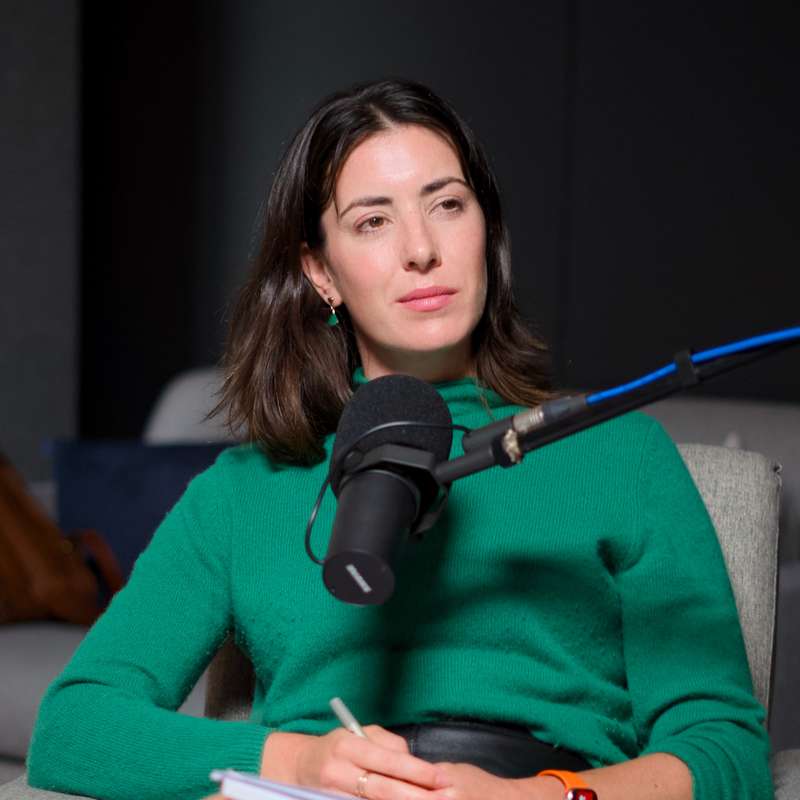 Susannah de JagerHost
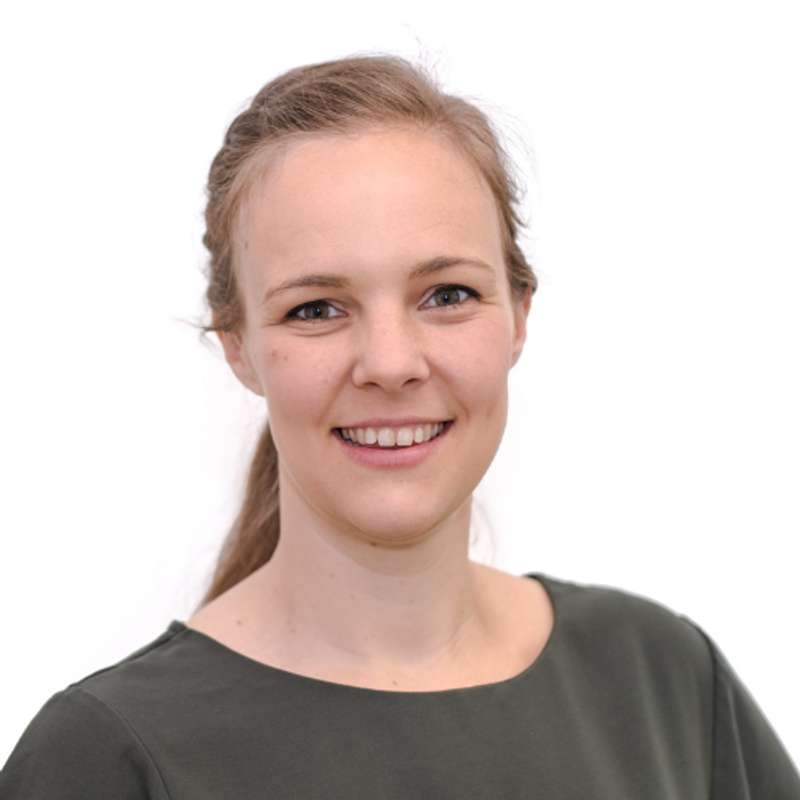 Dr Holly ReeveGuest
 Matt Eastland-JonesProducer
 Story Ninety-FourProduction Company
 mishcon.com
 oxfordequinox.com