
Diversifying the Investment Ecosystem with Rowan Gardner
Susannah de Jager·Oxford, United Kingdom
Rowan Gardner discusses diversifying investment in Oxford's health tech ecosystem, encouraging female investors, and how AI is reshaping chronic disease treatment and diagnosis.
Listen on
Now playing
Diversifying the Investment Ecosystem with Rowan Gardner
Season 1 · Episode 6 · 1 Apr 2024
Featured
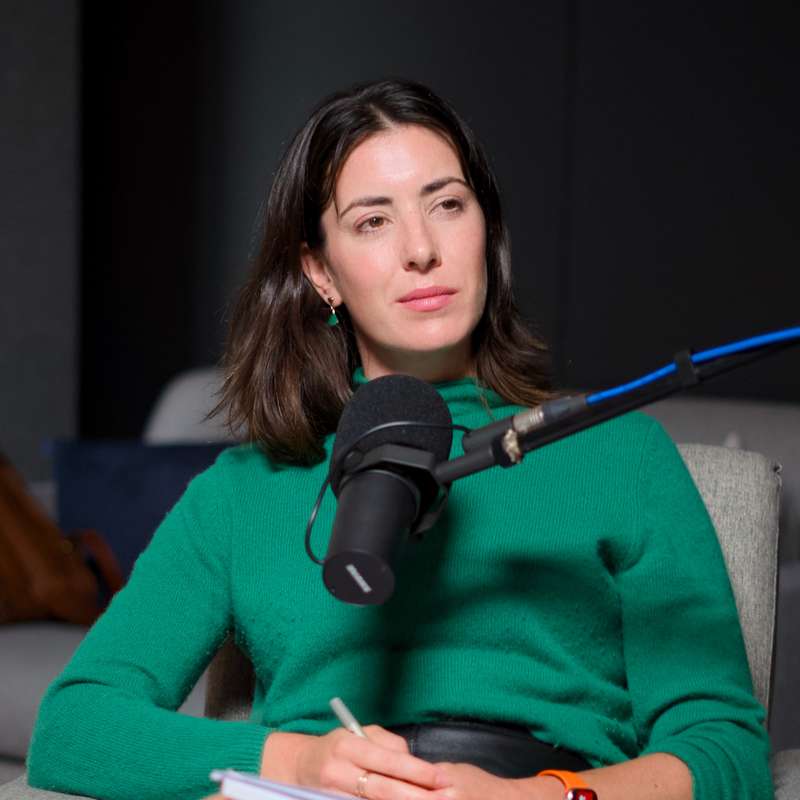 Susannah de JagerHost
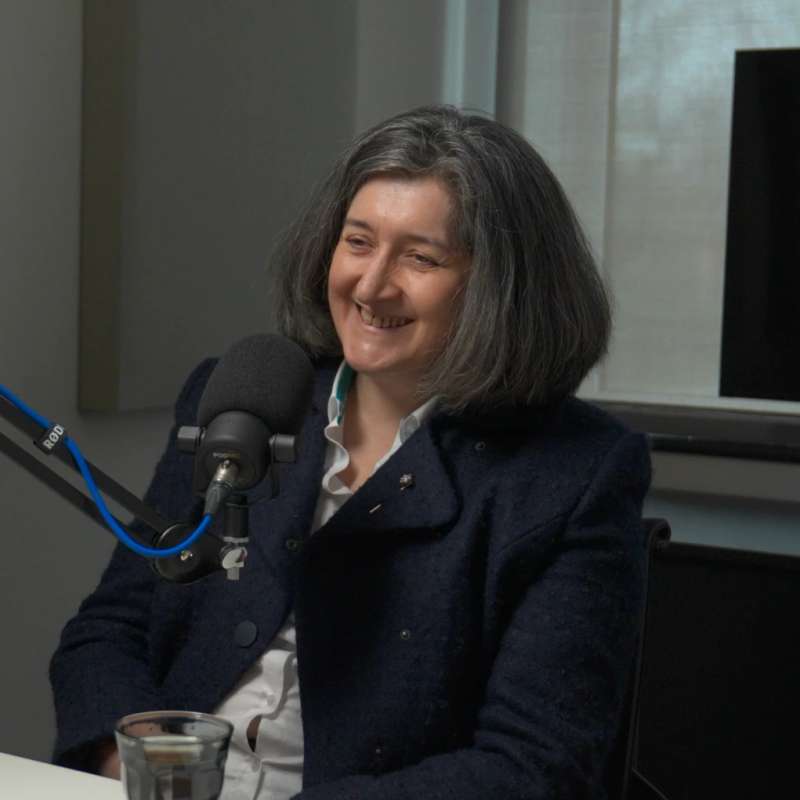 Rowan GardnerGuest
Production
 Matt Eastland-JonesProducer
 Story Ninety-FourProduction Company
Show notes
In this episode of Oxford+, host Susannah de Jager is joined by Rowan Gardner, co-founder of Precision Life. The topic of discussion delves into the importance of diversifying the investment ecosystem and encouraging more participation from female investors. They also discuss the future of healthcare and the pivotal role AI plays in it, including how AI is reshaping our approach to healthcare, particularly concerning chronic diseases and how we diagnose and treat them.
Introduction
From Oxford Molecular to Precision Life
The Oxford and Cambridge investing landscapes
The importance of heterogenous funding sources
Fostering diversity and inclusion in investment
The Mansion House Accord
About the guest:
Rowan Gardner is a seasoned entrepreneur and CEO with over 30 years of experience in health tech, digital health, deep tech, and biotech. She played a part in one of Oxford University's first spin-outs, Oxford Molecular Group, in 1989 and later listed it on the main London Stock Exchange in 1994. Rowan is a fervent advocate for Oxford and currently serves as the Chief Business and Investment Officer at Precision Life. This platform connects chronic disease patients with the drugs they'll respond to, using mechanistic patient stratification biomarkers.
Connect with Rowan on LinkedIn
About the host:
Susannah de Jager is a seasoned professional with over 15 years of experience in UK asset management. She has worked closely with industry experts, entrepreneurs, and government officials to shape the conversation around domestic scale-up capital.
Connect with Susannah on LinkedIn
Visit our website to learn more and subscribe to our newsletter - oxfordplus.co.uk
If you have a question for Susannah, please get in touch - oxfordplus.co.uk/contact
Oxford+ is hosted by Susannah de Jager, supported by Mishcon de Reya and produced and edited by Story Ninety-Four in Oxford.
Transcript
Welcome to Oxford+, the podcast series that takes you deep into the myths and truths of the Oxford investing landscape. I'm your host, Susannah de Jager and I've spent over 15 years in UK asset management. My guest today is Rowan Gardner. Rowan is a serial entrepreneur and CEO with over 30 years of experience in health tech, digital health, deep tech, and biotech. She has an unusual claim not only to have been part of one of the university's first spin outs, Oxford Molecular Group in 1989, but also to have subsequently listed it on the main London Stock Exchange in 1994. Rowan is currently Chief Business and Investment Officer at Precision Life, a platform that links chronic disease patients to the drugs they will respond to via mechanistic patient stratification biomarkers. A huge advocate and advertisement for Oxford, I am delighted to have Rowan here to share her experience and her views. Rowan, thank you so much for joining today. So slightly different to what I've done with other people, but because you are the guest with by far the most experience of Oxford over a longer period of time to date, I'd love to just hear a little bit of a roll call of some of the things you've been involved in and then we can kind of go on from there because I think it'll be interesting for people to hear. Well, thank you for the opportunity, Susannah and just reminding me that I'm quite old these days but I guess my adventure in Oxford started like many, I read biochemistry at the university and really because I was absolutely fascinated by a picture of DNA I saw as almost that early teenager being dragged around the science museum. You know, that really has been the common thread, molecular thread through my career and very early on, I joined a company called Oxford Molecular and some of the listeners will be familiar with Oxford University's Innovation. They have a slide, which is a time series of all of Oxford's spin outs and Oxford Molecular, I think, is about number four and that was a great adventure very early on in my career. We listed on the main board of the London Stock Exchange in 1995, we grew by acquisition of many US companies and really that was a trailblazer for some of the Generative AI and high performance computing applications around life science data that Oxford is known for. So we have Excientia, we have Genomics PLC, Nanopore, all of those companies coming from that thread and I had a great experience with Oxford. I did leave Oxford and go to the other place for a period of time. Surely not!
Sure, I did. I did. But you know, that's what experience teaches you, I came back and while I was based in Cambridge, I ran an advisory business. I was a co-founder of a very early sort of cloud computing architecture business called Sonomics, where we worked with those people at CERN who are phenomenal, in building an integration, architecture for bringing together life science data and had a ball and really discovered the technology behind the current work venture that I'm involved with, Precision Life while we were in that entrepreneurial environment and so Precision Life has three founders, myself, Steve Gardner and Gert Muller, who is a whip smart mathematician based in Denmark and we are doing amazing world leading work pioneering our understanding of chronic disease biology, which we believe will make it much more efficient to both discover new medicines but also develop them and enable the pharmaceutical industry to be much more effective in how it invests capital to bring drugs to market that serve unmet clinical need. Wonderful, thank you! That was a brilliant and efficient whistle stop tour of your years of experience and I wanted to just go into something you touched on, being in Cambridge and I'd love to understand from your perspective having started here gone to Cambridge now come back. Do you observe differences? Do you think they're more similar than people make out? What's your experience taught you about it? So I was thinking about that on the drive over because it was an inevitable question and I think what's slightly fascinating. is when I was at university, we always used to observe that Oxford was a more multidimensional place. It had the car industry and it had the university and you know, we like to observe that Cambridge was mostly the university and you roll forward the several decades further on and when it comes to entrepreneurship and innovation, Cambridge is perhaps more heterogeneous... Okay. ...it has a greater focus on repeat entrepreneurs and because of that it has a more heterogeneous funding environment than perhaps Oxford, and Oxford really has built its game around world class, phenomenal new ventures coming out of the university, both high growth and social ventures.
But the track record of repeat entrepreneurs in Oxford is not quite as balanced as you see in Cambridge and I think that's fascinating. That's really interesting and I've certainly heard that from other guests already that there's less of that recycling of talent but also that so often what can help companies that are in their infancy is having the recycling of capital from those really great success stories and so it's both elements that perhaps have room for improvement.
You said something else about Oxford that sort of caught my attention because actually we had a guest Mark Preston who comes from Formula One and was talking about the really amazing motorsports cluster, however his view was that perhaps Oxford as a place the university and indeed the industry have not made as much of their proximity to one another as they might have done and what a shame that is because they could both benefit. So I would be interested to know if you see any ways from your experience that could be improved upon? So, he's right, you know, most of the big problems that society is facing is going to require all of the talents to solve it and that involves bringing you know, world class engineering, sensing, data scientists, computational scientists, the physical scientists, anybody from the arts listening, we need you too. I will always start from a place of science and there's some real lessons actually that I remember from the conversations that I had with Paolo Zanella, who was a co founder of Sonomics with us, which was the data integration business and Paolo had led the computing lab at CERN. So Paolo was the guy who found funding when there wasn't any to give Tim Berners Lee his computer to write the World Wide Web on and you know, someone with that kind of imagination and flair you might imagine as being quite interesting and we worked with a number of people in that computing group and in the field of very large physics, you have to have collaboration because the requirement for capital to fund big ideas, to do the big experiments, means you have to coordinate and there are endless lessons in what happens when the particle physics community organises to do that and so you know, if you think back to the Large Hadron Collider, not only did we have a large hadron collider and a great piece of particle physics, we found a hadron and all the things that flowed from that, we also got cloud computing, we got very fast networks, we got the ability to do atom perfect welding in order to build some of the sensors, you got amazing innovation in terms of tackling very low cost sensors. There was endless innovation that came from that big project because you had to bring all of the capabilities together to do it and in the biosciences where I'm from, actually, much of bioscience can be done by an individual with a pipette and a bench and so trying to find those organisational principles and those questions that allow us to move beyond our training area are quite few and far between. When they do happen, like the Human Genome Project, you know, they can be transformative. But generally, the life sciences have not had to do quite so much innovation that requires bringing different skills together and I think the exception to that would be the genome sequencing companies like Nanopore. Really interesting, and going back to something you said earlier about precision life and what you're aiming for and hoping which is you know, if I paraphrase it correctly really that you can help, you know, pharmaceutical companies direct their R&D more effectively by using AI and data sets that will help them apply that.
It occurs to me that more and more and this is as a layperson but more and more R&D arms are being shut down and that there seems to be an over reliance upon startups in each area and before we went live you were talking about how much kind of research has gone in which is brilliant to oncology but to the detriment of other areas and do you think that with more precise directing from companies such as Precision Life that there will be a change in that trend and that people will effectively have more confidence that their investment in R&D will be yielding more? Yes, so that's a... I'm obviously going to say yes. I'm co founder Precision Life. Do I think it's going to change the world? Yes. Excellent!
Now, that question you asked is like an onion, there's a lot of things to peel. I know I'm bad at precision ironically. That's fine and you know, that's actually the challenge in healthcare, right? So there are a lot of different factors that, you know, the pharmaceutical industry face in bringing new medicines to market. So if I sort of delve into the origin story of Precision life a little bit, I think it, it starts to answer some of those questions. So I mentioned the Human Genome Project, and we were very fortunate, Steve and myself, to be working at Oxford Molecular in the very early days when Jim Watson, the Nobel laureate, was writing the grant to the NIH for the Human Genome Project and I think, you know, if you'd asked, most biologists in the early 90s, you know, what was the impact going to be of the Human Genome Project? Certainly, if you ask Jim Watson, you know, he's a very reductionist person, still sort of that central dogma, you know, one gene makes one protein, we know all that is rubbish. But, you know, we'd sequence the genome, we'd find all the genes, we'd find all the bad genes that caused disease, we'd wumpf up a drug, and hurrah, by now you know, I would still look like I did at 30, we'd all be living well and ageing well. Of course, that isn't what happened and that's because there are different types of diseases out there. So, you know, rare diseases tend to be very single gene, you know, driving the disease biology. So one thing, we can find it, you know, if we can find enough data to spot a pattern, we have a very good chance of developing medicines and certainly the human genome has had a big impact on rare disease. In oncology, one of the reasons that so much money has gone into oncology is because the cancer biologists have got very good at characterising different types of tumors and therefore we are beginning to see cancer at very high resolution and therefore we understand the problem that we're trying to solve in finding new medicines and we have become very experienced as an industry in making the case for those medicines to be reimbursed and so pharma can see a way of creating value for shareholders and, you know, oncology has driven a lot of investment and healthcare outcomes for cancer patients over the last couple of decades. What we haven't seen is the human genome impact chronic disease biology and that's because chronic disease biology is much more complex at its heart, it's a time bound situation and that means that we have in each of us a genetic capability propensity to have certain risk factors for disease and then we go out and live our lives and make certain choices and, you know, maybe don't do the exercise or don't eat our five vegetables a day or any of the other generalised advice that we get and so that will create different disease processes in us and the second challenge for chronic disease is much of the way that we diagnose it is really being built on the clinician's experience of what they can observe in a patient. So we classify diseases on what we can see in the clinic and not necessarily according to their underlying biology. So we've done an analysis of Alzheimer's patients and yeah, we can see six broad disease processes that are contributing to Alzheimer's. Only one of which is that amyloid tau lipoprotein approach that the industry has, you know, spent a lot of money trying to find effective medicines and I think there's about 139 failed clinical trials in that space and if we can find, match the patients who will benefit from those medicines, they will work really well for those patients.
But there are still five other disease processes that will be present in other patients who will still have unmet needs and so what we're doing at Precision Life is we have a very smart branch of maths that is allowing us to stratify patients and then see into those different patient groups what's driving disease and that way we can land whether there are effective drugs out there to treat patients already, perhaps repurposed medicines, or whether we need to find new ones and it is tremendously exciting what we're doing. So... It sounds very exciting, I mean, you know, it's interesting how much more discourse there is on this subject of preventative medicine, how can we get in front of chronic disease? I've been reading the book Outlive by Peter Attia which I'm sure has come across your radar even if you probably don't need to read it and it talks about the four horsemen diseases that we basically done nothing to move the needle on because it's preventative medicine or we've been pointing in the wrong direction to your point.
To the point that we were discussing around sort of R&D and funding and again touching upon something you brought up earlier about Cambridge having more heterogeneous sources of funding, do you think that's something that Oxford in particular needs more of and if so how can you see that it might make a difference or is that a bit of a red herring? So in some regards, Oxford has a lot of funding. So you know, OSE is a wonderful example of a lot of funding being in one place. They're doing a great job of supporting the university spin outs. They are syndicating well, we're seeing exits. So there's some real celebration, success here and you know, we want that quantum of capital to be successful in our ecosystem and then alongside that, what you might see in a more well developed balanced ecosystem, you might also expect to see a vibrant angel investment community, you might want to see family offices, you would want to see other investors in the ecosystem funding the companies that perhaps OSE don't see so much of, you know, if we're going to retain and recycle management and the fruits of wealth creation amongst the entrepreneurial community, you know, where are the funds that those people are investing in and how are they, looking to support the next generation of entrepreneurs? And that in Oxford is just a little bit thin, to the point that some of the venture funds probably would lean more into London and yet their partners are probably living very... in Oxford or near to Oxford and just a little example of that was at the recent J. P. Morgan conference in San Francisco, having flown all the way to San Francisco, at one of the first drinks parties, I was speaking to a partner of a venture firm, phenomenally interesting venture firm, very active in the UK and sort of two or three minutes into the conversation, it turns out he lives a three minute cycle ride from our office. So I flew all the way to San Francisco to find that out, so shame on me and that's one of the problems that You know, that behavior is certainly driving climate change in the wrong direction. No and listen, it's amusing, David Ford, who is an angel investor and who you know in Oxford and Cambridge, said exactly the same thing about the J. P. Morgan conference being where he can meet people from Oxford and how ironic that is and so I suppose I would ask you the explicit question and what would you want to see in Oxford to make sure that doesn't happen? Do we need a conference here where we just say, stop it. Everyone just come five minutes down the road. So I think part of it is we haven't joined our ecosystem together very well. So you know, we have OBN, which is a life science network. The O originally stood for Oxford, they have a broader interest than just Oxford these days, they have a series of meetings. We have the OION Angel Network that has a series of meetings. There is a lot going on in the university. to encourage entrepreneurship. But what there isn't is a lot of quality crosstalk and it's the crosstalk that is interesting to the wider entrepreneurial ecosystem They don't care where you come from. They don't care what you represent. And you will see, you know, ideas happening in different pools that when you put them together are, you know, much more than the individual pieces. So I think that's a bit that's missing and I also think, you know, where you've seen the Cambridge Angels have tremendous leadership, Simon Thorpe did a lot of support of the Angel Academy Group, which was developing female angel investors in London, we have Pam Garside as the chair of Cambridge Angels, there is a active and strong female angel community in Cambridge, and you look at what Jenny Tooth has been doing at the British Angel Network, we don't have the same participation in Oxford and that lack of diversity makes us less competitive. You know, if we are about solving big problems, then diversity is part of the ingredients that you want to bring, because all of the work on diversity, whether it's the hard problems, or it's management, or it's funding, you know, show that Diverse groups outperform, you know, the kind of echo chamber of largely white Oxford educated men. Well, any group right? You know, Matthew Syed covers this beautifully in his book Rebel Ideas, when he talks about just even one divergent perspective makes the experience less harmonious, but the outcomes better and I think that's an important point you make there and actually depressingly yesterday in the press and you will have seen this, that they are re categorising what it means to be a sophisticated investor and that because they're raising it from 100,000 to 170,000 you need to earn, it's going to reduce the number of women that qualify and I think it was from 320,000 to 70,000 and that the impact that therefore has on female funded businesses who are arguably proportionately, but you know, get more funding from female angels, is going to be very negative and we should be doing lots of things, many of which you've pointed out just now to try and mitigate what's not an unreasonable move in line with inflation, but will have a disproportionate effect on female founded, in this case, businesses. And it reinforces so much inequity. So women for the same job are quite frequently paid below the median. So, you know, there is a imbalance already priced into those sorts of cutoffs that are imposed by the treasury and also you know, it flies in the face of the experiences of more entrepreneurial leaning communities around the world. So I think it's problematic. I also do have an observation that the conversation comes down to women investing in women and I think it is a bigger picture than that, in that when men and women come together and invest together, everybody makes bigger returns. So the story needs to be told from a perspective of what's in it for men.
And indeed, you know, the pension funds and everybody who's there creating long term value, I'm obviously, you know, returning to the theme of I'm old. No, this is top of my list too! Don't worry, Rowan. But you know, the pension firms have so much capital tied up and the ability to make high quality decisions is in part about bringing diverse perspectives to bear on those decisions and I love the point that you say, well, the process of discussion may be, you know, more argument based because there's a divergent thought in the room and then I go back to the origins of Oxford University and the three R's of rhetoric, where, you know, we used to debate actively and the term scoring points off each other comes from us having an elongated thumb that we would kind of run over our opponent's neck when we felt we'd landed a point very well, so I think, those through Oxford... I've never heard that! The Oxford, kind of system are more than qualified to hold their own and make those points in a mixed environment. It really feels, this conversation, it's quite neatly sort of coming together insofar as it does feel that there are meaningful things that can be done. That there needs to be, you know, more bringing in of pharma, but also industry, we spoke about the cluster of motorsports around Oxford. There needs to be more bringing together of the existing excellent networks, they shouldn't be standing on their own and you know, if I captured it correctly, it sounds like Oxford is probably crying out for a female specific Angel Network as well, to really encourage that thread not to be too adversely affected by these changes at the top and to make sure that we counteract as much as we can. And within the existing networks, I'm a real fan of not recreating the wheel, but I think there are some good foundations that have been built that we could add a lot of value to by signaling very strongly that you are welcome, you know, please turn up at the, you know, at OION, participate. But there are other angel networks in Oxford and other family offices, and the family offices I think are a very important driver of this type of change. So just after I founded Precision Life, I went off and was a CEO of a hygiene business in North Oxford for a period of time and most of our capital was raised from either female angels, but also from family offices and the thing about family offices is, you know, you can't really have an effective family without women being involved. It's quite hard to produce the next generation without us and so there is a very strong interest in how you plan for long term value creation and you involve the entire family in some of those decisions and the women can be significant drivers of change in investment policy and that's been fantastic to see over the last two decades. And actually, it is one of the few areas in financial services that one sees women over represented proportionately is ESG, impact investing, that sort of planning for the next generation and I think you're right to draw it out in family offices too because, as you say, by their nature, there are women there and quite often they do bring these different perspectives on how to create value, both in absolute terms, financially, but also what does value mean if you are a wealthy family and how can you make sure you apply your money in meaningful ways. Yes and I've seen so many advances in the family office sector. So, I can think of a Middle Eastern family office, which, you know, had the law changed in Saudi to enable the female members of the family to make their own investment decisions without references to husbands, brothers, uncles and you know, their priorities are perhaps different to the men and it becomes a balanced portfolio across the family as a result and I've also had conversations with younger generations of families who perhaps have a greater interest in some of the ESG matters, you know, come to the table with that perspective and ask for a proportion of the investments that they will make in high growth businesses, which are generally a very small proportion of the total wealth, you know, most of the wealth will go into capital preservation activities, but on the capital growth agenda to see an allocation to ESG or to specific themes that they have an interest in. So that is a great driver of change that we perhaps don't hear enough about.
There was one thing when we met that I just wanted to go into and we touched upon it but not in any detail, which is the pension fund capital in the UK and how because of the Mansion House Compact, which I spoke to Alderman Nicholas Lyons about, there is going to be this influx of capital from currently DC pensions aiming for 5 percent by 2030.
You brought up something really interesting, which I would not have observed from my seat, about the talent that was coming into the UK, looking to help advise those pension funds, who are going to be in some cases, dipping a toe for the first time into unlisted equities. I'd love to hear a little bit more about what you're seeing and whether you saw anything more recently at JPM as well. So, I think the Mansion House Accord is very exciting. So for all entrepreneurs who want to see more capital flow into their areas, I think we're all watching it with great interest and of course, the fund managers in the UK are also very excited. to see additional LP potential in the UK. I see it as potentially catalysing another aspect of our investment ecosystem, which is that funds around the world have always come to London to raise money and they have raised money in London from high net worth families and they have tended to return to their domestic environment to invest there and it's one of the things that we don't track when we say, well, you know, we've got money coming in, inward investment in the UK, it's quite often, the money started in the UK, it went to a West Coast fund manager, perhaps, or an investment group in New York, and it's come back into the UK to be invested. It's not so much foreign investment as boomerang investment, but what I'm seeing with the Mansion House Accord is more of the experienced big name investors that have huge track records in the US actually coming to the UK and establishing funds in the UK and I can't help but think that part of that is because they are very alive to the opportunity of what the Mansion House Accord is and that means two things. It means that there will be more funds out there competing for the money and that's generally a good thing, and secondly, it also means that the talent pool that we are developing in our investor base is enriched by that broader experience and I think that's likely to be incredibly positive. Wonderful. Well that is a positive note on which to leave this conversation, but is there anything else, Rowan, that you wanted to add to the conversation? I think Susannah, just to thank you for the focus on some of the opportunities that we have in Oxford. Of course, there are challenges, but there is an incredible richness here that could be always improved on how we deliver solutions to the world. So I wish you every success and thank you very much for the opportunity. Thank you, Rowan. Thanks for listening to this episode of Oxford+, presented by me, Susannah de Jager. If you want to stay up to date with all things Oxford+, please visit our website, OxfordPlus.co.uk and sign up to our newsletter so you never miss an update. Oxford+ was made in partnership with Mishcon de Reya and is produced and edited by Story Ninety-Four.
Partners
 mishcon.com
In partnership with
Mishcon de Reya
The Mishcon de Reya Group is an independent, international professional services business with law at its heart, employing over 1450 people with over 650 lawyers. It includes the law firm Mishcon de Reya LLP and a collection of leading consultancy businesses that complement the firm's legal services.
 oxfordequinox.com
Sponsored by
Equinox
Equitable Innovation Oxford is a major regional partnership established by the University of Oxford to drive inclusive innovation and sustainable economic growth locally, nationally and globally. Equinox serves as a voice for the region, championing innovation that delivers economic impact and social value.
Diversifying the Investment Ecosystem with Rowan Gardner
Oxford+