Dallas Campbell
Welcome to Outer Orbit. This is the little short bonus episode where we drift further afield from our main topic of conversation and where I hijack one of our guests.
I'm with Charlotte Massey, from the National Physical Laboratory. She is the Strategic Business Development Manager for Earth Observation and Greenhouse Gases. That's a grownup job, I think, isn't it?
Charlotte Massey
It's a lot of words in a job title for sure.
Dallas Campbell
It's a lot of words.
Well, okay, just for those who didn't listen to the main episode, just very briefly, what is it you do at the National Physical Laboratory?
Charlotte Massey
So my role is working across the science structure. So in terms of our departmentswith our scientists and engineers to form strategy for greenhouse gas measurement and also curate the partnerships in terms of collaborators and customers and that can be both commercial, but government in terms of information as well.
Dallas Campbell
Beautifully, beautifully put.
How important is satellites in terms of measuring emissions?
Charlotte Massey
Satellites are an important piece of the jigsaw puzzle,
Dallas Campbell
Are we like an edge corner of the jigsaw puzzle that's really important? You know, when you do your jigsaw, you always try and find the edge corner first.
Charlotte Massey
It is a significant and large I say diplomatic.
Dallas Campbell
I'm trying to big up space satellites cause I'm doing a podcast on space
Charlotte Massey
Absolutely. And I fully,appreciate the contribution of satellite base, greenhouse gas measurement and monitoring. But I think it is important for me to recognize, across the breadth of offering of both techniques, methodologies, instrumentation,
Dallas Campbell
You're very diplomatic. You should be a diplomat.
Charlotte Massey
Well, I say it's one of the principles and roles of MPL, is actually the independence and impartiality, that we bring to science and data. So I'd be doing a disservice if I wasn't.
In our main podcast, we talk about methane. Just, just briefly how bad a problem is methane? We don't really talk about it that much, do we? We talk about CO2 a lot.
Charlotte Massey
It's a significant contributor in terms ofglobal warming potential. But it is also a significant opportunity for us to take action, and I think you can frame it as a negative, but you can also frame it as a positive. So we know that methane is an issue and we know that there are big steps that we can take to mitigate the emissions of methane.
Dallas Campbell
Yes. But in order to take those big steps, you need good data.
Charlotte Massey
We do need good data and in terms of what good data looks like, it's fit for purpose data and also quality assured data.
Dallas Campbell
Can I ask you about the Committee for Earth Observation satellites and the methane best practice work? Tell us, just tell us what that is, what it means.
Charlotte Massey
So the committee on Earth Observation satellites,in case it slips out, CEOS.
That is a coordination group for all the space agencies and satellite related organizations globally. So they convene agreement and strategy for earth observation, and I think importantly to note within that infrastructure there is the task team on greenhouse gases. Who set a roadmap, I think it was in 2024, looking at methane and CO2 from space and what that roadmap looked like.
Dallas Campbell
And how is that roadmap looking these days?
Charlotte Massey
That roadmap is progressing and I think that's where we come to the best practice for methane. That you referred to as well? Yes.
So, I think concept development was progressing through 2023 and then last year, so 2024, there was significant international workshops. So the methane best practice work, what we are looking to do and are doing, is setting best practice for the reporting of emissions for facility scalemethane emissions for oil and gas at the moment. What that is seeking to address is the growing offering and need of space-based derived data products that will enable both reporting, regulation and decision making.
Dallas Campbell
You talked about the international scene there.
Do all that information that you gathered can you then take it to things like COP these great meetings where everyone kind of gets together to discuss what the hell we're gonna do about climate change?
Charlotte Massey
Yes, so the current status is that that document, the concept has beenproposed through the CEOS framework for endorsements. So that is currently pending. It is certainly relevant to COP 30 and what we are seeking to do is promote that work, not just at COP.
Dallas Campbell
Give us a sense of your optimism versus pessimism. Where we are terms of I suppose the climate crisis. The climate crisis ebbs and flows in terms of our media. So depending on what else is going in the world. But you are kind of there at the sort of frontline all the time in terms of providing data to sort of understand it better. And I'm kind of curious of what your thoughts are on where we are.
Charlotte Massey
Yes, and I think in terms of science and research, we are there on the frontline. We're also there in the background when it goes perhaps quieter on the headline. So the science infrastructure is global, it is continuous and there is some really significant challenges that we're seeking to address.
And with that, I think perhaps sweeping statement, but I think it's fair and true is that those that work in this field are typically optimists by nature. You have to be to keep driving progress. Having said that, you know, there is a daunting amount of work.
Dallas Campbell
Well, the way to tackle a problem is to understand the problem, and your job is to understand the problem.
Charlotte Massey
Exactly. So understanding the problem is half that piece. If you can write it down, you've half solved the problem. I think it's roughly a saying.
Dallas Campbell
If it's not a saying, that should be a saying.
Charlotte Massey
I feel like it It's not me.
Dallas Campbell
It's a bit like a problem shared is a problem half. But a problem written down. There you go.
Charlotte Massey
So if you've articulated it, which essentially is what data and, you know, measurement science enables that confidence and that data is an analogy that we could run with. Then the next stage from that is the plan around it, and that is where measurement science, also known as metrology.
We support the traceability chain, which delivers that confidence in data. But we also support the development of tools, technologies, that are solutions.
Dallas Campbell
Honestly, it's such an amazing place. It's one of those places I've always been fascinated by it. By the amazing work that's done there that I think people don't quite sort of understand. Being in charge of measurements is pretty important,
Charlotte Massey
It is really interesting and it's ever evolving as well. Which I think is why it continues to be interesting to work within.
Charlotte Massey
I was a customer of NPL before I worked here.
Dallas Campbell
What do you mean a customer of NPL?
Charlotte Massey
So used NPLs facilities and so that's how they came into my awareness in real terms. And then I think moving into NPL it opens up this world of measurement science and how it is globally relevant and supporting progress. It's common theme that I identify with.
Dallas Campbell
Well, we need to have international standards of all acknowledging that all measurements, like a centimeter in the UK has to be a centimeter somewhere else.
Dallas Campbell
Great. Charlotte, thank you so much for that little extra little bit that's really clear and it's been really fascinating to talk to you.
To hear future episodes of In Orbit, be sure to subscribe on your favorite podcast app and head over to YouTube to watch the video versions of all of our discussions. And if you'd like to find out more about how Space is empowering your industry, visit the Catapult website or join them on social media.
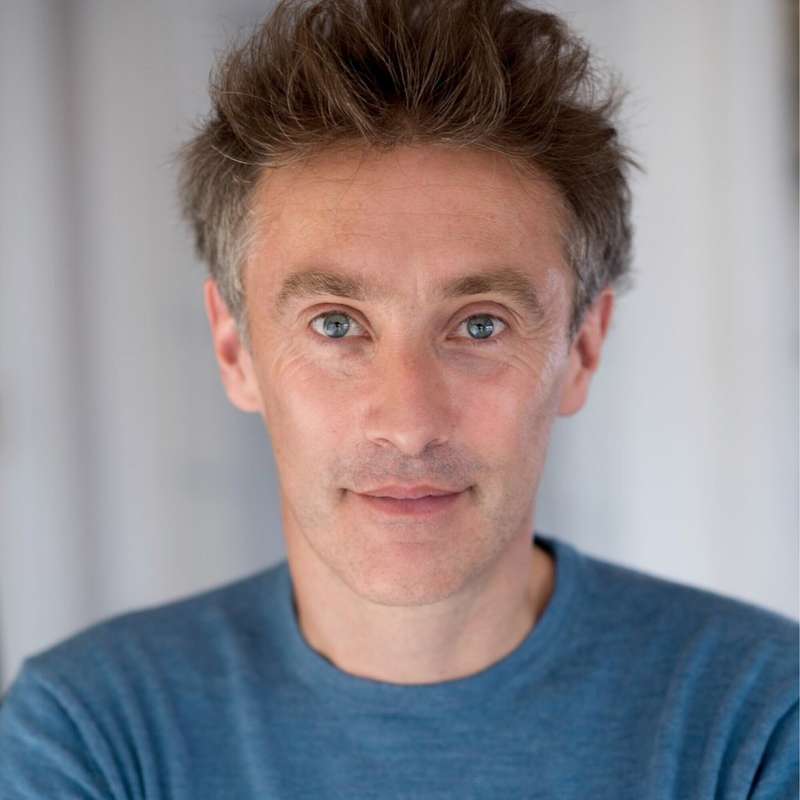 Dallas CampbellHost
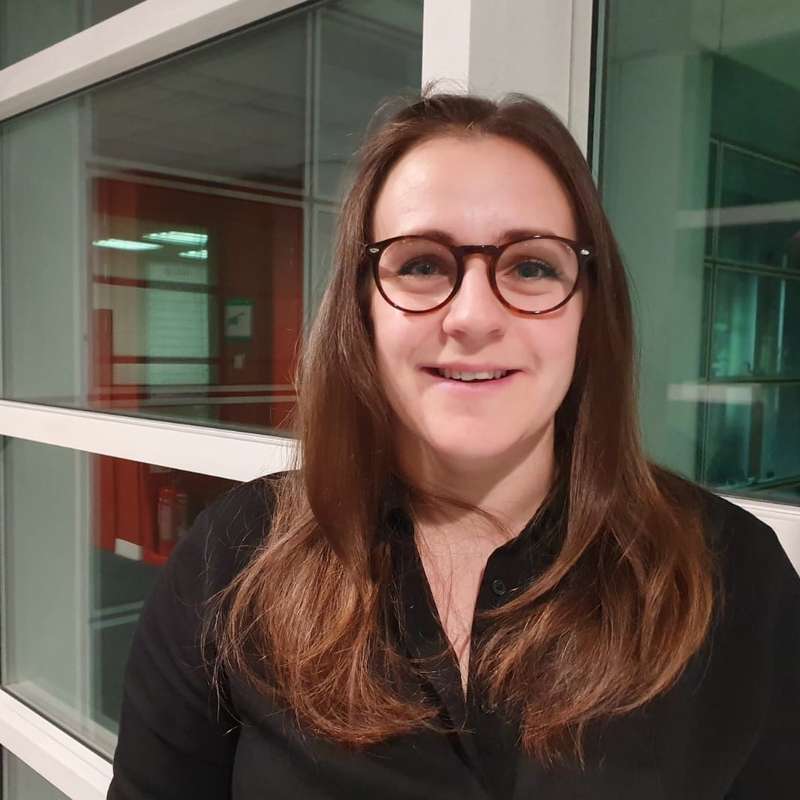 Charlotte MasseyGuest